A lot of battery problems do not start inside the cells. They show up at the connection. A 12V sodium battery may look fine, then fail under load: hot terminals, system cutouts, or BMS trips.Very often, the cause is simple: a poor crimp, wrong washer stack, or loose terminal bolt. Good chemistry will not fix a bad connection.
For quick reference, common torque ranges often seen on 12V battery insert terminals are M6 (1/4″): 4–5 Nm (35–45 in-lbs), M8 (5/16″): 8–10 Nm (70–90 in-lbs), and M10 (3/8″): 12–14 Nm (105–125 in-lbs). These are practical reference ranges, not a universal rule. The battery manufacturer’s datasheet always comes first, because terminal insert material, thread depth, bolt length, and supplied hardware can change the safe torque value.
If the terminal keeps heating up or the system drops out under load, the small installation details are usually where the real problem is.
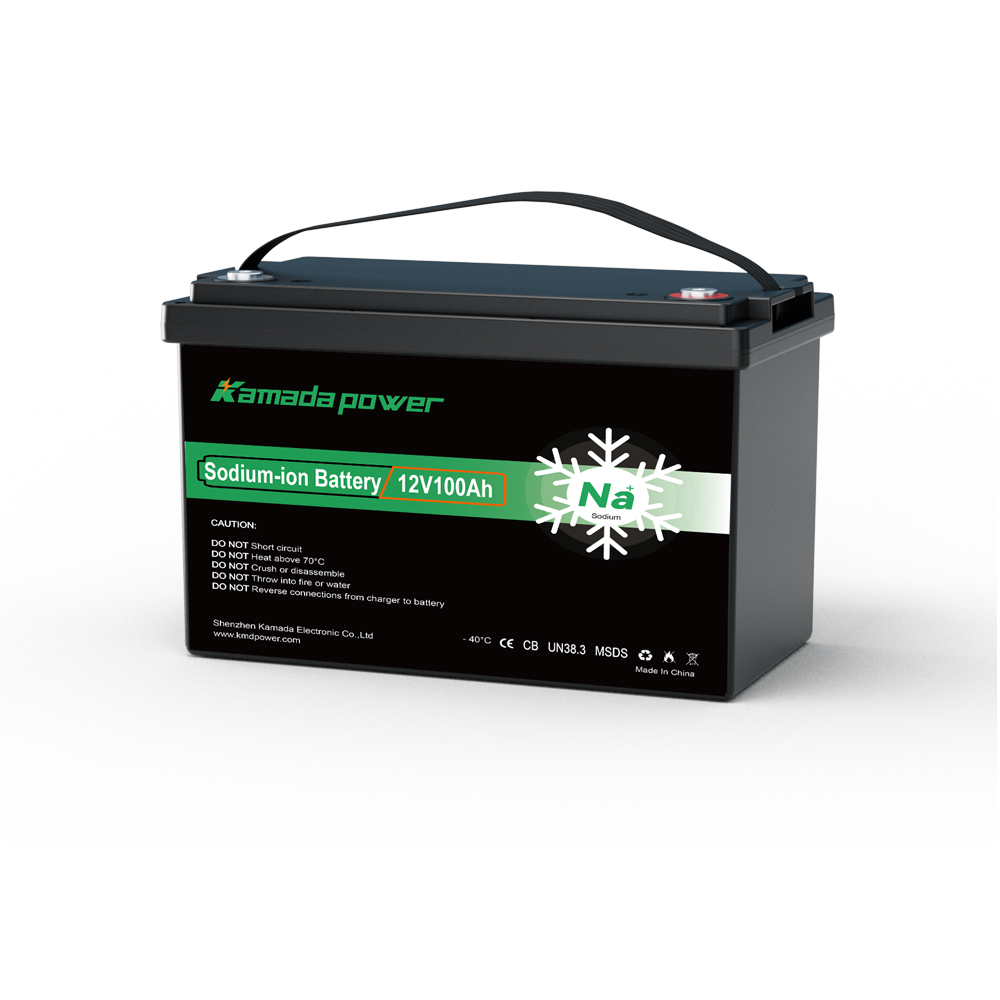
Kamada Power 12v 100Ah Sodium ion Battery
Why terminal torque matters more than many installers think
In low-current systems, sloppy connections may go unnoticed. In high-current DC systems, they usually do not. Even a slightly loose battery terminal adds resistance at the contact surface, and under load that extra resistance quickly turns into heat.
Since P = I²R, a rise in current can produce enough heat to damage the connection, soften nearby material, or deform the terminal block. That is why melted posts or discolored lugs are often blamed on the battery when the real problem is the connection.
Vibration makes it worse, because a marginally tightened bolt can loosen further over time, opening a gap that may lead to DC arcing, rapid metal damage, and fire risk.
Loose or high-resistance connections can also trigger nuisance BMS trips by causing a sudden voltage drop during inverter startup, making the BMS interpret the event as overcurrent or short circuit. That is why correct torque is not a minor installation detail. It is part of overall system reliability.
Terminal torque chart for M6 and M8 and M10 battery studs
You should always check the battery manufacturer’s own datasheet first. Thread design, insert material, bolt length, supplied hardware, and terminal construction can vary. The chart below is only a practical reference for many standard copper or brass battery terminals. It should not override the battery maker’s installation manual.
Also, do not treat metric and imperial hardware as interchangeable. M6 is only approximately close to 1/4″, M8 is only approximately close to 5/16″, and M10 is only approximately close to 3/8″. They are not the same thread system. Mixing bolts can damage the threads, reduce contact pressure, or create a connection that feels tight but is not actually correct.
| Terminal Size | Metric Torque | Imperial Torque | Cable Sizing Note |
|---|
| M6 (approx. 1/4″) | 4.0–5.0 Nm | 35–45 in-lbs | Cable size must be selected by current, cable length, voltage drop, insulation rating, and installation conditions. |
| M8 (approx. 5/16″) | 8.0–10.0 Nm | 70–90 in-lbs | The terminal size does not automatically decide the cable size. Always size the cable for the actual load. |
| M10 (approx. 3/8″) | 12.0–14.0 Nm | 105–125 in-lbs | Larger terminals are often used with higher-current cables, but the final cable size still depends on system design. |
One point is worth stressing: overtightening is not safer. Many people worry about loose terminals and then simply lean harder on the wrench. That can strip soft threads, deform the insert, or snap the bolt. Once that happens, you are no longer solving a connection problem. You are replacing hardware, and sometimes replacing the whole battery. A calibrated torque wrench is the right tool here. Guessing by feel is not.
How to crimp cable lugs correctly for 12V sodium batteries
Proper terminal torque only helps if the cable lug itself is sound. If the crimp is poor, the connection can still overheat even when the bolt torque is exactly right.
1. Start with the right cable and lug
Use a quality copper cable, ideally oxygen-free copper. If the battery will be installed in a humid, marine, or outdoor setting, tinned copper cable is the safer choice because it handles corrosion better over time.
Match that cable with a heavy-wall copper lug, not a thin bargain lug that deforms too easily. But do not choose the cable only by the terminal size. Cable size should be based on continuous current, surge current, cable run length, acceptable voltage drop, insulation temperature rating, and the installation environment.
This is not the place to save a few dollars. Cheap lugs and undersized cable create expensive problems later.
2. Strip the insulation carefully
Strip only enough insulation for the conductor to bottom out inside the lug barrel. Do not leave excess bare copper exposed, and do not damage the conductor strands while stripping. A nicked conductor reduces the effective cross-section of the cable and weakens both current capacity and mechanical strength.
A clean strip helps the cable seat fully and makes the crimp more consistent.
This is where a lot of installations go wrong.
A hammer-style crimper can flatten a lug enough to look acceptable from the outside, but appearance is not the same as performance. These tools often leave voids inside the barrel. Those gaps trap air and moisture, and they increase resistance.
A hydraulic crimper is usually a much better standard because it can apply stronger and more uniform compression. But the tool alone is not enough. The lug, cable size, die size, crimp position, and number of crimps must all match. A hydraulic crimper with the wrong die can still produce a bad crimp.
A proper crimp should create a tight, low-resistance compression joint between the conductor and the lug barrel. In practical terms, that means lower resistance, less heating, and better long-term durability.
For hobby projects, people sometimes accept compromises. For industrial, telecom, marine, or off-grid systems, a proper crimping process is the better standard.
4. Seal the joint with adhesive-lined heat shrink
Once the lug is crimped, cover the barrel with dual-wall adhesive-lined heat shrink tubing. When heated, the outer sleeve shrinks and the adhesive seals the transition between insulation and lug. This helps keep moisture out, supports the cable at the joint, and slows corrosion over time.
It is a simple step, but it makes the finished cable more durable and more professional.
Do sodium-ion batteries need different cable connections than LiFePO4?
From a chemistry standpoint, sodium-ion and LiFePO4 are different battery systems. From a wiring standpoint, the fundamentals do not change very much.
Current still flows through metal. Resistance still creates heat. Loose connections still fail.
What can change is the practical stress on the connection. Many 12V sodium-ion batteries are selected because they maintain strong discharge performance in cold environments where LiFePO4 becomes more limited. That means the cable, lug, and terminal interface may need to carry substantial current even in low temperatures.
For example, a 12V 100Ah sodium battery may be rated around 100A continuous in some designs, while high-rate versions may be rated closer to 150A or 200A depending on the BMS, cell design, thermal limits, and manufacturer specification. Once you are operating at that level, small connection defects stop being “small.” A mediocre crimp or inaccurate torque value is much more likely to show up as heat, voltage drop, or BMS protection.
So the connection method is not fundamentally different, but the margin for sloppy work is often smaller.
Common installation mistakes that still cause failures
Even experienced installers make these mistakes, especially when they are working fast.
Putting the washer in the wrong place
This is one of the most common causes of hot battery terminals.
The copper lug should sit directly against the battery terminal surface. That is the main rule. The current path should go from terminal to lug with as little resistance as possible.
The usual order is:
Battery terminal → copper lug → flat washer → lock washer or split washer → bolt
What should not happen is putting a stainless steel washer between the battery terminal and the copper lug. If that happens, current is forced through the washer instead of flowing directly from copper to copper or brass. Stainless steel has much higher resistance than copper, so the washer heats up under load and the connection starts to deteriorate.
Aluminum lugs on copper or brass battery terminals are a bad idea, especially in wet or humid environments. The issue is galvanic corrosion. Over time, corrosion increases resistance, and higher resistance means more heat.
For long-term reliability, keep the contact materials compatible.
Skipping re-torque checks
A fresh installation does not always stay the same after a few weeks of service. Copper can relax slightly. Temperature changes cause expansion and contraction. Equipment that moves or vibrates can shift hardware over time.
It is good practice to recheck terminal torque around 30 days after installation and then include it in periodic maintenance. One quick check with a torque wrench can prevent a much larger service problem later.
Troubleshooting hot terminals and sudden BMS trips
If a 12V sodium-ion battery terminal gets hot, or the system shuts down when the inverter, motor, pump, compressor, or other high-load equipment starts, do not assume the battery cells have failed first. Check the connection path.
| Symptom | Likely Cause | What to Check |
|---|
| Terminal becomes hot under load | Loose bolt, poor lug contact, wrong washer order, or undersized cable | Check torque, washer stack, lug contact surface, and cable sizing |
| BMS trips during inverter startup | Voltage sag caused by high resistance at the terminal or inside the crimp | Measure voltage drop across the connection during startup |
| Lug looks discolored or darkened | Heat buildup from contact resistance | Inspect crimp quality, oxidation, torque, and contact area |
| Terminal hardware loosens after use | Vibration, thermal cycling, or cable movement pulling on the terminal | Re-torque after initial service and add proper cable strain relief |
| Cable feels warm near the lug barrel | Bad crimp or cable too small for the load | Cut back and re-crimp with the correct lug, die, and cable size |
| One battery in a parallel bank trips earlier | Uneven resistance between battery cables or terminals | Check cable length, lug quality, torque, and busbar connection balance |
| Terminal still heats after correct torque | Problem may be inside the lug, cable, washer stack, or mating surface | Do not keep tightening; inspect the whole current path |
The important point is simple: torque is only one part of the connection. A good terminal connection needs the right cable, the right lug, the right crimp, the right washer order, and the right torque.
Conclusion
A 12V sodium-ion battery can work well for cold weather, backup, RV, marine, or off-grid use, but only if the connection is right. A poor crimp, wrong washer order, or incorrect terminal torque can cause heat and shutdowns.
Use the right copper lug, crimp tool, sealing method, and manufacturer torque specification. Many field problems disappear there.
Need help matching a 12V sodium-ion battery to your application? Contact us for a custom sodium ion battery solution.
FAQ
What if I do not have a torque wrench? Can I just tighten the terminal by hand?
It is not a good idea. “Hand tight” means different things to different people. One installer leaves the connection loose enough to heat up under load, while another strips the threads by overtightening. For the cost of the battery system, a basic torque wrench is a small investment and usually worth it.
Can I reuse old lead-acid battery cables with a sodium battery?
Sometimes, yes. But only if the cable is still in good condition and actually sized for the current your new setup will draw. Some sodium battery systems can deliver higher sustained current than older lead-acid systems, depending on their BMS rating and pack design. If the cable is corroded, stiff, undersized, or heat-damaged, replace it.
Why is the terminal still getting hot even though I torqued it correctly?
If the terminal hardware is torqued to spec and the connection still runs hot, the problem is often inside the lug rather than at the bolt. A bad crimp can leave voids and create resistance inside the barrel. In that case, the cable usually needs to be cut back and re-crimped properly. It is also worth checking the washer order again, because that mistake is easy to miss and very common.