Många batteriproblem börjar inte inuti cellerna. De dyker upp vid anslutningen. A 12V natrium-batteri kan se bra ut, men sedan gå sönder under belastning: heta terminaler, systemavbrott eller BMS-utlösningar. Ofta är orsaken enkel: en dålig krympning, fel brickpaket eller lös terminalbult. Bra kemi löser inte en dålig anslutning.
För snabb referens, vanliga vridmomentsintervall som ofta ses på 12V batteripoler är M6 (1/4″): 4-5 Nm (35-45 in-lbs), M8 (5/16″): 8-10 Nm (70-90 in-lbs), och M10 (3/8″): 12-14 Nm (105-125 in-lbs). Detta är praktiska referensintervall, inte en universell regel. Batteritillverkarens datablad kommer alltid i första hand, eftersom terminalinsatsens material, gängdjup, bultlängd och medföljande hårdvara kan ändra det säkra vridmomentsvärdet.
Om terminalen fortsätter att värmas upp eller om systemet faller ut under belastning är det oftast de små installationsdetaljerna som är det verkliga problemet.
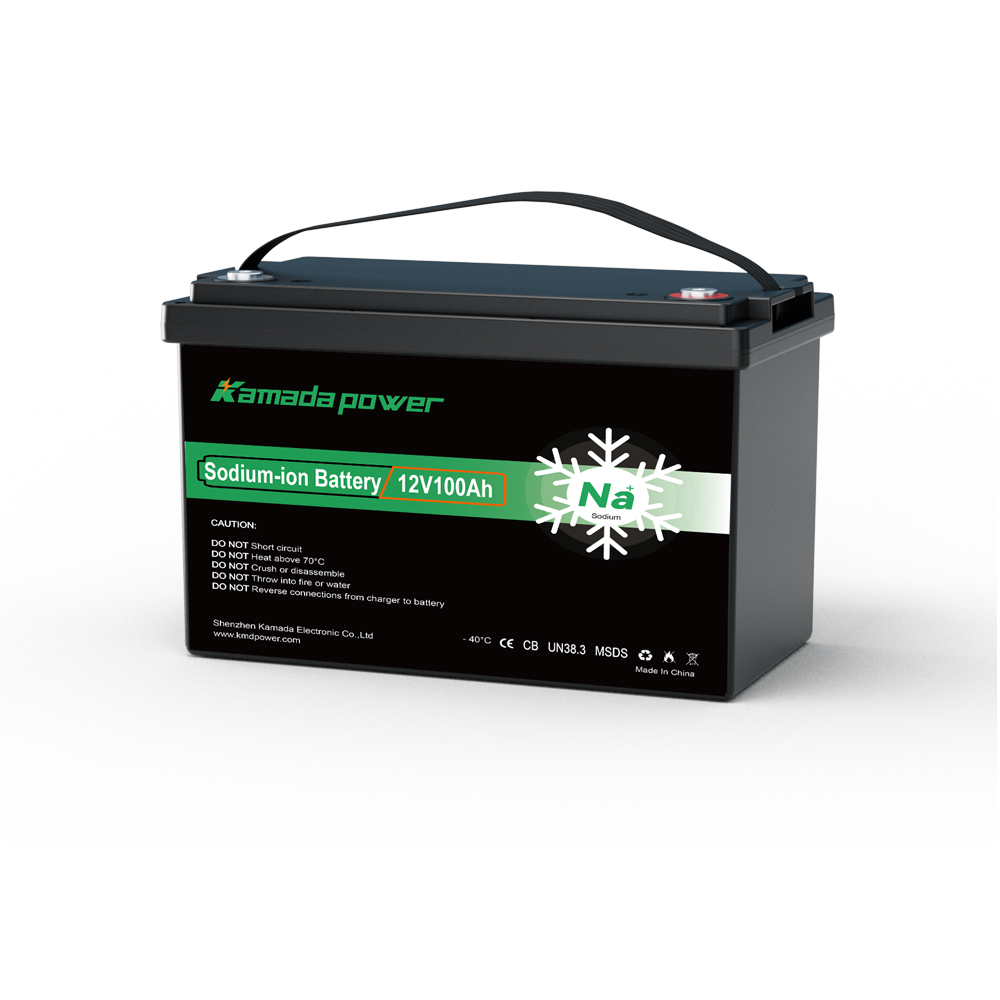
Kamada Power 12v 100Ah natriumjonbatteri
Varför terminalens vridmoment har större betydelse än vad många installatörer tror
I svagströmssystem kan slarviga anslutningar gå obemärkt förbi. I system med hög likström gör de vanligtvis inte det. Även om batteripolen sitter lite löst ökar motståndet vid kontaktytan, och under belastning omvandlas det extra motståndet snabbt till värme.
Sedan P = I²RNär strömmen ökar kan det uppstå tillräckligt med värme för att skada anslutningen, mjuka upp närliggande material eller deformera kopplingsplinten. Det är därför som smälta stolpar eller missfärgade kabelskor ofta skylls på batteriet när det verkliga problemet är anslutningen.
Vibrationer gör saken värre, eftersom en bult som är marginellt åtdragen kan lossna ytterligare med tiden och öppna en glipa som kan leda till ljusbågar, snabba metallskador och brandrisk.
Lösa anslutningar eller anslutningar med hög resistans kan också utlösa oönskade BMS-utlösningar genom att orsaka ett plötsligt spänningsfall under omriktarens start, vilket gör att BMS tolkar händelsen som överström eller kortslutning. Det är därför korrekt vridmoment inte är en mindre installationsdetalj. Det är en del av systemets totala tillförlitlighet.
Vridmomenttabell för M6-, M8- och M10-batteribultar
Du bör alltid först kontrollera batteritillverkarens eget datablad. Gängkonstruktion, insatsmaterial, bultlängd, medföljande hårdvara och polkonstruktion kan variera. Tabellen nedan är endast en praktisk referens för många vanliga batteripoler av koppar eller mässing. Den bör inte åsidosätta batteritillverkarens installationshandbok.
Behandla inte heller metriska och imperiala hårdvaror som utbytbara. M6 är bara ungefär nära 1/4″, M8 är bara ungefär nära 5/16″ och M10 är bara ungefär nära 3/8″. De är inte samma gängsystem. Att blanda bultar kan skada gängorna, minska kontakttrycket eller skapa en anslutning som känns tät men som faktiskt inte är korrekt.
| Terminalstorlek | Metriskt vridmoment | Imperial vridmoment | Anmärkning om kabeldimensionering |
|---|
| M6 (ca 1/4″) | 4,0-5,0 Nm | 35-45 in-lbs | Kabelstorleken måste väljas med hänsyn till strömstyrka, kabellängd, spänningsfall, isoleringsgrad och installationsförhållanden. |
| M8 (ca 5/16″) | 8,0-10,0 Nm | 70-90 in-lbs | Plintstorleken avgör inte automatiskt kabelstorleken. Dimensionera alltid kabeln för den faktiska belastningen. |
| M10 (ca 3/8″) | 12,0-14,0 Nm | 105-125 in-lbs | Större plintar används ofta med kablar för högre strömstyrka, men den slutliga kabelstorleken beror fortfarande på systemets utformning. |
En sak är värd att understryka: det är inte säkrare att dra åt för hårt. Många människor oroar sig för lösa terminaler och lutar sig sedan helt enkelt hårdare mot skiftnyckeln. Det kan slita av mjuka gängor, deformera insatsen eller knäcka bulten. När det händer löser du inte längre ett anslutningsproblem. Du byter ut hårdvara, och ibland byter du ut hela batteriet. En kalibrerad momentnyckel är rätt verktyg här. Att gissa på känsla är inte rätt.
Så här pressar du kabelskor korrekt för 12V natriumbatterier
Ett korrekt vridmoment i kabelskor hjälper bara om själva kabelskon är hel. Om krympningen är dålig kan anslutningen fortfarande överhettas även om skruvmomentet är exakt rätt.
1. Börja med rätt kabel och kabelsko
Använd en kopparkabel av hög kvalitet, helst syrefri koppar. Om batteriet ska installeras i en fuktig, marin eller utomhusmiljö är förtennad kopparkabel det säkraste valet eftersom den klarar korrosion bättre över tid.
Matcha kabeln med en kraftig kopparklämma, inte en tunn plåtklämma som deformeras för lätt. Men välj inte kabel enbart efter kabelskoens storlek. Kabelstorleken bör baseras på kontinuerlig ström, överspänningsström, kabellängd, acceptabelt spänningsfall, isoleringstemperatur och installationsmiljö.
Det här är inte rätt plats att spara några dollar. Billiga kabelskor och underdimensionerad kabel skapar dyra problem senare.
2. Avlägsna isoleringen försiktigt
Avisolera endast så mycket att ledaren bottnar inuti kabelskoens hylsa. Lämna inte överflödig blank koppar exponerad och skada inte ledarsträngarna när du skalar av. En skadad ledare minskar kabelns effektiva tvärsnitt och försämrar både strömkapaciteten och den mekaniska hållfastheten.
En ren remsa hjälper kabeln att sitta helt och gör krympningen mer konsekvent.
Det är här som många installationer går fel.
En crimper med hammare kan platta till en klack tillräckligt mycket för att se acceptabel ut från utsidan, men utseende är inte detsamma som prestanda. Dessa verktyg lämnar ofta hålrum inne i pipan. Dessa luckor fångar upp luft och fukt och ökar motståndet.
En hydraulisk press är vanligtvis en mycket bättre standard eftersom den kan ge en starkare och jämnare komprimering. Men verktyget i sig är inte tillräckligt. Kabelskor, kabelstorlek, matrisstorlek, pressposition och antal pressningar måste stämma överens. En hydraulisk press med fel pressverktyg kan fortfarande ge en dålig pressning.
En korrekt crimpning ska skapa en tät kompressionsfog med lågt motstånd mellan ledaren och kabelskoens hylsa. I praktiken innebär det lägre resistans, mindre uppvärmning och bättre långsiktig hållbarhet.
För hobbyprojekt får man ibland acceptera kompromisser. För industri-, telekom-, marin- eller off-grid-system är en korrekt krympningsprocess den bättre standarden.
4. Försegla fogen med självhäftande värmekrympare
När kabelskon är pressad, täck över hylsan med dubbelväggig krympslang med självhäftande ytskikt. Vid uppvärmning krymper den yttre hylsan och limmet tätar övergången mellan isolering och kabelsko. Detta hjälper till att hålla fukten ute, stöder kabeln vid skarven och bromsar korrosionen över tid.
Det är ett enkelt steg, men det gör den färdiga kabeln mer hållbar och mer professionell.
Behöver natriumjonbatterier andra kabelanslutningar än LiFePO4?
Ur kemisk synvinkel är natriumjon och LiFePO4 olika batterisystem. När det gäller kabeldragning ändras inte de grundläggande principerna särskilt mycket.
Ström flyter fortfarande genom metall. Motstånd skapar fortfarande värme. Lösa anslutningar går fortfarande sönder.
Det som kan förändras är den praktiska påfrestningen på anslutningen. Många 12V natriumjonbatterier väljs för att de bibehåller en stark urladdningsprestanda i kalla miljöer där LiFePO4 blir mer begränsat. Det innebär att gränssnittet mellan kabel, kabelsko och terminal kan behöva bära betydande ström även vid låga temperaturer.
Ett 12V 100Ah natriumbatteri kan t.ex. vara klassat för cirka 100A kontinuerligt i vissa konstruktioner, medan högbelastningsversioner kan vara klassade för närmare 150A eller 200A beroende på BMS, cellkonstruktion, termiska gränser och tillverkarens specifikationer. När du arbetar på den nivån slutar små anslutningsdefekter att vara "små". En medioker krympning eller ett felaktigt vridmoment är mycket mer sannolikt att visa sig som värme, spänningsfall eller BMS-skydd.
Så anslutningsmetoden är inte fundamentalt annorlunda, men marginalen för slarvigt arbete är ofta mindre.
Vanliga installationsfel som fortfarande orsakar fel
Även erfarna montörer gör dessa misstag, särskilt när de arbetar snabbt.
Placera brickan på fel plats
Detta är en av de vanligaste orsakerna till heta batteripoler.
Kopparklämman ska sitta direkt mot batteripolens yta. Det är huvudregeln. Strömvägen ska gå från pol till kabelsko med så litet motstånd som möjligt.
Den vanliga ordningen är:
Batteripol → kopparklämma → platt bricka → låsbricka eller delad bricka → bult
Vad som inte bör ske är att sätta en rostfri bricka mellan batteripolen och kopparklämman. Om det händer tvingas strömmen genom brickan i stället för att flyta direkt från koppar till koppar eller mässing. Rostfritt stål har mycket högre motstånd än koppar, så brickan värms upp under belastning och anslutningen börjar försämras.
Aluminiumklackar på batteripoler av koppar eller mässing är en dålig idé, särskilt i våta eller fuktiga miljöer. Problemet är galvanisk korrosion. Med tiden ökar korrosionen motståndet, och högre motstånd innebär mer värme.
För långsiktig tillförlitlighet, se till att kontaktmaterialen är kompatibla.
Hoppa över kontroll av åtdragningsmoment
En ny installation förblir inte alltid densamma efter några veckors drift. Koppar kan slappna av något. Temperaturförändringar orsakar expansion och sammandragning. Utrustning som rör sig eller vibrerar kan förskjuta hårdvaran över tid.
Det är bra att kontrollera terminalernas vridmoment igen cirka 30 dagar efter installationen och sedan inkludera det i det periodiska underhållet. En snabb kontroll med en momentnyckel kan förhindra ett mycket större serviceproblem senare.
Felsökning av heta terminaler och plötsliga BMS-utlösningar
Om en 12 V natriumjonbatteripol blir varm eller om systemet stängs av när växelriktaren, motorn, pumpen, kompressorn eller annan utrustning med hög belastning startar, ska du inte tro att battericellerna har gått sönder först. Kontrollera anslutningsvägen.
| Symptom | Trolig orsak | Vad ska kontrolleras? |
|---|
| Terminalen blir varm under belastning | Lös bult, dålig kontakt med kabelsko, fel ordning på brickor eller underdimensionerad kabel | Kontrollera vridmoment, brickpaket, kontaktyta för kabelskor och kabeldimensionering |
| BMS utlöses under start av växelriktaren | Spänningsfall orsakat av högt motstånd vid terminalen eller inuti crimpen | Mät spänningsfallet över anslutningen under uppstart |
| Luggen ser missfärgad eller mörkfärgad ut | Värmeutveckling från kontaktmotstånd | Kontrollera pressningens kvalitet, oxidation, vridmoment och kontaktyta |
| Terminalens hårdvara lossnar efter användning | Vibration, termisk cykling eller kabelrörelse som drar i terminalen | Dra åt igen efter första service och lägg till lämplig dragavlastning för kabeln |
| Kabeln känns varm nära kabelskoens hylsa | Dålig crimpning eller för liten kabel för belastningen | Skär tillbaka och pressa om med rätt kabelsko, verktyg och kabelstorlek |
| Ett batteri i en parallell bank utlöses tidigare | Ojämnt motstånd mellan batterikablar eller poler | Kontrollera kabellängd, kabelskoskvalitet, vridmoment och samlingsskenans anslutningsbalans |
| Terminalen värms fortfarande efter korrekt åtdragningsmoment | Problemet kan finnas inuti kabelskon, kabeln, brickpaketet eller anslutningsytan | Dra inte åt hela tiden, utan inspektera hela strömvägen |
Den viktiga poängen är enkel: vridmomentet är bara en del av anslutningen. En bra terminalanslutning kräver rätt kabel, rätt kabelsko, rätt crimp, rätt ordning på brickorna och rätt vridmoment.
Slutsats
A 12V natriumjonbatteri kan fungera bra i kallt väder, som reservaggregat, i husvagnar, på havet eller utanför elnätet, men bara om anslutningen är rätt. En dålig krympning, fel ordning på brickorna eller felaktigt vridmoment på terminalerna kan orsaka värme och driftstopp.
Använd rätt kopparsko, crimpverktyg, tätningsmetod och tillverkarens vridmomentspecifikation. Många fältproblem försvinner då.
Behöver du hjälp med att matcha ett 12V natriumjonbatteri till din applikation? Kontakta oss för en anpassat natriumjonbatteri lösning.
VANLIGA FRÅGOR
Vad händer om jag inte har någon momentnyckel? Kan jag bara dra åt terminalen för hand?
Det är inte en bra idé. "Handfast" betyder olika saker för olika personer. En installatör låter anslutningen vara tillräckligt lös för att den ska värmas upp under belastning, medan en annan drar åt gängorna för hårt. I förhållande till kostnaden för batterisystemet är en grundläggande momentnyckel en liten investering och oftast värd det.
Kan jag återanvända gamla blybatterikablar med ett natriumbatteri?
Ibland, ja. Men bara om kabeln fortfarande är i gott skick och faktiskt är dimensionerad för den ström som din nya installation kommer att dra. Vissa natrium-batterisystem kan leverera högre ihållande ström än äldre bly-syra-system, beroende på deras BMS-klassning och batteripaketets utformning. Om kabeln är korroderad, stel, underdimensionerad eller värmeskadad ska du byta ut den.
Varför blir terminalen fortfarande varm trots att jag har dragit åt den korrekt?
Om plintarna är åtdragna enligt specifikationerna och anslutningen fortfarande är varm, är problemet ofta inuti kabelskon snarare än vid bulten. En dålig pressning kan lämna hålrum och skapa motstånd inuti hylsan. I så fall måste kabeln vanligtvis kapas och pressas om ordentligt. Det är också värt att kontrollera ordningen på brickorna igen, eftersom det misstaget är lätt att missa och mycket vanligt.