Veel accuproblemen beginnen niet in de cellen. Ze ontstaan bij de aansluiting. A 12V natriumbatterij Vaak is de oorzaak eenvoudig: een slechte krimp, verkeerde sluitring of loszittende aansluitbout. Een goede chemie lost een slechte verbinding niet op.
Voor een snelle referentie, veel voorkomende koppelbereiken die vaak worden gezien op 12V-batterijinzetaansluitingen zijn M6 (1/4″): 4-5 Nm (35-45 in-lbs), M8 (5/16″)8-10 Nm (70-90 in-lbs) en M10 (3/8″): 12-14 Nm (105-125 in-lbs). Dit zijn praktische referentiebereiken, geen universele regel. Het gegevensblad van de batterijfabrikant komt altijd op de eerste plaats, omdat het materiaal van het aansluitpunt, de schroefdraaddiepte, de boutlengte en de meegeleverde hardware de veilige koppelwaarde kunnen veranderen.
Als de terminal warm blijft worden of het systeem onder belasting uitvalt, zijn het meestal de kleine installatiedetails waar het echte probleem zit.
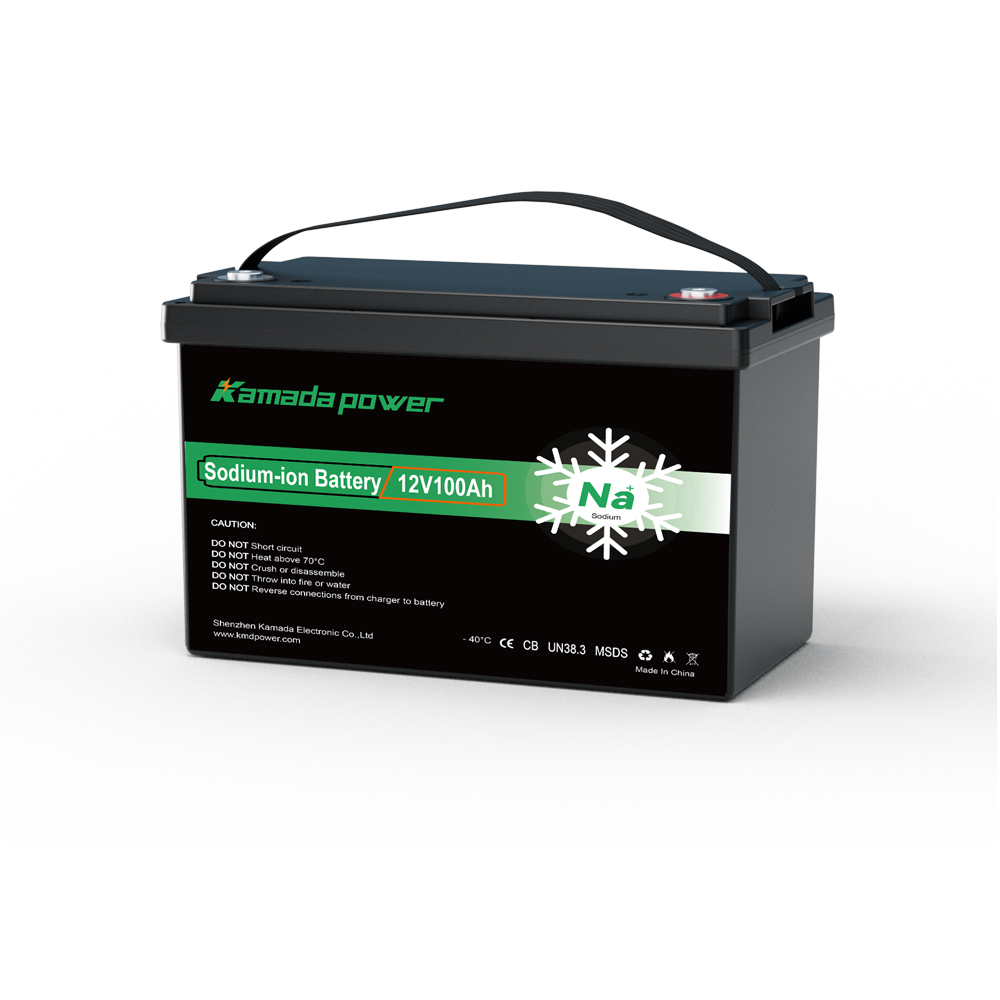
Kamada Power 12v 100Ah natrium-ion batterij
Waarom het aansluitkoppel belangrijker is dan veel installateurs denken
In systemen met lage stroom kunnen slordige verbindingen onopgemerkt blijven. In gelijkstroomsystemen met hoge stroomsterkte meestal niet. Zelfs een enigszins losse accuklem voegt weerstand toe aan het contactoppervlak en onder belasting verandert die extra weerstand snel in warmte.
Sinds P = I²REen toename in stroom kan genoeg warmte produceren om de aansluiting te beschadigen, nabijgelegen materiaal zachter te maken of het aansluitblok te vervormen. Daarom krijgen gesmolten pooltjes of verkleurde lugs vaak de schuld van de batterij, terwijl het echte probleem de aansluiting is.
Trillingen maken het nog erger, omdat een bout die marginaal is aangedraaid na verloop van tijd verder kan loskomen, waardoor een spleet ontstaat die kan leiden tot gelijkstroombogen, snelle metaalschade en brandgevaar.
Losse verbindingen of verbindingen met een hoge weerstand kunnen ook leiden tot hinderlijke BMS trips door een plotselinge spanningsdaling te veroorzaken tijdens het opstarten van de omvormer, waardoor het BMS de gebeurtenis interpreteert als overstroom of kortsluiting. Daarom is het juiste aanhaalmoment geen onbelangrijk installatiedetail. Het maakt deel uit van de algehele betrouwbaarheid van het systeem.
Aansluitkoppeltabel voor M6 en M8 en M10 batterijbouten
Je moet altijd eerst het gegevensblad van de batterijfabrikant zelf controleren. Het schroefdraadontwerp, het insteekmateriaal, de boutlengte, de meegeleverde hardware en de klemconstructie kunnen variëren. De onderstaande tabel is slechts een praktische referentie voor veel standaard koperen of messing accuklemmen. Het mag niet de plaats innemen van de installatiehandleiding van de batterijfabrikant.
Behandel metrische en Engelse ijzerwaren ook niet als onderling verwisselbaar. M6 is slechts ongeveer 1/4″, M8 is slechts ongeveer 5/16″ en M10 is slechts ongeveer 3/8″. Het is niet hetzelfde draadsysteem. Het mengen van bouten kan de schroefdraad beschadigen, de contactdruk verminderen of een verbinding creëren die strak aanvoelt maar eigenlijk niet goed is.
| Aansluitmaat | Metrisch koppel | Keizerkoppel | Opmerking over kabelgrootte |
|---|
| M6 (ongeveer 1/4″) | 4,0-5,0 Nm | 35-45 in-lbs | De kabelgrootte moet worden gekozen op basis van stroomsterkte, kabellengte, spanningsval, isolatiewaarde en installatieomstandigheden. |
| M8 (ongeveer 5/16″) | 8,0-10,0 Nm | 70-90 in-lbs | De klemgrootte bepaalt niet automatisch de kabelgrootte. Bereid de kabel altijd voor op de werkelijke belasting. |
| M10 (ongeveer 3/8″) | 12,0-14,0 Nm | 105-125 in-lbs | Grotere aansluitklemmen worden vaak gebruikt bij kabels met een hogere stroomsterkte, maar de uiteindelijke kabelgrootte hangt nog steeds af van het systeemontwerp. |
Eén punt is de moeite waard om te benadrukken: te strak aandraaien is niet veiliger. Veel mensen maken zich zorgen over losse terminals en leunen dan gewoon harder op de sleutel. Dat kan zachte draden strippen, het inzetstuk vervormen of de bout breken. Als dat gebeurt, los je niet langer een verbindingsprobleem op. Je vervangt hardware en soms de hele batterij. Een gekalibreerde momentsleutel is hier het juiste gereedschap. Gissen op gevoel is dat niet.
Hoe kabelklemmen correct te crimpen voor 12V natriumbatterijen
Het juiste aanhaalmoment van de kabelschoen helpt alleen als de kabelschoen zelf goed is. Als de krimp slecht is, kan de verbinding nog steeds oververhit raken, zelfs als het aandraaimoment van de bout precies goed is.
1. Begin met de juiste kabel en kabelschoen
Gebruik een koperen kabel van goede kwaliteit, bij voorkeur zuurstofvrij koper. Als de batterij wordt geïnstalleerd in een vochtige, maritieme of buitenomgeving, is vertind koperen kabel een veiligere keuze omdat deze na verloop van tijd beter bestand is tegen corrosie.
Combineer die kabel met een koperen kabelschoen met een zware wand, niet met een dunne kabelschoen die te gemakkelijk vervormt. Maar kies de kabel niet alleen op basis van de kabelschoengrootte. De kabelgrootte moet gebaseerd zijn op continue stroom, piekstroom, kabellengte, aanvaardbare spanningsval, isolatiewaarde en de installatieomgeving.
Dit is niet de plek om een paar dollar te besparen. Goedkope kabelschoenen en ondermaatse kabel zorgen later voor dure problemen.
2. Strip de isolatie zorgvuldig
Strip alleen genoeg isolatie om de geleider in de kabelschoen te laten zakken. Laat geen overtollig blank koper blootliggen en beschadig de geleiderstrengen niet tijdens het strippen. Een gekerfde geleider vermindert de effectieve doorsnede van de kabel en verzwakt zowel de stroomcapaciteit als de mechanische sterkte.
Een schone strip zorgt ervoor dat de kabel goed aansluit en dat de krimp consistenter is.
Dit is waar veel installaties fout gaan.
Een hamer-krimper kan een lug genoeg afvlakken om er aan de buitenkant acceptabel uit te zien, maar uiterlijk is niet hetzelfde als prestatie. Deze gereedschappen laten vaak holtes achter in de loop. Deze openingen houden lucht en vocht vast en verhogen de weerstand.
Een hydraulische crimper is meestal een veel betere standaard omdat deze een sterkere en gelijkmatigere compressie kan toepassen. Maar het gereedschap alleen is niet genoeg. De kabelschoen, kabelgrootte, matrijsgrootte, krimppositie en het aantal krimpen moeten allemaal overeenkomen. Een hydraulische crimper met de verkeerde matrijs kan nog steeds een slechte crimp produceren.
Een goede crimp moet een strakke compressieverbinding met lage weerstand creëren tussen de geleider en de kabelschoen. Praktisch gezien betekent dit een lagere weerstand, minder opwarming en een betere duurzaamheid op lange termijn.
Voor hobbyprojecten accepteren mensen soms compromissen. Voor industriële, telecom-, maritieme of off-grid systemen is een goed krimpproces de betere standaard.
4. Dicht de verbinding af met met lijm beklede krimpkous
Zodra de kabelschoen gekrompen is, bedek je de loop met dubbelwandige krimpkous met kleeflaag. Bij verhitting krimpt de buitenmantel en dicht de lijm de overgang tussen isolatie en kabelschoen af. Dit helpt vocht buiten te houden, ondersteunt de kabel bij de verbinding en vertraagt corrosie na verloop van tijd. Dit houdt vocht buiten, ondersteunt de kabel bij de verbinding en vertraagt corrosie na verloop van tijd.
Het is een eenvoudige stap, maar het maakt de afgewerkte kabel duurzamer en professioneler.
Hebben natrium-ion accu's andere kabelverbindingen nodig dan LiFePO4?
Vanuit chemisch oogpunt zijn natrium-ion en LiFePO4 verschillende accusystemen. Vanuit het oogpunt van bedrading veranderen de fundamenten niet veel.
Stroom vloeit nog steeds door metaal. Weerstand creëert nog steeds warmte. Losse verbindingen falen nog steeds.
Wat kan veranderen is de praktische belasting op de verbinding. Veel 12V natrium-ion accu's worden gekozen omdat ze goed blijven ontladen in koude omgevingen waar LiFePO4 beperkter wordt. Dat betekent dat de kabel, kabelschoen en terminalinterface zelfs bij lage temperaturen een aanzienlijke stroom moeten kunnen dragen.
Een natriumbatterij van 12V met een capaciteit van 100 Ah kan in sommige ontwerpen bijvoorbeeld een continue capaciteit van ongeveer 100 A hebben, terwijl versies met een hoge capaciteit eerder 150 A of 200 A kunnen hebben, afhankelijk van de BMS, het celontwerp, de thermische grenzen en de specificaties van de fabrikant. Als je eenmaal op dat niveau werkt, zijn kleine verbindingsfouten niet meer "klein". Een middelmatige krimp of een onnauwkeurige koppelwaarde zal veel eerder tot uiting komen in warmte, spanningsverlies of BMS-bescherming.
De verbindingsmethode is dus niet fundamenteel anders, maar de marge voor slordig werk is vaak kleiner.
Veelvoorkomende installatiefouten die nog steeds storingen veroorzaken
Zelfs ervaren installateurs maken deze fouten, vooral als ze snel werken.
De wasmachine op de verkeerde plaats zetten
Dit is een van de meest voorkomende oorzaken van hete accupolen.
De koperen kabelschoen moet direct tegen het oppervlak van de accupool zitten. Dat is de hoofdregel. De stroom moet met zo min mogelijk weerstand van de aansluitklem naar de kabelschoen lopen.
De gebruikelijke volgorde is:
Accuklem → koperen kabelschoen → platte ring → borgring of splitring → bout
Wat niet zou moeten gebeuren is het plaatsen van een roestvaststalen sluitring tussen de accupool en de koperen kabelschoen. Als dat gebeurt, wordt de stroom door de sluitring geforceerd in plaats van rechtstreeks van koper naar koper of messing te stromen. Roestvrij staal heeft een veel hogere weerstand dan koper, dus de sluitring warmt op onder belasting en de verbinding begint te verslechteren.
Aluminium kabelschoenen op koperen of messing accupolen zijn een slecht idee, vooral in natte of vochtige omgevingen. Het probleem is galvanische corrosie. Na verloop van tijd verhoogt corrosie de weerstand en een hogere weerstand betekent meer warmte.
Voor langdurige betrouwbaarheid moet je de contactmaterialen compatibel houden.
Herhaalde aanhaalcontroles overslaan
Een verse installatie blijft niet altijd hetzelfde na een paar weken dienst. Koper kan iets ontspannen. Temperatuurveranderingen veroorzaken uitzetting en inkrimping. Apparatuur die beweegt of trilt kan na verloop van tijd hardware verschuiven.
Het is een goede gewoonte om het aanhaalmoment van de aansluitklemmen ongeveer 30 dagen na de installatie opnieuw te controleren en dit vervolgens op te nemen in het periodieke onderhoud. Een snelle controle met een momentsleutel kan later een veel groter onderhoudsprobleem voorkomen.
Problemen met hete terminals en plotselinge uitschakelingen van het GBS oplossen
Als een 12V natrium-ion accupool heet wordt, of als het systeem uitschakelt wanneer de omvormer, motor, pomp, compressor of andere apparatuur met hoge belasting wordt gestart, ga er dan niet van uit dat de accucellen het eerst hebben begeven. Controleer het aansluitpad.
| Symptoom | Waarschijnlijke oorzaak | Wat controleren? |
|---|
| Terminal wordt heet onder belasting | Losse bout, slecht contact, verkeerde volgorde van sluitringen of te kleine kabel | Controleer het aanhaalmoment, het aantal ringen, het contactoppervlak van de kabelschoenen en de grootte van de kabel. |
| Het GBS schakelt uit tijdens het opstarten van de omvormer | Spanningsverzakking veroorzaakt door hoge weerstand op de terminal of in de crimp | Meet de spanningsval over de aansluiting tijdens het opstarten |
| Lug lijkt verkleurd of donkerder | Warmteontwikkeling door contactweerstand | Inspecteer de kwaliteit van de krimp, oxidatie, torsie en contactoppervlak |
| Aansluitmateriaal raakt los na gebruik | Trillingen, thermische cycli of kabelbewegingen die aan de terminal trekken | Na het eerste gebruik opnieuw aandraaien en de juiste trekontlasting voor de kabel aanbrengen |
| Kabel voelt warm aan bij de kabelschoen | Slechte krimp of kabel te klein voor de belasting | Terugknippen en opnieuw garneren met de juiste kabelschoen, matrijs en kabelmaat |
| Eén accu in een parallelle bank raakt eerder defect | Ongelijke weerstand tussen accukabels of accupolen | Controleer de kabellengte, de kwaliteit van de kabelschoenen, het aanhaalmoment en de balans van de busaansluiting. |
| Klem warmt nog steeds op na juist aandraaimoment | Het probleem kan zich binnenin de kabelschoen, kabel, ringstapel of het aansluitingsoppervlak bevinden. | Blijf niet aandraaien; inspecteer het hele stroompad |
Het belangrijkste punt is eenvoudig: het aanhaalmoment is slechts één onderdeel van de verbinding. Een goede klemverbinding heeft de juiste kabel, de juiste kabelschoen, de juiste crimp, de juiste volgorde van de sluitringen en het juiste koppel nodig.
Conclusie
A 12V natrium-ion batterij kunnen goed werken bij koud weer, als back-up, in een camper, op zee of los van het elektriciteitsnet, maar alleen als de aansluiting goed is. Een slechte krimp, verkeerde volgorde van de sluitringen of een verkeerd aanhaalmoment van de aansluitklemmen kan leiden tot oververhitting en uitschakeling.
Gebruik de juiste kabelschoen, krimptang, afdichtingsmethode en koppelspecificatie van de fabrikant. Veel problemen in het veld verdwijnen dan.
Hulp nodig bij het afstemmen van een natrium-ionaccu van 12 V op jouw toepassing? Neem contact met ons op voor een natriumionbatterij op maat oplossing.
FAQ
Wat als ik geen momentsleutel heb? Kan ik de klem gewoon met de hand aandraaien?
Het is geen goed idee. "Handvast" betekent verschillende dingen voor verschillende mensen. De ene installateur laat de verbinding los genoeg om onder belasting warm te worden, terwijl een ander de schroefdraden losdraait door ze te vast aan te draaien. Voor de kosten van het accusysteem is een eenvoudige momentsleutel een kleine investering en meestal de moeite waard.
Kan ik oude loodzuur-batterijkabels hergebruiken voor een natrium-batterij?
Soms wel, ja. Maar alleen als de kabel nog in goede staat is en de juiste afmetingen heeft voor de stroom die je nieuwe installatie zal gebruiken. Sommige natriumaccusystemen kunnen een hogere constante stroom leveren dan oudere loodzuursystemen, afhankelijk van de BMS-classificatie en het ontwerp van het pakket. Als de kabel gecorrodeerd, stijf, ondermaats of door warmte beschadigd is, vervang hem dan.
Waarom wordt de terminal nog steeds heet ondanks dat ik hem goed heb aangedraaid?
Als de hardware van het aansluitpunt goed is aangedraaid en de verbinding nog steeds heet is, zit het probleem vaak in de kabelschoen en niet bij de bout. Een slechte krimp kan holtes achterlaten en weerstand binnenin de kabelschoen veroorzaken. In dat geval moet de kabel meestal worden teruggesneden en opnieuw goed worden gekrompen. Het is ook de moeite waard om de volgorde van de sluitringen opnieuw te controleren, want die fout kan gemakkelijk over het hoofd worden gezien en komt vaak voor.