Muchos de los problemas de las baterías no empiezan dentro de las celdas. Aparecen en la conexión. A Batería de sodio de 12 V A menudo, la causa es simple: un engarce deficiente, una pila de arandelas incorrecta o un perno de terminal suelto. Una buena química no arreglará una mala conexión.
Para una referencia rápida, los rangos de par de apriete comunes que se ven a menudo en los terminales de inserción de baterías de 12 V son M6 (1/4″): 4-5 Nm (35-45 in-lbs), M8 (5/16″)8-10 Nm (70-90 in-lbs), y M10 (3/8″): 12-14 Nm (105-125 in-lbs). Se trata de intervalos de referencia prácticos, no de una regla universal. La hoja de datos del fabricante de la batería es siempre lo primero, ya que el material del inserto del terminal, la profundidad de la rosca, la longitud del tornillo y el hardware suministrado pueden cambiar el valor de par seguro.
Si el terminal sigue calentándose o el sistema se cae bajo carga, los pequeños detalles de la instalación suelen ser donde está el verdadero problema.
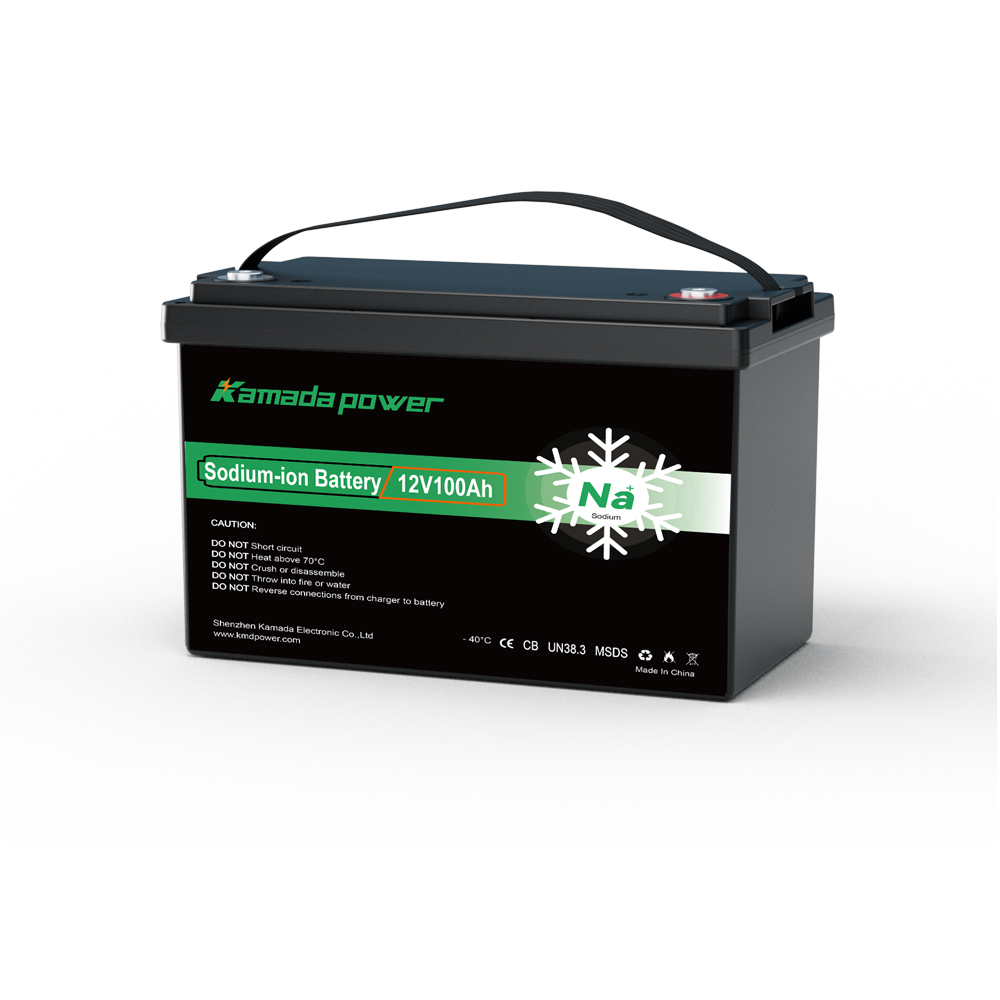
Batería de iones de sodio Kamada Power 12v 100Ah
Por qué el par de apriete de los bornes es más importante de lo que muchos instaladores creen
En sistemas de baja corriente, las conexiones descuidadas pueden pasar desapercibidas. En los sistemas de corriente continua de alta intensidad, normalmente no. Incluso un terminal de batería ligeramente suelto añade resistencia en la superficie de contacto, y bajo carga esa resistencia extra se convierte rápidamente en calor.
Desde P = I²Run aumento de la corriente puede producir suficiente calor para dañar la conexión, ablandar el material cercano o deformar el bloque de terminales. Por eso a menudo se culpa a la batería de los bornes fundidos o los terminales descoloridos, cuando el verdadero problema es la conexión.
La vibración lo empeora, porque un perno ligeramente apretado puede aflojarse aún más con el tiempo, abriendo una brecha que puede provocar un arco de CC, daños rápidos en el metal y riesgo de incendio.
Las conexiones flojas o de alta resistencia también pueden desencadenar molestos disparos del BMS al provocar una caída repentina de la tensión durante el arranque del inversor, haciendo que el BMS interprete el evento como una sobrecorriente o un cortocircuito. Por eso, un par de apriete correcto no es un detalle menor de la instalación. Forma parte de la fiabilidad general del sistema.
Tabla de pares de apriete para bornes de batería M6, M8 y M10
Siempre debe consultar primero la hoja de datos del fabricante de la batería. El diseño de la rosca, el material del inserto, la longitud del perno, la tornillería suministrada y la construcción del terminal pueden variar. La tabla siguiente es sólo una referencia práctica para muchos terminales de batería estándar de cobre o latón. No debe prevalecer sobre el manual de instalación del fabricante de la batería.
Además, no considere intercambiables los herrajes métricos y los imperiales. M6 es sólo aproximadamente cerca de 1/4″, M8 es sólo aproximadamente cerca de 5/16″, y M10 es sólo aproximadamente cerca de 3/8″. No son el mismo sistema de rosca. Mezclar tornillos puede dañar las roscas, reducir la presión de contacto o crear una conexión que parece apretada pero que en realidad no es correcta.
| Tamaño del terminal | Par métrico | Par imperial | Nota sobre el dimensionamiento de los cables |
|---|
| M6 (aprox. 1/4″) | 4,0-5,0 Nm | 35-45 in-lbs | El tamaño del cable debe seleccionarse en función de la corriente, la longitud del cable, la caída de tensión, la capacidad de aislamiento y las condiciones de instalación. |
| M8 (aprox. 5/16″) | 8,0-10,0 Nm | 70-90 in-lbs | El tamaño del terminal no determina automáticamente el tamaño del cable. Dimensione siempre el cable en función de la carga real. |
| M10 (aprox. 3/8″) | 12,0-14,0 Nm | 105-125 in-lbs | Los terminales más grandes suelen utilizarse con cables de mayor corriente, pero el tamaño final del cable sigue dependiendo del diseño del sistema. |
Merece la pena insistir en un punto: apretar demasiado no es más seguro. Mucha gente se preocupa por los terminales sueltos y aprieta con más fuerza la llave. Esto puede dañar las roscas blandas, deformar el inserto o romper el tornillo. Una vez que esto ocurre, ya no estás resolviendo un problema de conexión. Se está sustituyendo el hardware y, a veces, toda la batería. Una llave dinamométrica calibrada es la herramienta adecuada. Adivinar por tacto no lo es.
Cómo crimpar correctamente terminales de cable para baterías de sodio de 12 V
Un par de apriete adecuado de los terminales sólo es útil si el terminal del cable está en buenas condiciones. Si el engarce es deficiente, la conexión puede sobrecalentarse aunque el par de apriete sea el correcto.
1. Empiece con el cable y el terminal adecuados
Utilice un cable de cobre de calidad, idealmente cobre libre de oxígeno. Si la batería se va a instalar en un entorno húmedo, marino o al aire libre, el cable de cobre estañado es la opción más segura porque soporta mejor la corrosión con el paso del tiempo.
Combine ese cable con un terminal de cobre de pared gruesa, no con un terminal fino de ganga que se deforma con demasiada facilidad. Pero no elija el cable sólo por el tamaño del terminal. El tamaño del cable debe basarse en la corriente continua, la corriente de choque, la longitud del cable, la caída de tensión aceptable, la temperatura de aislamiento y el entorno de instalación.
Este no es el lugar para ahorrarse unos dólares. Los terminales baratos y el cable de tamaño insuficiente crean problemas caros más adelante.
2. Pele el aislamiento con cuidado
Pele sólo el aislamiento suficiente para que el conductor toque fondo en el interior de la lengüeta. No deje al descubierto el cobre desnudo sobrante y no dañe los hilos del conductor al pelarlo. Un conductor mellado reduce la sección transversal efectiva del cable y debilita tanto la capacidad de corriente como la resistencia mecánica.
Una tira limpia ayuda a que el cable se asiente completamente y hace que el crimpado sea más consistente.
Aquí es donde muchas instalaciones salen mal.
Una crimpadora tipo martillo puede aplanar un tetón lo suficiente como para que parezca aceptable desde fuera, pero la apariencia no es lo mismo que el rendimiento. Estas herramientas suelen dejar huecos en el interior del cañón. Esos huecos atrapan el aire y la humedad, y aumentan la resistencia.
Una crimpadora hidráulica suele ser mucho mejor porque puede aplicar una compresión más fuerte y uniforme. Pero la herramienta por sí sola no basta. El terminal, el tamaño del cable, el tamaño de la matriz, la posición de crimpado y el número de crimpados deben coincidir. Una crimpadora hidráulica con una matriz incorrecta puede producir un crimpado defectuoso.
Un crimpado correcto debe crear una unión por compresión estanca y de baja resistencia entre el conductor y el cuerpo del terminal. En la práctica, esto significa menor resistencia, menor calentamiento y mayor durabilidad a largo plazo.
En los proyectos de aficionados, a veces se aceptan compromisos. Para sistemas industriales, de telecomunicaciones, marinos o aislados de la red, el mejor estándar es un proceso de crimpado adecuado.
4. Sellar la junta con termorretráctil forrado de adhesivo.
Una vez engarzada la orejeta, cubra el cañón con un tubo termorretráctil de doble pared revestido de adhesivo. Cuando se calienta, la funda exterior se contrae y el adhesivo sella la transición entre el aislamiento y el terminal. Esto ayuda a mantener la humedad fuera, soporta el cable en la unión y ralentiza la corrosión con el tiempo.
Es un paso sencillo, pero hace que el cable acabado sea más duradero y más profesional.
¿Necesitan las baterías de iones de sodio conexiones de cable diferentes a las de LiFePO4?
Desde el punto de vista químico, las baterías de iones de sodio y LiFePO4 son sistemas diferentes. Desde el punto de vista del cableado, los fundamentos no cambian mucho.
La corriente sigue fluyendo a través del metal. La resistencia sigue generando calor. Las conexiones sueltas siguen fallando.
Lo que puede cambiar es la tensión práctica de la conexión. Muchas baterías de iones de sodio de 12 V se seleccionan porque mantienen un fuerte rendimiento de descarga en entornos fríos, donde el LiFePO4 se vuelve más limitado. Esto significa que el cable, el terminal y la interfaz del borne pueden tener que soportar una corriente considerable incluso a bajas temperaturas.
Por ejemplo, una batería de sodio de 12 V y 100 Ah puede tener una capacidad de 100 A continuos en algunos diseños, mientras que las versiones de alta capacidad pueden tener una capacidad de 150 A o 200 A, dependiendo del BMS, el diseño de la célula, los límites térmicos y las especificaciones del fabricante. Una vez que se trabaja a ese nivel, los pequeños defectos de conexión dejan de ser "pequeños". Es mucho más probable que un engarce mediocre o un valor de par de apriete inexacto se manifiesten en forma de calor, caída de tensión o protección del BMS.
Así pues, el método de conexión no es fundamentalmente diferente, pero el margen de descuido suele ser menor.
Errores comunes de instalación que siguen causando fallos
Incluso los instaladores experimentados cometen estos errores, sobre todo cuando trabajan deprisa.
Colocar la lavadora en el lugar equivocado
Esta es una de las causas más comunes de que los bornes de la batería se calienten.
El terminal de cobre debe asentarse directamente contra la superficie del borne de la batería. Esta es la regla principal. El recorrido de la corriente debe ir del borne al terminal con la menor resistencia posible.
El orden habitual es:
Terminal de la batería → terminal de cobre → arandela plana → arandela de seguridad o arandela partida → perno.
Lo que no debería ocurrir es poner una arandela de acero inoxidable entre el terminal de la batería y el terminal de cobre. Si eso ocurre, la corriente es forzada a pasar a través de la arandela en lugar de fluir directamente de cobre a cobre o latón. El acero inoxidable tiene una resistencia mucho mayor que el cobre, por lo que la arandela se calienta bajo carga y la conexión empieza a deteriorarse.
Los terminales de aluminio en bornes de cobre o latón son una mala idea, especialmente en entornos húmedos o mojados. El problema es la corrosión galvánica. Con el tiempo, la corrosión aumenta la resistencia, y una mayor resistencia significa más calor.
Para garantizar la fiabilidad a largo plazo, los materiales de contacto deben ser compatibles.
Omisión de las comprobaciones de reapriete
Una instalación nueva no siempre permanece igual tras unas semanas de servicio. El cobre puede relajarse ligeramente. Los cambios de temperatura provocan dilataciones y contracciones. Los equipos que se mueven o vibran pueden desplazar los herrajes con el tiempo.
Es una buena práctica volver a comprobar el par de apriete de los terminales unos 30 días después de la instalación e incluirlo en el mantenimiento periódico. Una comprobación rápida con una llave dinamométrica puede evitar un problema de servicio mucho mayor más adelante.
Resolución de problemas de terminales calientes y desconexiones repentinas del BMS
Si un terminal de la batería de iones de sodio de 12 V se calienta, o el sistema se apaga cuando arranca el inversor, el motor, la bomba, el compresor u otro equipo de alta carga, no asuma que las celdas de la batería han fallado primero. Compruebe la ruta de conexión.
| Síntoma | Causa probable | Qué comprobar |
|---|
| El terminal se calienta bajo carga | Perno flojo, contacto deficiente del terminal, orden incorrecto de la arandela o cable de tamaño insuficiente. | Compruebe el par de apriete, la pila de arandelas, la superficie de contacto del terminal y el tamaño del cable. |
| El BMS se dispara durante el arranque del inversor | Caída de tensión causada por una resistencia elevada en el terminal o en el interior del crimpado. | Mida la caída de tensión en la conexión durante el arranque |
| La lengüeta parece descolorida u oscurecida | Acumulación de calor por resistencia de contacto | Inspeccionar la calidad del engarce, la oxidación, el par de apriete y el área de contacto. |
| La tornillería de los terminales se afloja tras el uso | Vibración, ciclos térmicos o movimiento del cable tirando del terminal. | Vuelva a apretar después del servicio inicial y añada el alivio de tensión de cable adecuado. |
| El cable está caliente cerca de la lengüeta | Engarce defectuoso o cable demasiado pequeño para la carga | Recorte y vuelva a apretar con el terminal, la matriz y el tamaño de cable correctos. |
| Una batería de un banco en paralelo se dispara antes | Resistencia desigual entre los cables o terminales de la batería | Compruebe la longitud del cable, la calidad del terminal, el par de apriete y el equilibrio de la conexión de la barra colectora. |
| El terminal sigue calentándose después de aplicar el par de apriete correcto | El problema puede estar en el interior del terminal, el cable, la pila de arandelas o la superficie de contacto. | No siga apretando; inspeccione todo el recorrido de la corriente |
Lo importante es sencillo: el par de apriete es sólo una parte de la conexión. Una buena conexión de terminales necesita el cable adecuado, el terminal adecuado, el crimpado adecuado, el orden de las arandelas adecuado y el par de apriete adecuado.
Conclusión
A Batería de iones de sodio de 12 V pueden funcionar bien en climas fríos, como respaldo, en vehículos recreativos, marinos o fuera de la red, pero sólo si la conexión es correcta. Un crimpado deficiente, un orden incorrecto de las arandelas o un par de apriete incorrecto de los terminales pueden provocar calentamiento y averías.
Utilice el terminal de cobre, la herramienta de crimpado, el método de sellado y la especificación de par de apriete del fabricante adecuados. Muchos problemas de campo desaparecen ahí.
¿Necesita ayuda para adaptar una batería de iones de sodio de 12 V a su aplicación? Póngase en contacto con nosotros para un batería de iones de sodio a medida solución.
PREGUNTAS FRECUENTES
¿Qué ocurre si no dispongo de una llave dinamométrica? ¿Puedo apretar el terminal a mano?
No es una buena idea. "Apretar a mano" significa cosas diferentes para cada persona. Un instalador deja la conexión lo suficientemente floja como para que se caliente bajo carga, mientras que otro destroza las roscas apretando demasiado. Por el coste del sistema de baterías, una llave dinamométrica básica es una pequeña inversión que suele merecer la pena.
¿Puedo reutilizar los cables viejos de una batería de plomo-ácido con una batería de sodio?
A veces, sí. Pero sólo si el cable está en buenas condiciones y realmente dimensionado para la corriente que consumirá su nueva configuración. Algunos sistemas de baterías de sodio pueden suministrar una corriente sostenida más alta que los antiguos sistemas de plomo-ácido, dependiendo de la capacidad de su BMS y del diseño del pack. Si el cable está corroído, rígido, es demasiado pequeño o está dañado por el calor, sustitúyalo.
¿Por qué se sigue calentando el terminal a pesar de que lo he apretado correctamente?
Si el terminal está apretado según las especificaciones y la conexión sigue caliente, el problema suele estar en el interior del terminal y no en el perno. Un crimpado defectuoso puede dejar huecos y crear resistencia en el interior del tambor. En ese caso, suele ser necesario cortar el cable y volver a engarzarlo correctamente. También merece la pena comprobar de nuevo el orden de las arandelas, porque ese error es fácil de pasar por alto y muy común.