Hvordan velge den beste Batteri til pontongbåt. Forestill deg at klokken er 16.00 på sandbaren. Etter flere timer med musikk og kjøleboks, vrir du om nøkkelen og hører et hult klikk.
Dette skjer fordi pongtonger oppfører seg mindre som prestasjonsbåter og mer som flytende stuer. Du driver ikke bare en propell, du driver en livsstil. Med lange inaktivitetstider og store "husbelastninger" utsetter pontongene batteriene for en belastning som vanlige marineoppsett ikke kan håndtere. Slik velger du riktig batteriarkitektur for dine spesifikke behov.
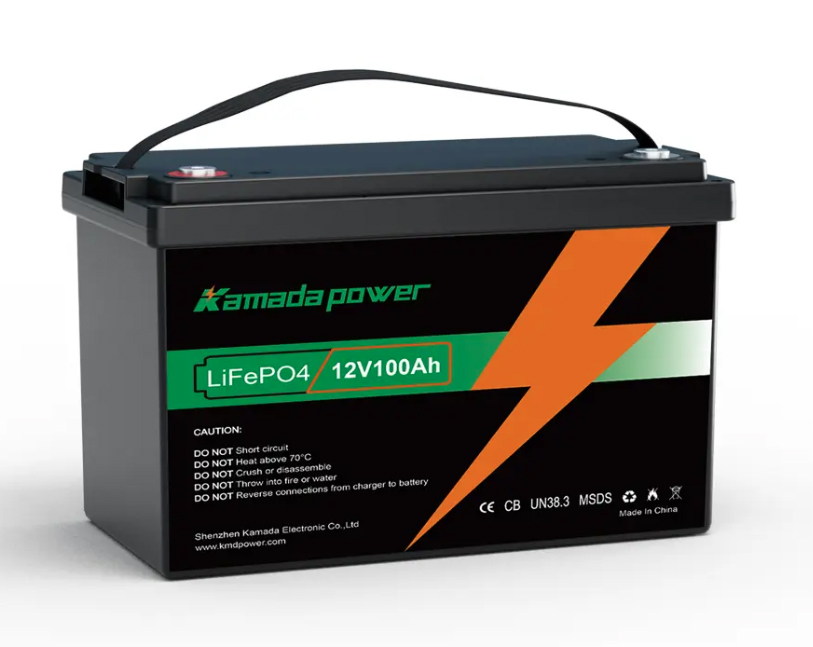
Kamada Power 12v 100AH Lifepo4-batteri
Hvilke enheter på en pontongbåt bruker egentlig batteriet
Før innkjøpere eller båteiere ser på spesifikasjonene, må vi se på belastningen. Pongtonger er unike fordi "motorbelastningen" ofte er sekundær i forhold til "tilbehørsbelastningen".
Batteri for start av pontongbåtmotor
Kravene til selve motoren er enkle, men kritiske. Typiske påhengsmotorer til pongtongbåter (fra 50 til 300 hk) krever et kort, høyt strømforbruk for å dreie svinghjulet og oppnå forbrenning.
Du vil se begreper som CCA (Cold Cranking Amps) og MCA (Marine Cranking Amps).
- CCA: Ampere levert ved -18 °C (0 °F) som batteriet kan levere i 30 sekunder med opprettholdelse av en minimumsspenning.
- MCA: Ampere levert ved 0 °C (32 °F) under de samme forholdene. MCA er ofte høyere enn CCA for det samme batteriet fordi testene utføres ved en varmere temperatur.
Siden de fleste pongtongbåter brukes i fint vær, er MCA det mest relevante målet her. Men her er realiteten: Startbatterier til pongtongbåter svikter sjelden fordi motoren er for vanskelig å få i gang. De svikter fordi tilbehøret har senket spenningen så mye at batteriet ikke lenger har utholdenhet til å levere den første gnisten.
For å sikre pålitelighet må du alltid bekrefte produsentens anbefalte MCA/CCA-verdi for din spesifikke utenbordsmotormodell og overdimensjonere litt hvis du forventer mye bruk av tilbehør før start.
Batteri for trollingmotorer til pontongbåter
Hvis pongtongen din er rigget for fiske, er trollingmotoren en enorm energiforbruker. I motsetning til en bassbåt som driver lett, er en pongtongbåt i bunn og grunn en stor, aerodynamisk murstein.
Å skyve et firkantet skrog mot vinden krever kontinuerlig dreiemoment. Enten du kjører et 12 V-, 24 V- eller 36 V-system, er etterspørselen jevn og ubarmhjertig.
- Utfordringen: En bassbåt kan bruke trollingmotoren i korte stunder. En pongtong bruker den ofte til posisjonering eller sakte cruising i lengre perioder.
- Behovet: Dette stiller høye krav til Reservekapasitet (RC). Reservekapasitet er definert som antall minutter et fulladet batteri kan levere 25 ampere ved 26,7 °C (80 °F) før spenningen faller under 10,5 V på en 12 V-enhet. Det er et praktisk mål på driftstid under belastning.
Et batteri med høyere RC vil tåle belastning lenger og er en bedre indikator for dyputladede bruksområder som trollingmotorer enn CCA alene.
Batteri for elektronikk og tilbehør til pontongbåter
Dette er den stille drapsmannen for standard marinebatterier. Moderne pongtonger er utstyrt med lydanlegg med flere høyttalere, subwoofere, LED-belysning under dekk, fiskefinnere og 12 V-kjøleskap.
Dette er "komfortbelastninger". De går vanligvis når motoren (og generatoren) er slått av. Hvis du bruker 15 ampere i 4 timer på sandbanken, har du trukket 60 amperetimer (Ah) ut av batteriet. Hvis batteriet er et standard startbatteri, har du sannsynligvis skadet den interne kjemien i batteriet.
For å estimere tilbehørsbelastningen i praksis:
- Oppgi alle apparater og hvor mye strøm de bruker ved 12 V.
- Multipliser med forventet antall brukstimer.
- Totalt = estimert Ah-behov.
Eksempel: Lys + Stereoanlegg (15A) + Kjøleskap (5A) = 20A totalt 20A × 4 timer = 80Ah forbrukt
Et standard startbatteri på 50Ah (selv om det er markedsført med 100Ah) vil bli overbelastet.
Velge riktig batteritype for hver funksjon i en pontongbåt
Ulike systemer krever ulik batterilogikk. Her finnes det definitivt ikke én størrelse som passer alle.
Startbatterier for pontongbåtmotorer
Et dedikert startbatteri er konstruert med tynne blyplater for å maksimere overflatearealet. Dette gir en massiv energiutladning i ca. 5-10 sekunder - akkurat det en motorstarter krever.
- Styrke: Umiddelbar kraftuttak.
- Begrensning: De avskyr å bli tappet. Hvis du tapper et startbatteri under ~80% kapasitet gjentatte ganger, vil det ta livet av det i løpet av en sesong.
- Beste praksis: Disse bør være isolert fra tilbehørsbelastninger. Stereoanlegget skal ikke trekke strøm fra dette batteriet.
Startbatterier er optimalisert for høy strøm, ikke dyputlading. Gjentatt grunn sykling forårsaker irreversible skader.
Deep-Cycle-batterier for pontongtilbehør
Dypsyklusbatterier bruker tykkere plater og tettere aktivt materiale. De er designet for maraton, ikke sprint. De er den viktigste strømkilden for de fleste veldesignede pontonger, fordi de tåler å bli tappet ned til ~50% (for tradisjonelle blybatterier) eller ~80-90% (for litiumbatterier) og lades opp gjentatte ganger.
Dypsyklusbatterier er klassifisert i amperetimer (Ah) med større brukbar kapasitet ved dypere utslippsnivåer.
Batterier med to bruksområder - bekvemmelighet kontra kompromisser
For mindre, enkle pongtonger ser du ofte "Dual-Purpose"-batterier. De prøver å tilby startkreftene til et startbatteri med syklingsevnen til et dypsyklusbatteri.
- Når det fungerer: Lett utstyrte båter (enkel radio, navigasjonslys).
- Fellen: På pongtonger med mye tilbehør er det de tosidige batteriene som svikter først. De har rett og slett ikke nok holdbarhet til et 1000 W lydanlegg som går hele ettermiddagen.
Dual-purpose er praktisk ikke en ytelsesløsning.
Beste batterikjemi for pontongbåter
Kjemien avgjør ytelsen. La oss se på de tre hovedkonkurrentene på pongtongmarkedet.
Blybatterier for grunnleggende pontongbåtsystemer
Dette er de tradisjonelle "oversvømte" batteriene.
- Brukssaken: Nybegynnerpongtonger, utleieflåter eller budsjettbevisste reparasjoner.
- Virkeligheten: På en pongtong er vedlikehold irriterende. Det blir ofte forsømt å sjekke vannstanden i en batteriboks som er gjemt under et benkesete. I tillegg er det en katastrofe hvis foringsrøret sprekker på grunn av vibrasjoner, og syre på et vevd vinyldekk er en katastrofe.
Blybatterier er rimelige, men krever regelmessig vedlikehold og har begrenset kapasitet (~50% av nominell Ah).
AGM-batterier for elektronikk til pontongbåter
Absorberte glassmatter (AGM) batterier er en betydelig oppgradering for pontonger. Elektrolytten er suspendert i glassfibermatter, noe som gjør dem sølsikre og svært vibrasjonsbestandige.
- Hvorfor de passer: Til tross for at pontonger er stabile, slår de mot vannet på dager med mye bølger. AGM-batterier takler denne fysiske påkjenningen mye bedre enn oversvømte celler.
- Prestasjoner: De lader raskere og har lavere indre motstand, noe som gir bedre ytelse for elektronikk og beskjeden bruk på sykkel.
AGM-batterier er fortsatt basert på blysyrekjemi, men med forbedret holdbarhet og vedlikeholdsfri drift.
Litiumbatterier (LiFePO4) for pontongsystemer med høy belastning
Vår erfaring fra samarbeid med industrikunder og avanserte marineinstallatører viser at litiumjernfosfat (LiFePO₄) raskt er i ferd med å bli standarden for husbanker og trollingmotorer.
- Kapasitet: Et litiumbatteri på 100 Ah gir deg vanligvis ca. 90-95 Ah brukbar strøm på grunn av en flat utladningskurve.
- Vekt: Dette er enormt. Et 36 V trollingoppsett med blybatterier kan veie ca. 180 kg. Tilsvarende litiumbatterier kan veie ca. 70-80 kg.
- Forbeholdet: De krever spesifikke ladeprofiler og et batteristyringssystem (BMS) for å beskytte mot overutlading, overlading og ekstreme temperaturer.
Litium gir mer brukbar energi per Ah og lengre levetid når det støttes riktig med kompatible ladesystemer.
Den største feilen når det gjelder batterikostnader i pontongbåter
Her er en innsikt som ofte overses i spesifikasjonsbladene: Kjøper basert på nominelle amperetimer (Ah) i stedet for brukbar energi.
Hvis du kjøper et billigere blybatteri med en kapasitet på 100 Ah, er du i praktisk bruk begrenset til ca. 50 Ah brukbar kapasitet for å unngå skader. Hvis du kjøper et litiumbatteri på 100 Ah, får du ca. 90 Ah brukbar kapasitet.
På en pongtong, der tilbehøret går i timevis, blir dette regnestykket smertefullt. Du trenger kanskje to blybatterier for å matche ett litiumbatteris brukbare effekt. Når du tar hensyn til utskiftingskapasiteten - litium varer i ca. 2000-5000 sykluser mot ca. 300-500 sykluser for blybatterier - blir kostnad per brukbar amperetime over levetiden er ofte lavere med litium, til tross for den høyere forhåndsprisen.
Slik dimensjonerer du et batteri basert på enheter til pontongbåter
Forstå batterispesifikasjoner for pontongbåtsystemer
- Ah (amperetimer): Tenk på dette som drivstofftanken din. Hvis tilbehøret ditt trekker 10 ampere, holder et 100Ah-batteri (brukbart) i ca. 10 timer.
- CCA/MCA: Nødvendig for utenbordsmotoren. Sjekk motorhåndboken din. Moderne mellomstore utenbordsmotorer krever ofte ~500-800 MCA.
- Reservekapasitet (RC): Et fulladet batteri kan levere 25 ampere før det faller under 10,5 V. Høy RC er spesielt verdifullt for trollingmotorer og tilbehørslaster.
Dimensjonering av batterier handler om å tilpasse belastningen til batterikapasiteten, og ta hensyn til brukbar kapasitet, utløpsdybde og forventet driftstid.
Retningslinjer for batterikapasitet fra Pontoon Equipment
- Lett elektronikk: Én gruppe 24 Dual-Purpose er vanligvis nok.
- Underholdningsfokusert: Separat gruppe 27 eller 31 Deep Cycle (AGM eller litium) kun for "huset".
- Fiske/Trolling: Dedikert 24V- eller 36V-bank (2 eller 3 batterier) isolert fra alt annet.
Comon batterigruppestørrelser brukt på pontongbåter
Du vil vanligvis se gruppe 24, 27 og 31.
- Gruppe 24: Den minste, vanlig å starte med.
- Gruppe 31: Største standard fotavtrykk. Hvis du har plass i kupeen på en pongtong, bør du alltid oppgradere til gruppe 31 for husbatteriet. Det ekstra blybatteriet (eller litiumceller) gir en nødvendig buffer for lange dager på vannet.
Ved å velge riktig gruppestørrelse balanseres fysisk plass, strømbehov og driftstidsbehov.
Pongtonger er avhengige av oppdrift og trim. Hvis du legger til 300 kg blybatterier i akterenden (bakerst) av båten, blir akterenden lavere. Dette øker luftmotstanden, ødelegger drivstofføkonomien og endrer skrogtrimmen, noe som gjør båten tregere å få "i plan" og vanskeligere å håndtere.
Ved å bytte til litium kan du fjerne mer enn 200 kg fra hekken. Det endrer kjørefølelsen fullstendig. Båten blir flatere i baugen, og motoren trenger mindre krefter for å skyve båten fremover. Selv om pontongbåter vanligvis kjører i beskjeden hastighet, gir vektbesparelser likevel bedre akselerasjon, drivstofføkonomi og komfort.
Batteriinstallasjon og lading for pontongbåtsystemer
Oppsett med ett eller to batterier
Hvis du har noe mer enn en enkel radio, trenger du en Oppsett med to batterier.
- Batteri 1 (Start): Dedikert til motoren.
- Batteri 2 (hus): Dedikert til elektronikk.
De bør kobles sammen via en Batteribryter (1-2-Both-Off) eller en Automatisk laderelé (ACR). ACR er overlegen fordi den automatisk kombinerer batteriene for lading når motoren går, men isolerer dem når motoren er slått av - noe som sparer startbatteriet.
Riktig isolering forhindrer at tilbehørsbelastninger tapper startbatteriet.
Plassering og beskyttelse av batteriet
Pongtonger er våte miljøer. Oppbevaringsrom under setene kan fange fuktighet. Sørg for at batteripolene er tildekket (maritimt krav), og at batteriene er stroppet fast. Et løst batteri som spretter rundt i et bredt aluminiumsskrog under en kjølvannskryssing, utgjør en brannfare.
Bruk alltid batteribrett, stropper og tildekkede poler av marin kvalitet for å forhindre korrosjon og kortslutning.
Lading av batterier som brukes til pontongbåtenheter
Avgjørende merknad: Generatoren på påhengsmotoren gir sannsynligvis bare 15-50 ampere. Hvis du har tømt trollingmotorbanken hele dagen, og går på tomgang tilbake til kaien i 20 minutter vil ikke lade dem opp. Du må bruke vekselstrømsladere om bord (plugges inn ved kaien) for å lade batteriene helt opp og holde dem friske.
For litium må du sørge for at laderen har en LiFePO₄-profil eller bruk en dedikert DC-DC-lader/regulator for å lade riktig og trygt fra motorens dynamo.
Bruk av litiumbatterier til elektronikk i pontongbåter - hva du må sjekke
Hvis du velger litium (LiFePO₄), må du kontrollere tre ting for å unngå systemfeil:
- Kompatibilitet med lader: Har den innebygde laderen en litiumprofil? Hvis ikke, vil den ikke lade batteriet fullt ut. LiFePO₄ bruker vanligvis ~14,4-14,6 V ladespenning og presis absorpsjonsregulering.
- Beskyttelse av alternatoren: Litiumbatterier kan ta imot ladning raskt og trekker høy strøm. En vanlig dynamo kan bli overopphetet hvis den ikke reguleres. A DC-DC lader eller generatorisolator/regulator hjelper deg med å håndtere dette.
- Temperaturgrenser: De fleste LiFePO₄ BMS-systemer vil avbryt lading under ~32 °F (0 °C) for å beskytte cellene. Hvis du bruker pongtongen under kjøligere forhold, bør du velge batterier med innebygd varmeapparat eller temperaturkompensering.
Riktig integrering bevarer ytelsen og forlenger levetiden.
Beste batterivalg etter pontongbåtfunksjon
Beste batteri for start av pontongbåtmotor
Generalforsamling Gruppe 24
De er valgt på grunn av sin høye sveiveffekt, vibrasjonsmotstand og vedlikeholdsfrie design. AGM-batterier leverer pålitelig MCA for moderne utenbordsmotorer, samtidig som de tåler sporadisk overlapping av tilbehør uten vedlikeholdsrisikoen som oversvømte celler medfører.
Beste batteri for tilbehør til pontongbåter
LiFePO₄ (litium) - formfaktor gruppe 31 eller tilsvarende kapasitet
Ideell for husbelastninger på grunn av den stabile spenningskurven, den fulle brukbare kapasiteten og den dramatisk lengre sykluslevetiden. I pontonger med mye tilbehør forhindrer litium spenningsfall som fører til at forsterkere, belysningssystemer og kjøleskap underpresterer eller slår seg av.
Beste batteri for trollingmotor til pontongbåt
LiFePO₄ 12 V / 24 V / 36 V-systemer
Den konsekvente utladningsprofilen og den enorme vektreduksjonen gjør litium til det overlegne valget for applikasjoner med vedvarende skyvekraft. I motsetning til blybatterier opprettholder litium et tilnærmet konstant dreiemoment helt til det er tomt, noe som er avgjørende for vind- og strømkontroll på brede pontongplattformer.
Beste allround-batteri for pontongbåter
AGM av høy kvalitet når enkelhet veier tyngre enn maksimal ytelse
For eiere som ønsker en løsning med én enkelt kjemi uten oppgraderinger av laderen eller systemmodifikasjoner, tilbyr premium AGM-batterier et balansert kompromiss mellom startevne, moderat syklustoleranse og enkel installasjon.
Batterivedlikehold for pontongbåter
Beste praksis for lading og lagring
Det som tar livet av pongtongbatterier mest, er forsømmelse utenfor sesongen. Når du lagrer for vinteren:
- Lad batteriet helt opp.
- Koble fra den negative kabelen. Stereoanlegg og klokker trekker små mengder strøm som vil tømme et batteri i løpet av ca. 8-12 uker.
For litium, oppbevar ved ~50-70% ladetilstand for å bevare cellenes helse.
Vanlige problemer forårsaket av pontongtilbehør
- Stereo Memory Wire: Ofte koblet direkte til batteriet, utenom bryteren.
- Belysningsreléer: Billige LED-kontrollere kan stå "åpne" og tappe strøm uten at man legger merke til det.
Ved å bruke riktige standarder for kabling og brytere/kontaktorer eliminerer du parasittbelastninger.
Når bør du bytte batteri på en pontongbåt?
Hvis spenningen faller under 10,5 V umiddelbart når du prøver å starte motoren, eller hvis ekkoloddet slår seg av hver gang du starter påhengsmotoren, har batteriet mistet brukbar kapasitet og bør skiftes ut.
Konklusjon
Pongtonger krever driftstid og komfort, ikke hastighet. Det beste batteriet balanserer startkraft med festfunksjon. Mens AGM-batterier passer til enkle oppsett, krever underholdningsanlegg et dobbelt system med en litiumhusbank for å holde musikken i gang. Gå gjennom elektronikken din for å beregne den faktiske "husbelastningen", og beregn deretter batteriets størrelse ut fra brukbare amperetimer, ikke bare nominell kapasitet.
Kontakt oss og send oss utstyrslisten din i dag, så vil våre ingeniører tilpasse pontongbåtbatteri batteri batteri løsning for å garantere at dagen ender på dine premisser.
VANLIGE SPØRSMÅL
Kan jeg blande et blysyrebatteri med et litium-batteri?
Ja, og dette er faktisk et veldig populært oppsett. Du beholder blybatteriet til motoren (enkelt og pålitelig) og bruker litium til tilbehøret (lang driftstid). Du trenger bare en DC-DC-lader mellom dem for å sikre at begge lades riktig fra dynamoen.
Hva skjer hvis jeg lar batteribryteren stå på Both mens jeg ligger for anker?
Dette er risikabelt. Hvis du tapper begge batteriene når du bruker radioen, vil du ikke kunne starte motoren. Bytt alltid til posisjon "2" (hus), eller bruk et automatisk laderelé (ACR) til å håndtere isoleringen for deg.
Trenger jeg virkelig en spesiell lader for AGM-batterier?
Teknisk sett, ja. Mens en standard bly-syre-lader kan "Smarte" ladere med en egen AGM-modus bruker en litt annen spenningsprofil som sørger for at batteriet blir 100% fullt uten å overlades, noe som forlenger batteriets levetid betydelig.
Hvor mange år bør et batteri til en pongtong vare?
Et godt vedlikeholdt blybatteri holder vanligvis i 3-4 år. AGM-batterier holder ofte i 4-6 år med riktig lading og temperaturkontroll. Litiumbatterier kan vare i mer enn 10 år eller mer, og varer ofte lenger enn båtens eiertid når de kombineres med kompatible ladesystemer.