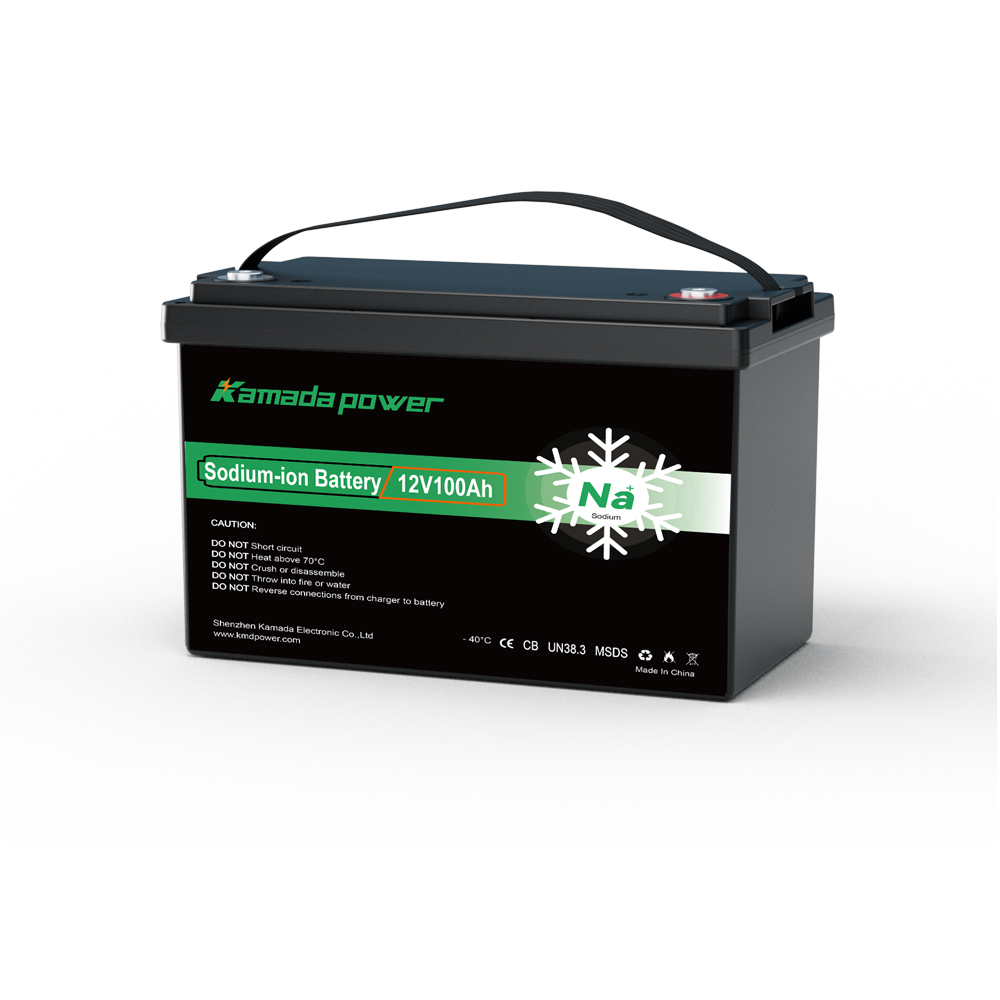
Battery Compartment Design for RV Sodium-ion Battery Packs
|

Battery Compartment Design for RV Sodium-ion Battery Packs

Battery Compartment Design for RV Sodium-ion Battery Packs. An RV sodium-ion battery pack is not defined only by voltage, capacity, and chemistry. The compartment also controls safety, moisture, voltage drop, vibration, service access, and recovery. If the compartment traps heat or cold, exposes terminals, forces poor cable routing, or blocks maintenance, even a good pack…

Do Sodium-Ion Battery Lose Capacity If Stored at 0V for Long Periods?
|

Do Sodium-Ion Battery Lose Capacity If Stored at 0V for Long Periods?

Do Sodium-Ion Battery Lose Capacity If Stored at 0V for Long Periods? A sodium-ion battery that reads 0V makes many buyers uneasy for a simple reason: in lithium-ion systems, deep over-discharge can mean safety risk, permanent damage, or both. Sodium-ion changes that discussion, but it does not remove the risk. The most accurate answer is…

How to Size a Sodium-ion Battery Pack for RV Air Conditioners
|

How to Size a Sodium-ion Battery Pack for RV Air Conditioners

Sizing a sodium-ion battery pack for RV air conditioner is not just about Ah. The pack must handle running power, startup surge, inverter loss, high DC current, voltage cutoff, and recovery behavior. Even when capacity looks enough, the system may still fail from inverter trips, BMS cutoff, voltage sag, hot-weather runtime loss, charger mismatch, or…

Can Sodium-Ion Battery Systems Operate Reliably at High Altitude?
|

Can Sodium-Ion Battery Systems Operate Reliably at High Altitude?

Can Sodium-Ion Battery Systems Operate Reliably at High Altitude? For OEMs, distributors, and system integrators, high altitude is not just an environmental checkbox. It usually means colder nights, thinner air, weaker cooling, and harder maintenance. The key question is not whether sodium-ion chemistry can survive in the mountains, but whether the full battery system can…

Sodium-ion Battery Packs for AGVs AMRs and Warehouse Vehicles What System Integrators Should Know
|

Sodium-ion Battery Packs for AGVs AMRs and Warehouse Vehicles What System Integrators Should Know

Sodium-ion battery packs can be considered for AGVs, AMRs, and warehouse vehicles, but the decision should not start with chemistry alone. In warehouse automation, the battery works inside a moving control system: motor, controller, charger, docking station, BMS, fleet software, connectors, safety logic, and service workflow all affect reliability. A pack may match the voltage…

Can Sodium-Ion Batteries Be Connected in Parallel with LiFePO4 Systems?
|

Can Sodium-Ion Batteries Be Connected in Parallel with LiFePO4 Systems?

“Can I add a sodium-ion battery in parallel with my LiFePO4 bank?” This question is common in RV, off-grid, marine, backup, and cold-weather systems. It sounds efficient: keep the existing LiFePO4 bank, add sodium-ion for more capacity or better low-temperature performance, and avoid rebuilding the system. But batteries are not generic 12V boxes. Sodium-ion batteries…

Best MPPT & PWM Charge Controller Settings for 12V Sodium-Ion Battery
|

Best MPPT & PWM Charge Controller Settings for 12V Sodium-Ion Battery

As sodium-ion battery enter solar and telecom systems, many users assume they can keep the same controller settings. In practice, reduced life, unstable output, poor backup time, and shutdowns often come from settings that do not match the exact battery. Because 12V sodium-ion battery are not standardized, some work around 14.2V–14.6V, while others may require…

Cable Lug Crimping Terminal Torque Specs for 12V Sodium Battery
|

Cable Lug Crimping Terminal Torque Specs for 12V Sodium Battery

A lot of battery problems do not start inside the cells. They show up at the connection. A 12V sodium battery may look fine, then fail under load: hot terminals, system cutouts, or BMS trips.Very often, the cause is simple: a poor crimp, wrong washer stack, or loose terminal bolt. Good chemistry will not fix…

Sodium-ion Battery vs LTO Batteries at –40°C: Which Battery Works Best and Why?
|

Sodium-ion Battery vs LTO Batteries at –40°C: Which Battery Works Best and Why?

Sodium-ion Battery vs LTO Batteries at –40°C: Which Battery Works Best and Why? At –40°C, standard batteries like NCM or LFP effectively turn into bricks, leaving remote industrial assets in the dark. While Lithium Titanate (LTO) remains the “Polar Vortex” champion, Sodium-ion Battery is emerging as a cost-effective challenger with some surprising cold-weather stats. From…

Sodium-ion vs. AGM Batteries: Is Your UPS Ready for the Sodium Revolution?
|

Sodium-ion vs. AGM Batteries: Is Your UPS Ready for the Sodium Revolution?

AGM (Absorbent Glass Mat) batteries have long been the industry standard for standby power, but their sensitivity to thermal stress and float-charging degradation is forcing a global shift. As Sodium-ion (Na-ion) emerges as a high-performance alternative, the real hurdle for procurement officers and industrial engineers in the US and Europe isn’t just cost—it’s technical integration….

Why Communication Compatibility Matters for a 48V 200Ah Sodium-ion Battery
|

Why Communication Compatibility Matters for a 48V 200Ah Sodium-ion Battery

A 48V 200Ah sodium-ion battery may look simple: 48V, 200Ah, about 9.6kWh nominal energy, and BMS protection. But in solar storage and backup systems, capacity is not enough. If the battery cannot communicate properly with the inverter, charger, or monitoring platform, the system may still face wrong SOC display, blocked charging, unexpected shutdowns, confusing alarms,…

12V Sodium-Ion Battery for Marine AtoN and Solar Buoys: Long-Service Backup Guide
|

12V Sodium-Ion Battery for Marine AtoN and Solar Buoys: Long-Service Backup Guide

A marine buoy battery often decides whether an AtoN, solar buoy, channel light, or remote monitoring station stays online—or requires an expensive emergency service trip. Unlike ordinary backup power, the key question is not just amp-hours. It is whether the battery can reduce unplanned maintenance in hot, sealed, salt-mist, solar-charged environments. Lead-acid may look cheaper…