Which Is Safer for Unattended Operation: Sodium-Ion or Lithium Battery? “Set it and forget it” is the dream for remote power systems, but the lingering nightmare for industrial engineers is thermal runaway. When a battery fails at an unmanned telecom tower or monitoring buoy, it’s a total loss—a far cry from a contained incident in a warehouse. For the last decade, Lithium Iron Phosphate (LFP) has been the gold standard for mitigating this risk. Now, 12 volt Sodium-ion battery technology has moved from the lab to the production line, promising a new tier of intrinsic safety. For the procurement officer or engineer speccing the next rollout, the question is critical: Is Sodium-ion battery actually safer, or is it just hype? Let’s dig into the chemistry.
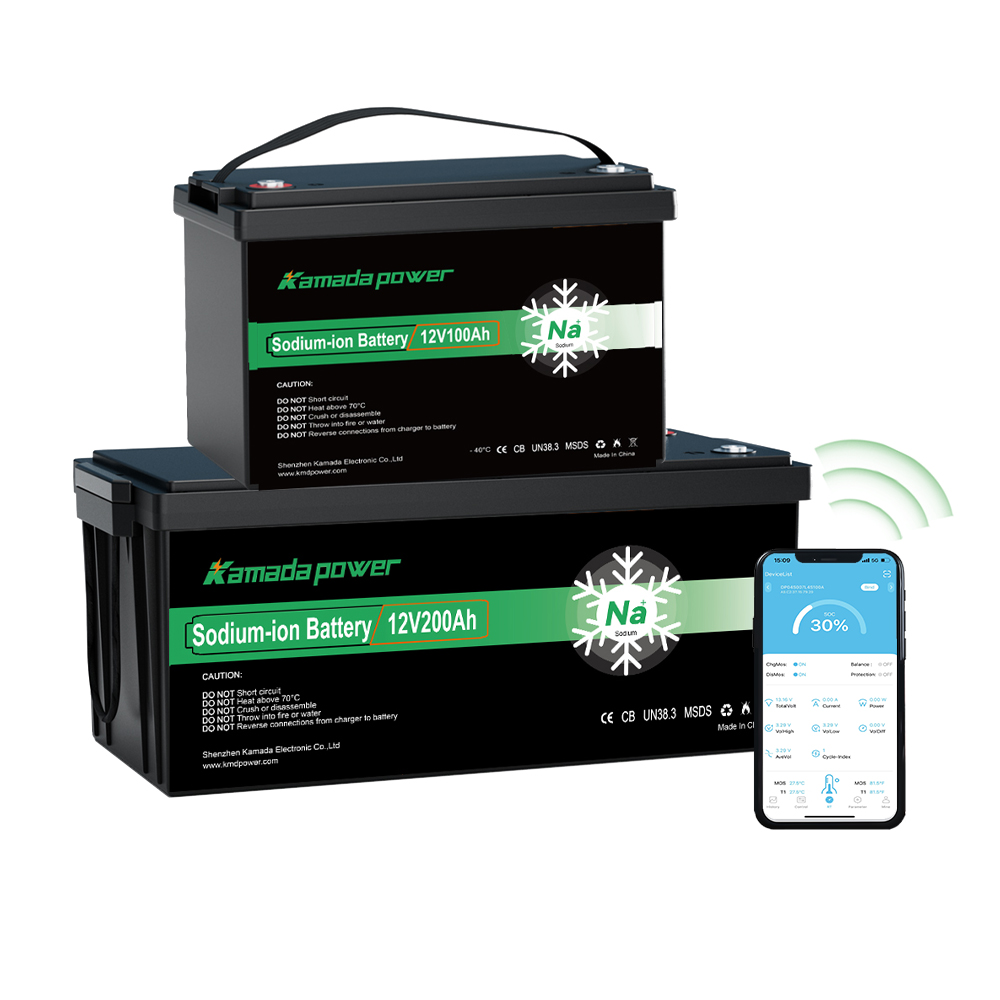
Kamada Power 12V 200Ah Sodium ion Battery
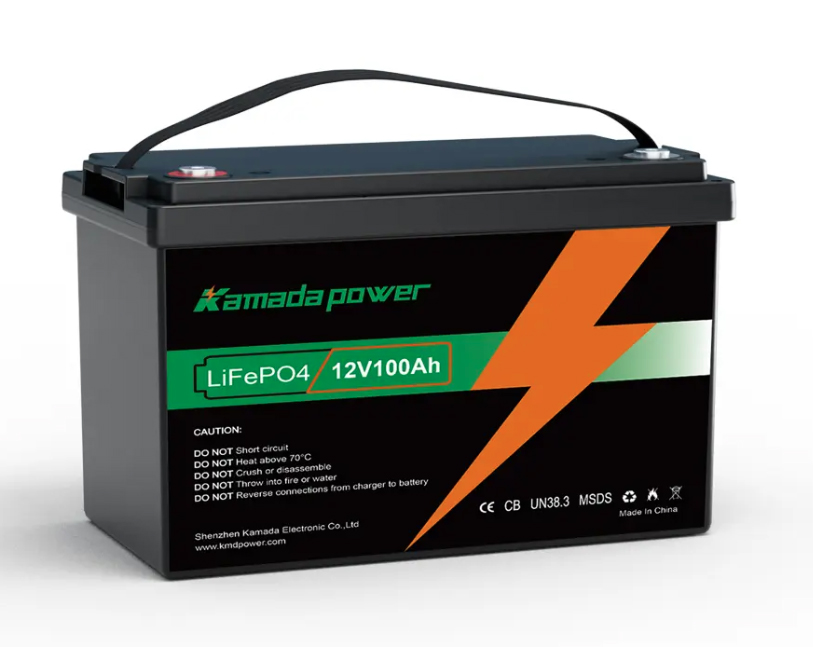
Kamada Power 12V 100Ah Lifepo4 Battery
The Chemistry of Fear: Comparing Thermal Runaway Risks
To understand safety, we have to look at what happens when things go wrong. We call this the “failure mode.” Not all batteries fail the same way.
Lithium NMC/NCA: Why It’s Dangerous
We need to be clear here: When the general media screams about “Lithium battery fires,” they are almost always talking about Nickel Manganese Cobalt (NMC) or Nickel Cobalt Aluminum (NCA) chemistries. These are the energy-dense cells found in EVs and smartphones.
The issue with NMC is its low thermal runaway threshold—often around 150°C to 180°C. Once the cell hits that temperature (due to internal short or external heat), the oxide cathode structure collapses and releases oxygen.
This is the scary part. The battery effectively supplies its own fuel (electrolyte) and its own oxidizer (oxygen). No amount of smothering will put it out. For unattended infrastructure, NMC is generally considered too high-risk unless heavily managed by complex liquid cooling systems.
Lithium LFP (LiFePO4): The Safe Standard
Most industrial equipment—from forklift battery packs to commercial ESS (Energy Storage Systems)—has migrated to LFP.
LFP is chemically robust. The phosphate bond is much stronger than the oxide bond in NMC. It generally won’t go into thermal runaway until it hits ~270°C. If it does fail, it usually vents gas and smokes rather than erupting into a violent jet of flame. It is safe, but it isn’t invincible. If subjected to massive overvoltage or crushing, it can still ruin your day.
Sodium-Ion: The New Safety Champion
Here is where things get interesting. Sodium-ion batteries utilize a chemistry that is chemically similar to Lithium but thermally superior.
Data from recent crush and puncture tests show that Sodium-ion cells have a thermal runaway onset generally exceeding 300°C. Even more importantly, the heat release rate is significantly lower.
If an LFP cell is an angry simmer, and NMC is a boil-over, Sodium-ion is barely lukewarm in comparison. In many destructive tests, Sodium-ion cells don’t catch fire at all—they just heat up and eventually cool down. For a remote cabinet surrounded by dry brush, that difference is everything.
The “Zero Volt” Technology: A Game Changer for Transport & Storage
From our experience working with industrial clients, one of the biggest headaches isn’t running the battery—it’s moving the battery.
The Danger of Storing Lithium (Potential Energy)
You cannot discharge a Lithium-ion battery to 0 volts. If an LFP cell drops below roughly 2.0V or 2.5V, the copper current collector on the anode begins to dissolve into the electrolyte.
When you try to recharge that “dead” battery, the dissolved copper plates back out, but it doesn’t land smoothly. It forms jagged dendrites (microscopic spikes) that can pierce the separator and cause an internal short circuit.
This creates a massive logistical risk. You must ship Lithium batteries with a charge (usually 30%). That means you are shipping a box full of potential chemical energy. If that pallet gets crushed in a truck accident, the energy is there to start a fire.
Sodium-Ion at 0V: Completely Inert Storage
Sodium-ion batteries don’t use copper current collectors at the anode; they use aluminum. Aluminum does not dissolve at low voltages.
This allows for the “Zero Volt” capability.
You can discharge a sodium-ion battery pack down to absolute zero volts. In this state, the battery is chemically inert. You could drive a metal spike through it, and absolutely nothing would happen because there is no voltage potential to drive a current.
- For Procurement: This simplifies shipping regulations and lowers insurance premiums.
- For Operations: If a remote sensor buoy fails and drifts for six months, draining the battery completely flat, you haven’t lost the asset. With LFP, that battery would be a brick. With Sodium-ion, you simply hook it up, recharge it, and it’s back to work.
Tolerance to Abuse: What If the BMS Fails?
We all rely on the Battery Management System (BMS) to keep things safe. But electronics fail. A MOSFET gets stuck closed; a voltage sensor wire corrodes. A “Fail-Safe” battery is one that remains safe even when the computer guarding it dies.
Overcharge Resistance
When a Lithium battery is overcharged, lithium ions pile up faster than they can intercalate into the anode. They start plating as metallic lithium on the surface. This is highly reactive and grows those dangerous dendrites we mentioned earlier.
Sodium ion battery are larger and heavier. While you certainly shouldn’t overcharge them, they are chemically more resistant to plating. In tests where BMS protection was disabled, Sodium-ion packs withstood higher over-voltages for longer periods before showing signs of thermal distress compared to LFP.
The Nail Penetration Test
This is the brutal standard for battery safety. A steel nail is driven through a fully charged cell, instantly creating a massive internal short circuit.
- NMC: Immediate explosion/fire.
- LFP: usually smokes heavily, reaches high temps (>400°C), but often avoids open flame.
- Sodium-Ion: The internal resistance is naturally slightly higher, which limits the short-circuit current. The cell temperature rises (typically <200°C), but in most tests, there is no smoke and no fire.
Environmental Safety: Heat and Cold Extremes
If your equipment is sitting in a climate-controlled server room, skip this section. But if you are deploying assets in Canada, Scandinavia, or widespread industrial yards, read on.
The Winter Fire Risk (Lithium Plating)
The most insidious risk with Lithium batteries is charging in the cold. If you push high current into an LFP battery when it is below freezing (0°C), the lithium ions cannot enter the anode structure. Instead, they plate onto the surface.
The Domino Effect:
- Cold Charging -> Lithium Plating.
- The battery seems fine immediately after charging.
- Weeks later, the plating grows into a dendrite.
- Dendrite punctures separator -> Internal Short -> Fire.
This is a “delayed winter fire.” It happens when no one is looking.
Sodium-Ion’s Cold Charging Safety (-20°C)
Sodium-ion allows for charging at much lower temperatures—typically down to -20°C—without the risk of plating.
For an unattended site, this is massive. It means you don’t need energy-hungry heating pads just to accept a charge from a solar panel on a cold morning. It reduces the complexity of the system and eliminates the primary cause of cold-weather battery failure.
The “Human Factor”: Theft and Vandalism Risks
We often focus on chemical risks, but physical security is a major pain point for telecom and railway operators.
LFP as a Theft Target LFP batteries are lightweight and chemically compatible with 12V systems. Thieves know this. They steal them to power their RVs, fishing boats, or off-grid setups. During the theft, they often rip wires out, leaving live cables dangling that can spark a fire at your site.
Sodium-Ion as a Deterrent Sodium-ion batteries are currently less energy-dense (slightly larger and heavier) and have different voltage curves that make them tricky to use as “drop-in” replacements for standard consumer gear without the right equipment.
Furthermore, as they become known for being cheaper and heavier, their black-market value is lower. It’s a subtle form of safety, but making your site less attractive to vandals protects the infrastructure just as much as a good BMS does.
Comparison: NMC vs LFP vs Sodium-ion Safety Risks
Here is how the chemistries stack up when ranked purely on risk profile.
| Safety Metric | Lithium (NMC) | Lithium (LFP) | Sodium-Ion (Na-ion) |
|---|
| Thermal Runaway Temp | Low (~180°C) | High (~270°C) | Highest (~300°C+) |
| 0V Safe Storage | No (Dangerous) | No (Bricks cell) | Yes (Inert) |
| Cold Charging Risk | High (Plating) | High (Plating) | Low (Safe) |
| Fire Intensity | High | Low | Very Low |
| Unattended Suitability | Poor | Good | Excellent |
Critical Safety Certifications to Look For
Just because Sodium-ion is chemically safer doesn’t mean you should buy a generic “white label” battery from an unknown vendor. Manufacturing quality matters.
Whether you are buying LFP or Sodium, ensure your spec sheet includes these three non-negotiables:
- UL 1973: The standard for stationary energy storage. This certifies that the system (cells + BMS + enclosure) is safe.
- UN 38.3: You literally cannot legally ship the batteries by air or sea without this. It proves they can handle vibration, shock, and altitude changes.
- IEC 62619: The industrial safety standard.
Advice: If a supplier can’t provide these certificates, walk away. It doesn’t matter how safe the chemistry is if the welding inside the pack is garbage.
Are There Any Downsides? (Objective Analysis)
We want to be balanced here. Sodium-ion is not a magic bullet for every application.
Manufacturing Maturity (QC Risks) LFP supply chains have had 20 years to perfect their quality control. Sodium-ion is newer. The ecosystem is maturing rapidly, but there is a higher risk of “early batch” defects if you aren’t sourcing from top-tier manufacturers like CATL, HiNa, or established pack assemblers.
Energy Density Trade-off Safety comes at the cost of weight. Sodium-ion is currently less energy-dense than LFP (roughly 140-160 Wh/kg vs 160-170 Wh/kg for LFP). If you have a strictly weight-constrained application—like a drone or a sleek wearable—Sodium isn’t for you. But for a stationary box on a concrete pad? The extra weight is irrelevant.
Which Battery Lets You Sleep at Night?
When Should You Choose an LFP Battery?
Choose LFP for manned facilities, indoor warehouses, or applications where space is extremely tight. If you need maximum runtime in a small footprint and have climate control, LFP remains a fantastic, proven choice.
What Problems Does a Sodium-Ion Battery Solve?
Choose Sodium-Ion for Critical Unattended Infrastructure. If your equipment is 100 miles from the nearest technician, or if it sits in freezing temperatures, Sodium-ion is the superior choice. The combination of 0V storage recovery, cold charging capability, and intrinsic thermal stability makes it the ultimate “Fail-Safe” battery.
Conclusion
Safety in industrial power isn’t just about preventing a fire; it’s about system resilience. While Lithium Iron Phosphate (LFP) is an inherently safe chemistry, its safety is highly dependent on the flawless operation of its surrounding systems, such as the BMS, heaters, and voltage cut-offs. Sodium-ion, however, is fundamentally different; it is exceptionally forgiving. It tolerates temperature drops, deep discharges, and even withstands system failures that would be catastrophic for other chemistries. Therefore, for the procurement officer looking to minimize liability and the engineer aiming to reduce site visits, Sodium-ion battery is undoubtedly the future of remote power.
If you are concerned about fire risks in your upcoming remote deployment, Contact us. Our Kamada Power sodium ion battery manufacturers battery engineers will tailor a solution specifically for you, ensuring your system is both robust and reliable.
FAQ
Do sodium-ion batteries catch fire?
While technically possible under extreme abuse, it is highly unlikely. Sodium-ion batteries have a much higher thermal runaway threshold than Lithium batteries. In most puncture or short-circuit tests, they simply heat up without producing open flames or explosions.
Can I leave sodium ion batteries uncharged for months?
Yes, and this is one of their biggest advantages. You can discharge a sodium-ion battery to 0V (completely dead) for transport or storage. It won’t degrade the chemistry, and you can safely recharge it later. Doing this to a Lithium battery would permanently damage it.
What if I need to charge my system in freezing temperatures?
Sodium-ion is your best bet. Most Sodium-ion batteries can accept a charge at temperatures as low as -20°C (-4°F) without the risk of lithium plating, which is a major fire hazard for standard Lithium batteries in the cold.
Is Sodium-ion Battery safer than LiFePO4?
Generally, yes. While LiFePO4 (LFP) is very safe compared to other Lithium chemistries, Sodium-ion offers superior performance in extreme temperatures and remains inert when discharged to 0V, reducing risks during transport and installation.