Sodium-Ion Battery vs LFP for Solar: Stability or Energy Density? Picture this: It’s freezing, and your LFP battery bank has stopped charging—its classic Achilles’ heel. For years, LFP has been the undisputed king of industrial storage.But now, a new challenger is entering the procurement conversation: Sodium-ion (Na-ion).
For application engineers, the choice isn’t just about price. It’s a fundamental trade-off: Energy Density (Space) vs. Cold Weather Stability. From our experience, the newest tech isn’t always the right solution. Let’s break down the real-world data and ROI to help you make the right call.
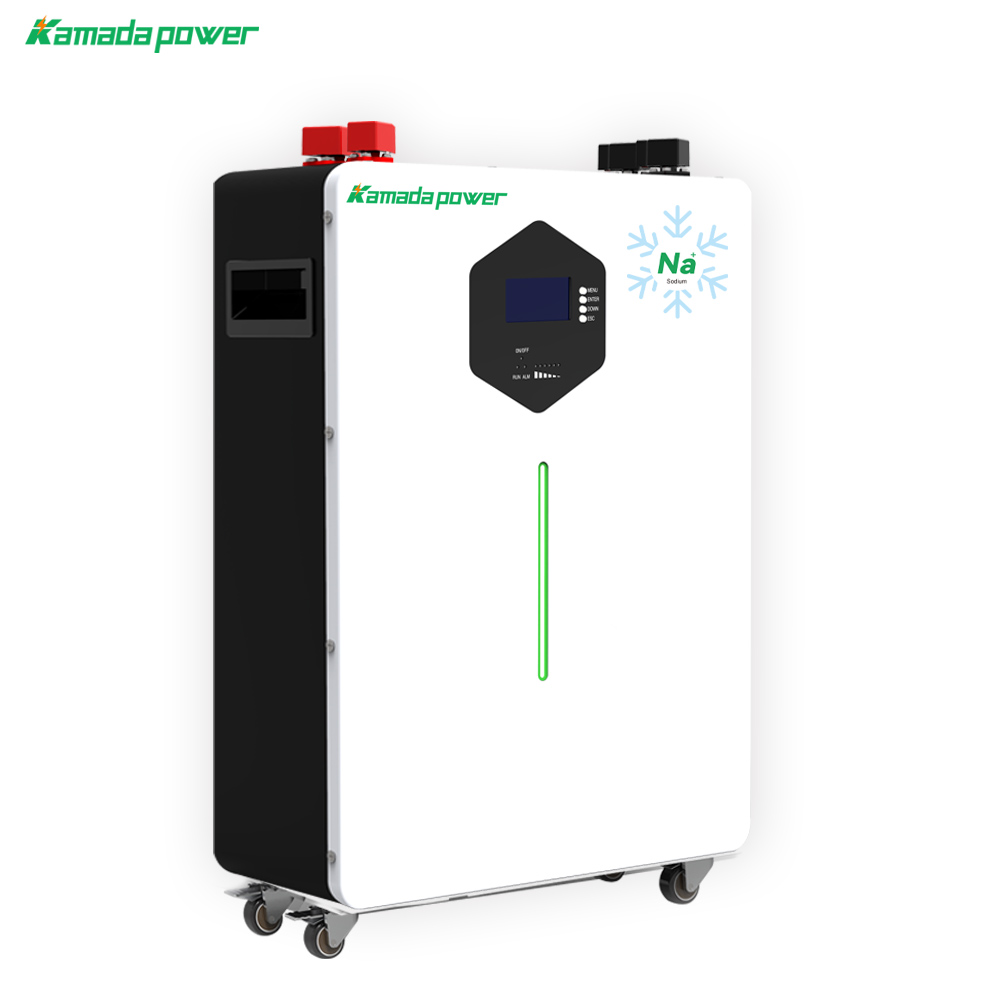
Kamada Power 10kWh Home Sodium ion Battery
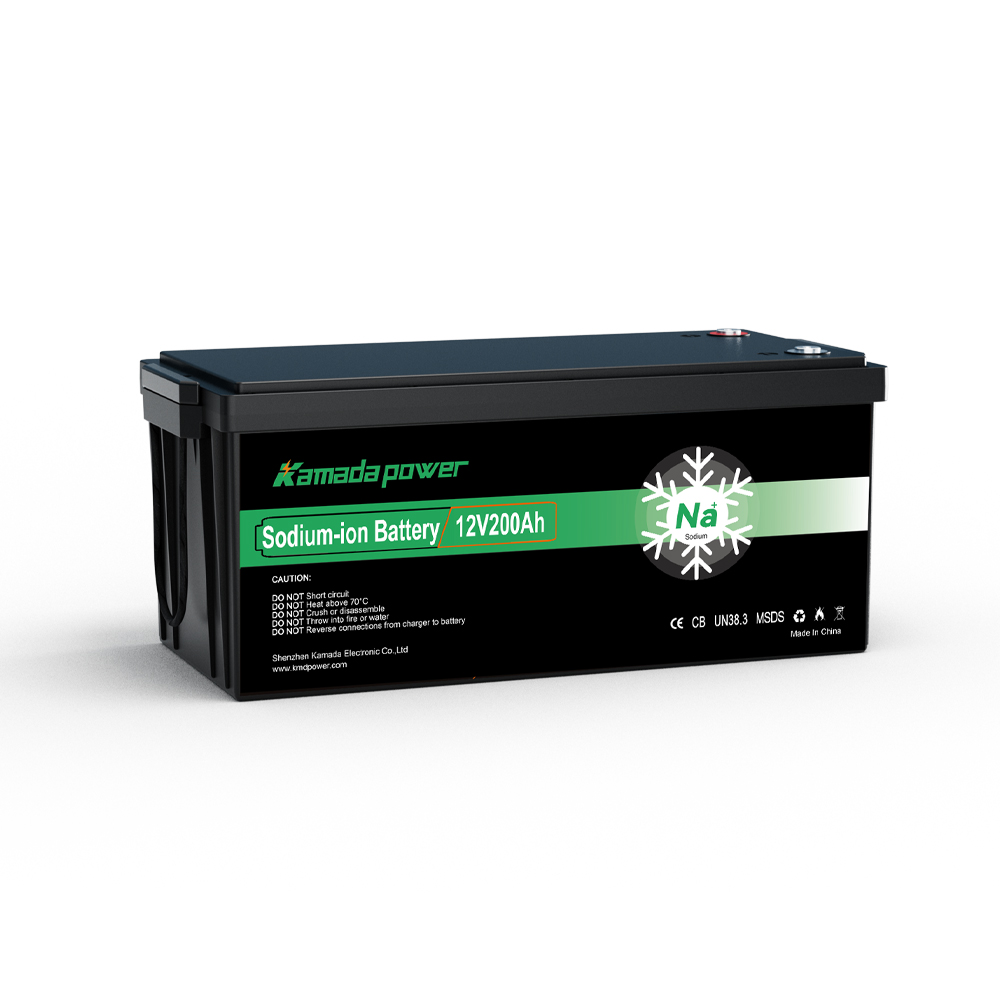
Kamada Power 12V 200Ah Sodium ion Battery
Understanding the Chemistry: Na-ion vs. LiFePO4
Before we look at the specs, we need to understand why these batteries behave differently. It all comes down to the ions moving inside the cell.
What is LiFePO4 (LFP) Technology?
LiFePO4 uses lithium ions to shuttle energy back and forth. It is currently the mature, proven standard for safety and longevity. If you are buying a forklift battery or a marine house bank today, 95% of the time, you are looking at LFP. It relies on lithium carbonate or hydroxide—materials that have volatile supply chains, but the technology itself is refined. We know exactly how an LFP cell behaves after 5,000 cycles. There is no guesswork here.
What is Sodium-Ion (Na-ion) Technology?
Think of Sodium-ion as lithium’s larger, cheaper cousin. Chemically, they work very similarly—they are both “rocking chair” batteries where ions move between cathode and anode.
However, sodium ions are physically larger and heavier than lithium ions. Because they are bigger, they don’t pack as tightly into the electrode materials. The raw material—soda ash—is abundant and harvested right here in the US and Europe, unlike lithium which has a complex geopolitical supply chain. But that size difference brings us to the first major trade-off.
Round 1: Energy Density and Size (Space Efficiency)
If you are outfitting a Class B RV or a sleek sailing yacht, real estate is everything. This is where the physics of the sodium ion works against it.
Gravimetric Density (Wh/kg): Weight Matters
In the battery world, “gravimetric density” is just a fancy way of asking: How heavy is this thing for the power it holds?
- LFP: Typically ranges from 160-170 Wh/kg.
- Sodium-ion: Currently sits around 140-150 Wh/kg (though 1st gen cells were even lower).
In a real-world context, if you are building a 10kWh battery bank, the Sodium-ion version is going to be significantly heavier than its LFP counterpart. If you’re installing a stationary Commercial ESS (Energy Storage System) on a concrete pad behind a factory, weight doesn’t matter. But if you are trying to minimize the payload on a delivery van, those extra kilograms hurt your efficiency.
Volumetric Density (Wh/L): Installation Space
This is usually the dealbreaker for mobile applications. Because sodium ions are bulkier, the battery cells physically take up more room.
Sodium-ion battery packs are roughly 20-30% larger by volume than LFP packs of the same capacity.
The Verdict: LFP wins for mobile applications. If you are retrofitting a battery compartment in a forklift or a boat where every inch is measured, LFP is still the champion. Sodium is better suited for places where the battery sits still and space is cheap.
Round 2: Cycle Life and Longevity (The LFP Advantage)
When you’re calculating the Total Cost of Ownership (TCO) for a project, cycle life is the most critical metric. How many times can we charge and discharge this before we have to pay a crew to replace it?
How Long Do LFP Batteries Last?
LFP is the marathon runner of the battery world. A high-quality Tier 1 LFP cell can easily deliver 4,000 to 8,000+ cycles at 80% Depth of Discharge. For a solar system cycling once a day, that is theoretically 10 to 20 years of service. It is a “install it and forget it” asset.
Current Sodium-Ion Cycle Life Expectations
We have to be honest here—Sodium technology is younger. Current commercial Sodium-ion cells are rated for 2,000 to 4,000 cycles.
While R&D labs are promising 6,000+ cycles in the near future, what you can buy today generally has half the lifespan of premium LFP.
The Verdict: LFP wins on pure durability and ROI. If your application runs in a temperate climate (25°C) and you need the battery to last 15 years, stick with LFP.
Here is where the script flips. If LFP is the marathon runner, Sodium is the polar explorer.
The LFP “Cold Charging” Limitation
We see this issue constantly in industrial applications. You cannot charge a standard Lithium battery below freezing (0°C / 32°F). If you do, you cause lithium plating on the anode. This permanently damages the cell and can eventually lead to a short circuit.
To get around this, engineers have to add resistive heating pads and insulation. This adds cost, complexity, and failure points. Plus, you have to burn precious energy just to warm the battery up before it can accept a charge.
Why Sodium-Ion Battery Wins in Winter
Sodium ions battery move much more freely at low temperatures.
- Charging: You can safely charge Sodium-ion batteries at -20°C (-4°F) without plating risks.
- Discharging: You can pull power at -40°C.
Even more impressive is the capacity retention. At -20°C, an LFP battery (even if you could discharge it) might only give you 50-60% of its rated capacity due to internal resistance. A Sodium-ion battery will still deliver about 90% of its capacity in those freezing temps.
The Verdict: Sodium-ion wins hands down for unheated cabins, outdoor telecom towers, and northern climates. It simplifies the system design by eliminating the need for heaters.
Round 4: Safety, Transport, and Storage
Safety is non-negotiable, especially for B2B buyers shipping hazardous goods across borders.
Thermal Runaway and Fire Risk
Both chemistries are exceptionally safe compared to the old Lithium Cobalt (NMC) batteries used in phones. However, Sodium-ion has a higher thermal runaway onset temperature. It takes a lot more heat to make a Sodium battery vent than an LFP one.
The 0V Discharge Capability (Deep Discharge)
This is a technical nuance that gets logistics managers excited.
LFP batteries must be kept at a certain voltage (usually above 2.5V per cell). If they drop too low, the copper current collector dissolves, destroying the cell. This creates “brick voltage” risks during long shipping times or seasonal storage.
Sodium-ion batteries can be discharged to 0 Volts.
You can drain them completely dead, bridge the terminals, and ship them as inert metal blocks. No voltage means no fire risk during transport. When they arrive at the site, you simply hook them up, charge them, and they bounce right back to 100% health.
Benefit: This drastically reduces warehousing anxiety. You can leave a Sodium battery in a seasonal cabin for 6 months without a trickle charger, and it will be fine.
Round 5: Cost Analysis (Upfront vs. Future)
You’ve likely read headlines saying “Sodium is Cheaper than Lithium!” Is that true for your purchase order today?
Current Market Prices
The raw materials for Sodium-ion (soda ash, iron, manganese) are dirt cheap compared to lithium carbonate. However, manufacturing is all about scale.
Right now, the global supply chain for LFP is massive. Because of this efficiency, retail LFP batteries are incredibly affordable. Sodium production is just ramping up. Consequently, Sodium-ion batteries currently cost about the same, or slightly more, than LFP per kWh on the retail market.
Future Price Predictions
This will change fast. As Gigafactories for sodium spin up, we expect to see prices drop 30-40% below LFP levels. But for the 2025 fiscal year, you are buying Sodium for its performance features (cold weather), not for an immediate price cut.
Comparison: Sodium-Ion Battery vs. LFP Battery
| Feature | LiFePO4 (LFP) | Sodium-Ion (Na-ion) |
|---|
| Energy Density | High (Compact) | Moderate (Bulkier) |
| Cycle Life | 4,000 – 8,000+ | 2,000 – 4,000 |
| Cold Weather | Poor (Needs heat < 0°C) | Excellent (Charge at -20°C) |
| Storage Safety | Must stay > 2.5V | Can go to 0V (Safe Transport) |
| Ideal Use Case | Mobile, Long-term ROI | Cold Climate, Stationary |
Buying Guide: Which Battery Fits Your Setup?
I tell my clients: stop looking for the “best” battery. Look for the “right” one.
When is LiFePO4 (LFP) the Right Choice?
- When space is tight. I mean camper vans, boats, compact industrial gear—anywhere space is at a premium. LFP packs more punch in less room. Simple as that.
- If longevity is everything. You need a system to last 15 years to justify the CapEx. LFP has the cycle life to back that up. It’s a workhorse.
- For controlled, temperate climates. If your batteries live inside a conditioned space or you’re just not dealing with extreme cold, LFP is a solid, proven choice.
What Are the Best Use Cases for a Sodium-Ion Battery?
- When you’re fighting the cold. Think stationary off-grid cabins, remote weather stations, anything in a freezing region. This is where sodium-ion shines.
- For sporadic or seasonal use. I’ve seen equipment sit idle for months, like on a farm. With sodium, you don’t need to worry about maintaining a trickle charge. Just let it sit.
- If you need simpler, safer logistics. That 0V discharge capability is a huge deal for shipping. Need to air-freight? Less hazmat paperwork. It’s a real headache-saver.
Conclusion
The “Sodium vs. Lithium” debate isn’t a zero-sum game. Sodium-ion battery isn’t going to kill LFP; it’s going to complement it.
For the last ten years, we’ve tried to force Lithium batteries to work in extreme cold by wrapping them in heating blankets. Sodium-ion solves that pain point natively at the chemistry level. However, if you are building a system where weight and cycle life are the primary KPIs, LFP remains the reigning champion. The choice ultimately comes down to Climate vs. Space.
Ready to select the right energy storage solution for your project? Contact us. Our kamada power sodium ion battery engineers will tailor a sodium ion battery solution specifically for you.
FAQ
Can I mix Sodium-ion and LFP batteries in one bank?
No, you really shouldn’t. While their voltages are somewhat similar, their discharge curves are different. Mixing chemistries (or even different capacities) creates a “Frankenstein” bank where one battery ends up working harder than the other, leading to premature failure or BMS errors. Stick to one chemistry per system.
What if I switch to Sodium—do I need a special charger?
Not usually, but you need to check settings. Sodium-ion batteries operate in a voltage range very similar to LFP (nominal 3.0V-3.2V range), so most modern programmable MPPT controllers and inverters can charge them. However, you must adjust the charging parameters (bulk and float voltages) to match the manufacturer’s specific recommendations for Sodium.
Is Sodium-ion cheaper than Lithium right now?
At the raw material level? Yes. At the “add to cart” level? Not yet. Because manufacturing volume is lower, Sodium batteries currently cost about the same as quality LFP batteries. The price advantage will kick in over the next few years as production scales up.
Are Sodium-ion batteries safer than Lithium?
Both are very safe compared to older technologies, but Sodium has a slight edge. It has excellent thermal stability and the unique ability to be discharged to 0V for storage and transport, which eliminates the risk of electrical fire during shipping.