A 12V 200Ah Natrium-Ionen-Akku kann die südafrikanische Lastabwurfsicherung für Haushalte, Geschäfte, Kliniken und Siedlungsprojekte unterstützen, allerdings nur, wenn sie der tatsächlichen Last, dem Aufladefenster, den Wechselrichtereinstellungen und den BMS-Grenzwerten entspricht.
Mit einer Nennenergie von etwa 2,4 kWh kann es bei 90% DoD vor Wechselrichterverlusten etwa 2,16 kWh nutzbare batterieseitige Energie liefern. Damit kann eine 420-W-Last bequem 2 Stunden lang abgedeckt werden, und wenn die Lasten kontrolliert werden und das System richtig abgestimmt ist, kann es 4 Stunden lang funktionieren.
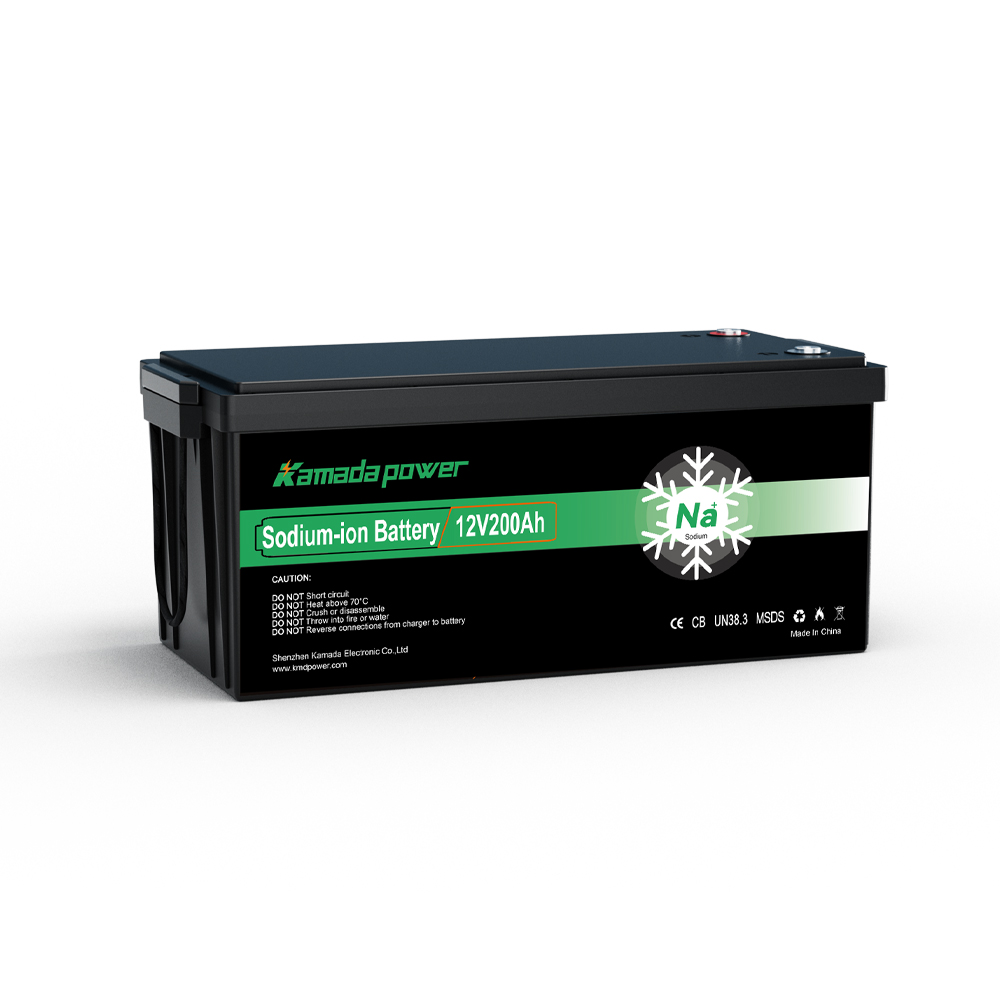
12v 200Ah Natrium-Ionen-Akku
Kann eine 12V 200Ah Natrium-Ionen-Batterie einen 2-stündigen Stromausfall überstehen?
Ja, in vielen Fällen kann eine 12V 200Ah Natrium-Ionen-Batterie einen 2-stündigen Stromausfall überbrücken. Ein typisches Grundlastprofil könnte Wi-Fi, Licht, einen Fernseher, Laptops und einen modernen Kühlschrank umfassen. Wenn die AC-Last etwa 420Wverbraucht eine 2-stündige Unterbrechung:
420W × 2h = 840Wh AC-Energie
Nach Verlusten des Wechselrichters muss die Batterie möglicherweise Strom liefern:
840Wh ÷ 0,90 Wirkungsgrad des Wechselrichters ≈ 933Wh Batterieenergie
Bei 12 V ist dies ungefähr:
933Wh ÷ 12V ≈ 78Ah
Ein 12-Volt-Akku mit 200 Ah und einer nutzbaren Kapazität von etwa 180 Ah kann diese 2-stündige Zeitspanne mit Sicherheit überbrücken. Die eigentliche Herausforderung ist nicht nur die Laufzeit, sondern auch die Frage, ob die Batterie während des Zeitraums, in dem das Netz eingeschaltet ist, vor dem nächsten Stromausfall genügend Energie zurückgewinnen kann.
Verwenden Sie diese vereinfachte Formel:
Benötigte Batterieenergie, Wh = Lastleistung, W × Backup-Stunden ÷ Wechselrichterwirkungsgrad
Dann in Nenn-Ampere-Stunden umrechnen:
Benötigte Batterie-Ah = Benötigte Batterie-Energie, Wh ÷ Batterie-Spannung ÷ Nutzbare DoD
Für eine 420-W-Last, 2-stündigen Ausfall, 90%-Wechselrichterwirkungsgrad und 90% nutzbare DoD:
420W × 2h ÷ 0,90 = 933Wh
933Wh ÷ 12V ÷ 0,90 = 86,4Ah Nennkapazität der Batterie
Eine 12V 200Ah-Batterie wird also in einem 2-Stunden-Slot nicht so stark beansprucht. Diese geringere Belastung kann zu einer längeren Lebensdauer beitragen, sofern Ladespannung, Strom, Temperatur und BMS-Grenzwerte korrekt sind.
Beispiel einer wesentlichen Belastung für einen südafrikanischen Haushalt
Dimensionieren Sie Ihre Batterie nicht nach Wunschdenken. Listen Sie die Verbraucher auf, die während des Lastabwurfs eingeschaltet bleiben müssen.
| Wesentliche Belastung | Typische Leistung | 2-Stunden-Energieverbrauch | Hinweis zur Größenbestimmung |
|---|
| Wi-Fi-Router + Glasfaser-ONT | 15W | 30Wh | Geringe Leistung, aber kritisch |
| LED-Leuchten | 30-50W | 60-100Wh | Leicht zu unterstützen |
| TV + Streaming-Gerät | 80-120W | 160-240Wh | Optional im strengen Sicherungsmodus |
| Zwei Laptops | 80-130W | 160-260Wh | Abhängig von der Verwendung des Ladegeräts |
| Moderner Kühlschrank/Gefrierschrank | 100-250W durchschnittlich | 200-500Wh | Kompressorstoß muss überprüft werden |
| CCTV / Alarm / Torbereitschaft | 20-80W | 40-160Wh | Wichtig für die Sicherheit |
Eine realistische Grundbelastung liegt oft zwischen 300W und 600W. Wasserkocher, Heizgeräte, Geysire, Öfen und große Pumpen sollten nicht in ein kleines 12-Volt-Backup-System integriert werden.
Schätzung der Laufzeit unter verschiedenen Belastungen
Nehmen wir einen 12V 200Ah Natrium-Ionen-Akku, 90% nutzbare DoD und 90% Wechselrichterwirkungsgrad an. Die praktische nutzbare Energie auf der AC-Seite ist ungefähr:
12V × 200Ah × 0,90 DoD × 0,90 Wirkungsgrad des Wechselrichters ≈ 1.944Wh AC nutzbare Energie
| AC-Last | Geschätzte Laufzeit | Praktische Bedeutung |
|---|
| 300W | Etwa 6,5 Stunden | Wi-Fi, Licht, Laptop, leichter Kühlschrank Radfahren |
| 420W | Etwa 4,6 Stunden | Typische häusliche Grundlast |
| 500W | Etwa 3,9 Stunden | Gut für 2-Stunden-Slots, mäßig für 4-Stunden-Slots |
| 800W | Etwa 2,4 Stunden | Kann 2 Stunden aushalten, aber der Stress beim Aufladen steigt |
Die tatsächliche Laufzeit hängt vom Wirkungsgrad des Wechselrichters, der Unterspannungsabschaltung, der Temperatur der Batterie, der Kühlung, den Kabelverlusten und dem Spannungsfenster ab.
Warum Lastabwürfe viele Blei-Säure-Batterien beschädigen
Der Lastabwurf ist für die Batterien sehr anstrengend, da er zu wiederholten Entlade- und Aufladezyklen führt. Die Batterie kann sich 2 Stunden lang entladen, nur wenige Stunden lang aufladen und dann wieder entladen. Vor dem nächsten Stromausfall ist sie möglicherweise nicht wieder voll geladen.
Hier haben AGM- und GEL-Blei-Säure-Batterien oft Probleme. Häufiger Betrieb im Teilladezustand kann die Sulfatierung beschleunigen, den Innenwiderstand erhöhen und die nutzbare Kapazität verringern. Eine Batterie, die auf dem Papier korrekt dimensioniert zu sein scheint, kann schnell an Leistung verlieren, wenn sie wiederholt zyklisch geladen wird, ohne die volle Ladung zu erreichen.
Natrium-Ionen-Akkus leiden nicht unter der Sulfatierung von Blei-Säure-Akkus, was bei wiederholtem Betrieb mit Teilladungen hilfreich ist. Dies bedeutet jedoch nicht, dass es keine Alterung gibt. Die Zyklenlebensdauer hängt immer noch von DoD, C-Rate, Temperatur, Ladespannung, Abschaltung, Zelldesign und BMS-Schutz ab.
Der 2-Stunden-Entladungs- und 4-Stunden-Aufladungstest
Bei südafrikanischen Backup-Systemen ist die Laufzeit nur die halbe Miete. Die Aufladegeschwindigkeit ist ebenso wichtig.
Nehmen wir das Beispiel 420W:
2-Stunden-Ausfall-Energie = 840Wh AC
Batterieseitige Energie nach Wechselrichterverlusten:
840Wh ÷ 0,90 ≈ 933Wh
Bei 12V:
933Wh ÷ 12V ≈ 78Ah
Rückgewinnung von 78Ah in einem 4-Stunden-Fenster am Netz:
78Ah ÷ 4h = 19,5A
Nach Abzug von Ladeverlusten und BMS-Grenzwerten ergibt sich ein 20A-30A Ladegerät ist in der Regel realistischer als ein schwaches Erhaltungsladegerät. Höhere Lasten oder kürzere Ladezeitfenster benötigen mehr Strom.
| Szenario | Batterie Energie zum Ersetzen | Minimaler durchschnittlicher Ladestrom | Praktisches Ladegerät Ziel |
|---|
| 420W für 2h | ~78Ah | ~20A über 4h | 20A-30A |
| 500W für 2h | ~93Ah | ~23A über 4h | 30A |
| 500W für 4h | ~185Ah | ~46A über 4h | 50A+ |
| 800W für 2h | ~148Ah | ~37A über 4h | 40A-50A |
Eine 12V 200Ah Natrium-Ionen-Batterie kann immer noch ausfallen, wenn das Ladegerät zu klein ist. Es muss die Last laufen lassen und sich vor dem nächsten Stromausfall erholen.
Wo die Natrium-Ionen-Batterie bei der Lastabwurfsicherung hilft
Eine Natrium-Ionen-Batterie kann in Lastabwurfsystemen aus vier Gründen nützlich sein.
Erstens kann sie eine hohe nutzbare Kapazität unterstützen, wenn sie mit einem geeigneten BMS und einer entsprechenden DoD ausgelegt ist. Zweitens wird die Sulfatierung von Blei-Säure-Batterien vermieden, was bei wiederholten Teilladungen von Vorteil ist. Drittens können Natrium-Ionen-Akkus für eine hohe Ladeakzeptanz ausgelegt werden, so dass sich die Batterie in kürzeren Zeitfenstern am Netz erholen kann. Viertens können Natrium-Ionen-Batterien attraktive Sicherheits- und Temperatureigenschaften aufweisen, die von der Zellchemie, dem Design der Batterie und den Zertifizierungen abhängen.
Aber keine Batterie sollte als "unbrennbar" vermarktet werden. Die Sicherheit hängt vom BMS-Schutz, dem Gehäuse, der Verkabelung, der Absicherung und der Qualität der Installation ab.
Natrium-Ionen vs. LiFePO4 vs. Blei-Säure für Lastabwurf
| Entscheidungsfaktor | Blei-Säure AGM/GEL | LiFePO4 | Natrium-Ionen |
|---|
| Betrieb mit Teilladung | Schwach bis mäßig; Sulfatierungsrisiko | Stark | Stark; kein Bleisulfat-Mechanismus |
| Nutzbare Energie | Niedriger bei tiefem Radfahren | Hoch | Hoch, wenn die Packung dafür ausgelegt ist |
| Fenster aufladen | Langsamer bei voller Ladung | Schnell, wenn Ladegerät/BMS es erlauben | Schnell, wenn Ladegerät/BMS es erlauben |
| Lebensdauer des Zyklus | Niedriger bei häufigem Radfahren | Hoch | Potenziell hoch; Testbedingungen überprüfen |
| Hitzetoleranz | Bei Hitze verkürzt sich das Leben | Erfordert Leistungsreduzierung | Prüfen Sie das Design der Verpackung und des Gehäuses |
| Sicherheit | Entlüftungs-/Wasserstoffrisiko bei Missbrauch | Gut mit geeignetem BMS | Starkes Potenzial mit geeignetem BMS |
| Beste Passform | Kostengünstiges gelegentliches Backup | Ausgereiftes Hochleistungs-Backup | Häufige Teilladungspufferung bei bestätigter Spannungskompatibilität |
Die Schlussfolgerung ist nicht, dass Natrium-Ionen automatisch LiFePO4 überlegen sind. LiFePO4 ist ausgereift und wird weitgehend unterstützt. Natrium-Ionen wird dort attraktiv, wo häufige Zyklen, Teilladungsbetrieb und schnelle Erholung Priorität haben.
Wechselrichter-Kompatibilität: Lithium-Einstellungen nicht blindlings kopieren
Eine 12-V-Natrium-Ionen-Batterie ist nicht automatisch mit jeder 12-V-Wechselrichtereinstellung kompatibel. Bei einigen Wechselrichtern können die Ladespannung, die Unterspannungsabschaltung und der Ladestrom benutzerdefiniert eingestellt werden. Andere sind auf Blei-Säure- oder Lithium-Profile festgelegt.
Überprüfen Sie diese Punkte vor der Installation:
| Einstellung | Was zu bestätigen ist | Warum es wichtig ist |
|---|
| Ladespannung der Batterie | Vom Hersteller empfohlene Masse/Absorptionsspannung | Natrium-Ionen-Spannungsfenster variieren je nach Packungsdesign |
| Erhaltungsspannung oder Standby-Spannung | Erforderlicher oder begrenzter Spielraum | Falsche Standby-Spannung kann die Lebensdauer verkürzen |
| Unterspannungsabschaltung | Batterieseitige Abschaltung und Wechselrichterabschaltung | Ein zu hoher Wert verringert die nutzbare Kapazität; ein zu niedriger Wert birgt die Gefahr einer Abschaltung des BMS |
| Maximaler Ladestrom | Leistung des Ladegeräts im Vergleich zur BMS-Ladegrenze | Bestimmt die Wiederherstellung zwischen Ausfällen |
| Maximaler Entladestrom | Wechselrichterlast und Überspannung im Vergleich zur BMS-Leistung | Verhindert das Abschalten bei Kompressorstößen |
| Kabel- und Sicherungswert | Strom, Kabellänge, DC-Schutz | Reduziert Spannungsabfall und Brandgefahr |
Gehen Sie nicht davon aus, dass eine 14,4-V-Lithium-Einstellung für jede Natrium-Ionen-Batterie richtig ist. Verwenden Sie immer das Datenblatt des Herstellers der Natrium-Ionen-Batterie. Wenn der Wechselrichter das erforderliche Spannungsfenster nicht unterstützen kann, können die nutzbare Kapazität, die Ladegeschwindigkeit oder das BMS-Verhalten beeinträchtigt werden.
Für wen ist eine 12V 200Ah Natrium-Ionen-Batterie geeignet?
Eine einzige 12V 200Ah Natrium-Ionen-Akku ist ein guter Kandidat für wichtige Ersatzlasten, nicht für die Elektrifizierung des gesamten Hauses.
| Benutzertyp | Geeignete Ladungen | Vorsicht |
|---|
| Hauseigentümer | Wi-Fi, Licht, TV, Laptops, Kühlschrank Radfahren | Vermeiden Sie Heizgeräte, Wasserkocher, Geysire, Öfen |
| Kleiner Laden | Router, POS, Beleuchtung, Laptop, Sicherheit | Überprüfen Sie die Stoßbelastung des Kühlschranks oder des Motors |
| Klinik oder Apotheke | Router, Beleuchtung, kleiner medizinischer Kühlschrank, Laptop | Gemessene Kühllast und Alarmsicherung verwenden |
| Beschaffung von Immobilien | Standardisierte Kits für wesentliche Ladungen | Wechselrichterkompatibilität und Installations-SOP erforderlich |
| Installateur | Nachrüstung einer defekten Blei-Säure-Batterie | Bestätigen Sie das Profil des Ladegeräts und die Kabeldimensionierung |
Wenn Ihre Last unter 500W liegt, kann ein 12V 200Ah Pack praktisch sein. Bei einer Leistung von 800W-1.000W sollten Sie eine größere Bank, ein 24V/48V-System oder einen Plan zur Lastreduzierung in Betracht ziehen.
Häufige Fehler bei der Größenbestimmung
| Irrtum | Ergebnis | Besserer Ansatz |
|---|
| Größenbestimmung nur nach Ah | Laufzeit wird überschätzt | Ladungen zuerst in Wh umwandeln |
| Wechselrichterverluste ignorieren | Die Laufzeit ist kürzer als erwartet | Verwenden Sie die Wirkungsgradannahme 85-92% |
| Betrieb schwerer Geräte | Batterie entlädt sich zu schnell | Trennen Sie wesentliche und unwesentliche Lasten |
| Verwendung eines schwachen Ladegeräts | Die Batterie erholt sich nicht zwischen den Stromausfällen | Anpassung des Ladestroms an das Aufladefenster |
| Kopieren von LiFePO4-Einstellungen | Schlechtes Laden oder BMS-Abschaltung | Datenblatt für Natrium-Ionen-Packs verwenden |
| Kompressorstoß ignorieren | Kühlschrank oder Pumpe löst Wechselrichter aus | Wechselrichter-Spitzenstrom und BMS-Spitzenstrom prüfen |
| Verwendung dünner DC-Kabel | Spannungsabfall und Wärme | Kabel und Sicherung für den Spitzenstrom dimensionieren |
Praktischer Sizing-Workflow
Führen Sie vor dem Kauf die wichtigsten Verbraucher auf, addieren Sie die laufenden Watt, multiplizieren Sie mit den Backup-Stunden, dividieren Sie durch den Wirkungsgrad des Wechselrichters, dividieren Sie durch die Batteriespannung und dividieren Sie dann durch die nutzbare DoD. Überprüfen Sie danach die Wechselrichterleistung, den BMS-Strom, den Ladestrom, die Ladespannung, die Unterspannungsabschaltung, die Kabelgröße, den Sicherungswert und die Gehäusebedingungen.
Für eine genaue Dimensionierung sollten Sie Ihrem Lieferanten das Wechselrichtermodell, die Lastliste, die Backup-Dauer, das Aufladefenster, die Kabellänge und die Installationsumgebung mitteilen.
Schlussfolgerung
A 12V 200Ah Natrium-Ionen-Akku kann eine starke Lastabwurf-Backup-Lösung für südafrikanische Privathaushalte, Kliniken, kleine Geschäfte und Immobilienprojekte sein, wenn sie nach den tatsächlichen Lasten, dem Wirkungsgrad des Wechselrichters, den Ladezeitfenstern und den BMS-Grenzwerten bemessen wird. Bei einer Grundlast von 420 W kann sie in der Regel einen 2-stündigen Ausfall mit einer guten Marge bewältigen, während bei 4-stündigen oder höheren Lasten eine genauere Prüfung der nutzbaren DoD, der Wechselrichterabschaltung, des Ladestroms, des Kompressorstoßes, der Kabeldimensionierung und der Spannungseinstellungen erforderlich ist. Der eigentliche Wert der Natrium-Ionen-Batterie liegt in ihrer Beständigkeit gegen Blei-Säure-Sulfatierung, in der Fähigkeit, häufig zu wechseln, und in der starken Erholung bei Teilladungs-Backup-Nutzung, wenn sie richtig spezifiziert ist. Kontakt zu Kamada Power um das richtige 12V 200Ah Natrium-Ionen-Backup-System für Ihre Lastabwurf-Anwendung in Südafrika zu entwickeln.
FAQ
Kann eine 12-V-Natrium-Ionen-Batterie mit 200 Ah ein Haus während eines Lastabwurfs betreiben?
Es kann wichtige Verbraucher betreiben, aber nicht das ganze Haus. Für Wi-Fi, Licht, Laptops, Fernseher und einen modernen Kühlschrank mit zyklischer Belastung kann es oft einen 2-stündigen Ausfall mit Spielraum abdecken. Schwere Heizlasten, Wasserkocher, Geysire, Öfen und große Pumpen sollten von einem kleinen 12-V-Backup-System ausgeschlossen werden.
Wie lange hält eine 12V 200Ah-Batterie mit einer 420W-Last?
Bei 90% nutzbarem DoD und etwa 90% Wechselrichter-Wirkungsgrad liegt die geschätzte nutzbare Energie auf der AC-Seite bei etwa 1,94kWh. Bei 420 W beträgt die Laufzeit etwa 4,6 Stunden. In realen Installationen ist ein gewisser Spielraum für Überspannungen im Kühlschrank, Abschaltung des Wechselrichters, Batterietemperatur und Kabelverluste einzuplanen.
Kann es sich während eines 4-stündigen Zeitfensters am Netz erholen?
Bei einer 420-W-Last über 2 Stunden muss die Batterie möglicherweise rund 78 Ah ersetzen. Bei einer Ladezeit von 4 Stunden ist ein durchschnittlicher Ladestrom von etwa 20 A erforderlich, bevor Verluste auftreten. Ein 20A-30A-Ladegerät kann für diesen Fall ausreichen, während höhere Lasten oder kürzere Ladefenster mehr Ladestrom benötigen.
Ist Natrium-Ionen sicherer als Lithium?
Natriumionen haben ein hohes Sicherheitspotenzial, aber die Sicherheit hängt von der Zellchemie, dem BMS-Design, dem Gehäuse, der Verkabelung, der Absicherung und der Zertifizierung ab. Man sollte nicht sagen, dass es unmöglich ist, zu verbrennen. Ein gut durchdachtes Batteriesystem ist sicherer als ein schlecht installiertes, unabhängig von der Chemie.
Kann ich mein altes Blei-Säure-Ladegerät verwenden?
Nicht automatisch. Verwenden Sie ein Ladegerät oder einen Wechselrichter, das bzw. der mit den Spannungs- und Stromeinstellungen des Herstellers der Natrium-Ionen-Batterie übereinstimmt. Alte "dumme" Ladegeräte sind nicht zu empfehlen, da sie die Ladespannung oder die Beendigung des Ladevorgangs möglicherweise nicht genau steuern.
Kann ich später eine zweite 12V 200Ah Batterie hinzufügen?
Oft ja, wenn der Hersteller die Parallelschaltung unterstützt. Verwenden Sie dasselbe Modell, ähnliches Alter, gleiche Kabellängen, korrekte Absicherung und vom Hersteller genehmigte Anschlussgrenzen. Bei größeren Systemen kann eine 24-V- oder 48-V-Konstruktion effizienter sein als die Parallelschaltung mehrerer 12-V-Batterien.