Batterie sodium-ion vs Batteries LTO à -40°C : Quelle est la meilleure batterie ? À -40°C, les batteries standard telles que NCM ou LFP se transforment en briques, laissant les équipements industriels distants dans l'obscurité. Alors que le titanate de lithium (LTO) reste le champion du "vortex polaire", la batterie sodium-ion apparaît comme un challenger rentable avec des statistiques surprenantes par temps froid. D'après notre expérience, le bon choix ne se trouve pas sur une fiche technique - il s'agit de ce qui survit réellement à l'hiver lorsque le soleil se couche et que les chauffages tombent en panne.
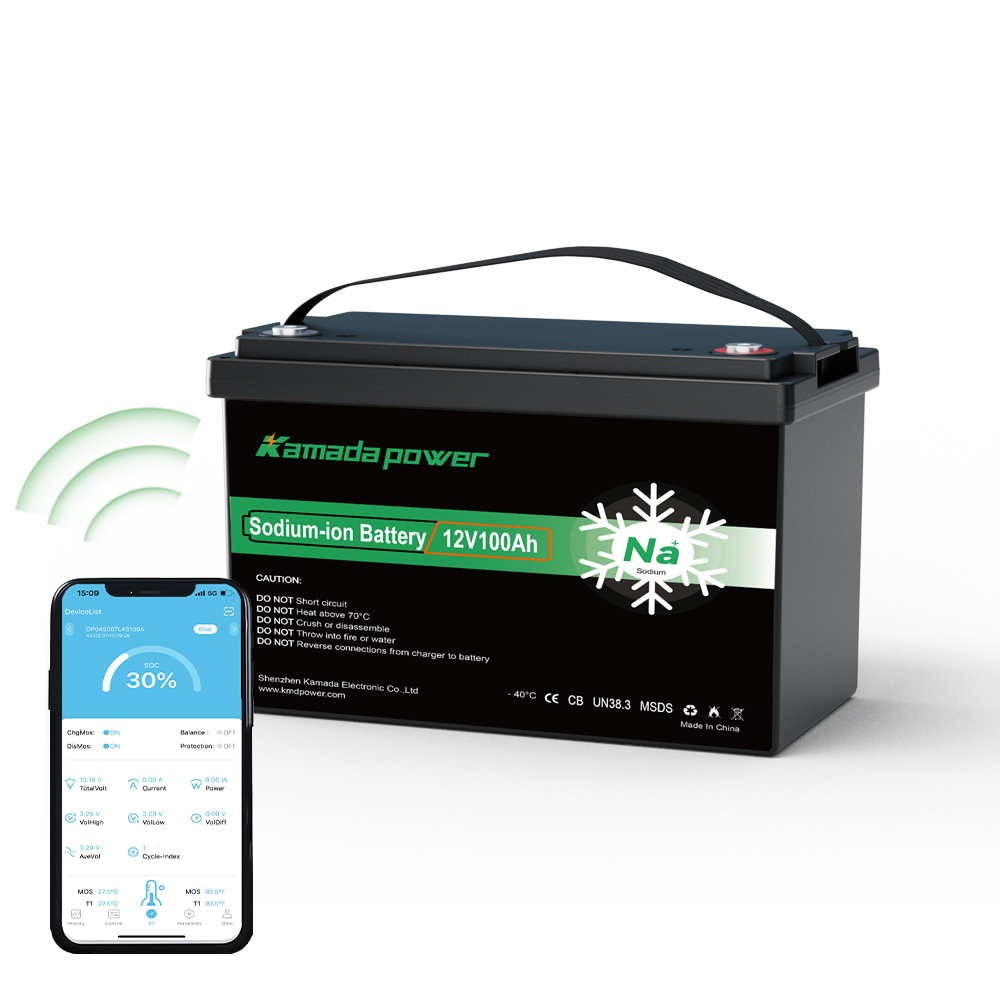
Kamada Power 12V 100Ah Sodium ion Battery
Pourquoi les piles tombent-elles en panne à des températures très basses ?
Pour comprendre pourquoi la batterie LTO et la batterie sodium-ion font l'objet de cette discussion, nous devons examiner les raisons pour lesquelles les batteries standard tombent en panne.
Pourquoi la charge à -40°C est-elle plus difficile que la décharge ?
L'électrolyte d'une batterie est comparable à de l'huile de moteur. À température ambiante, elle s'écoule librement. À -40 °C, il devient visqueux, comme du miel froid. Cela crée des résistance interfaciale. Bien qu'une batterie puisse encore "extraire" de l'énergie (décharge), poussant Le retour de l'énergie (chargement) est une autre histoire.
Lorsque vous essayez de charger une batterie standard à anode de graphite par grand froid, les ions se déplacent trop lentement pour s'intercaler. Au lieu de cela, ils s'accumulent à la surface, formant des placage au lithium. Il ne s'agit pas seulement d'une baisse de performance, mais d'une blessure permanente de la cellule qui peut entraîner des courts-circuits internes.
Comment la température affecte-t-elle la sécurité et la durée de vie des piles ?
Le placage conduit à dendrites-Ces structures minuscules, semblables à des aiguilles, peuvent percer le séparateur. Même si la batterie ne prend pas feu, les Couche d'interphase de l'électrolyte solide (SEI) devient instable. En bref : si vous chargez de force une batterie standard à -40°C, vous risquez de tuer son cycle de vie en une seule saison.
Ce n'est pas pour rien que la batterie LTO est souvent appelée la batterie "imbattable". Dans le monde de l'ingénierie des températures inférieures à zéro, elle reste la référence en matière de fiabilité extrême.
L'avantage du 1,55V : Pourquoi le LTO n'est pas "plaqué" ?
LTO utilise Titanate de lithium (Li₄Ti₅O₁₂) comme anode. Il présente une structure spinelle "zéro contrainte", ce qui signifie que le réseau ne se dilate pas et ne se contracte pas pendant l'utilisation. Plus important encore, le le potentiel de fonctionnement du LTO est d'environ 1,55V-ce qui est nettement plus élevé que le potentiel auquel le lithium métallique commence à se plaquer.
Comme le LTO reste bien au-dessus de ce seuil de 0V (où opère le graphite), il est résistance thermodynamique au placage de lithium. Cela permet au LTO d'accepter une charge à -40°C en toute sécurité, alors que d'autres chimies seraient détruites par des dendrites internes.
Les batteries LTO peuvent-elles se charger de manière fiable à des températures inférieures à -30°C ?
Lors d'essais réels sur le terrain, les cellules LTO peuvent être chargées à -40°C, à condition que le taux C soit maîtrisé. Si la résistance interne augmente, il n'y a pas de risque de "mort subite". Pour un site minier éloigné utilisant le freinage par récupération dans une tempête de neige, le LTO est souvent la seule chimie capable de supporter une "bouffée" d'énergie à fort courant.
Comment les batteries sodium-ion supportent-elles une température de -40°C ?
L'ion-sodium est le "petit nouveau", et sa popularité est étayée par une physique du froid très sérieuse.
Pourquoi l'ion sodium change la donne : L'indice de référence CATL
Les piles aux ions sodium sont plus grandes que les piles au lithium, ce qui semble être un inconvénient. Cependant, les anodes en carbone dur utilisés dans les cellules Na-ion ne présentent pas les mêmes tendances au placage que le graphite.
Des données commerciales récentes, notamment celles provenant de Cellules ion-sodium de première génération du CATL-fait preuve d'une incroyable 90% conserve sa capacité à -20°C et maintient une efficacité de décharge élevée même à -40°C. Cela signifie que dans les applications à forte décharge, la batterie sodium-ion fournit presque la même autonomie dans un congélateur qu'en été.
Les batteries sodium-ion peuvent-elles se charger en toute sécurité à -40°C ?
Tandis que la batterie à ions sodium rejets magnifiquement, charge en dessous de -30°C provoque toujours une forte augmentation de la résistance interfaciale. Les cellules commerciales haut de gamme permettent désormais de charger jusqu'à -30°C, mais à -40°C, il faut encore s'attendre à un "ruissellement" très lent ou à la nécessité d'un système d'alimentation en énergie. Système de gestion thermique (TMS) pour garantir une santé à long terme.
Tableau de comparaison : Réalité technique à -40°C
| Paramètres | LTO (titanate de lithium) | Sodium-ion (classe commerciale) |
|---|
| Décharge à -40°C | Excellente ; puissance élevée disponible | Remarquable ; ~90% de rétention de capacité |
| Chargement à -40°C | Faisable (1.55V Logique de non-placage) | Difficile (Nécessite un chauffage/un filet d'eau) |
| Cycle de vie | 20 000+ cycles | 3 000 - 6 000 cycles |
| Densité énergétique | Faible (~80 Wh/kg) | Modéré (~140-160 Wh/kg) |
| Maturité du champ | Prouvé (10 ans et plus) | Émergents (CATL et production de niveau 1) |
Quelle batterie convient le mieux à votre application spécifique ?
Pour 90% des applications industrielles en dessous de zéro, la batterie sodium-ion représente le "sweet spot" - offrant presque le double de la densité d'énergie du LTO à une fraction du prix.
Quand choisir une batterie sodium-ion ?
- Le courant dominant pratique : Si votre projet nécessite une capacité élevée et un bon rapport coût-efficacité. Elle comble le fossé entre la LFP, sujette aux défaillances, et la LTO, très onéreuse.
- Utilisation dominante de la décharge : Si votre principale préoccupation est d'avoir de l'électricité disponible pour vous décharger dans le froid (p. ex., secours d'urgence).
- Échelle sensible aux coûts : Stockage à grande échelle sur le réseau où le budget pour la gestion thermique active (réchauffeurs) est déjà intégré au système.
Quand choisir la batterie LTO ?
- La "norme arctique" : Capteurs à distance dans des endroits tels que l'Arctique profond, où un technicien ne peut pas se rendre pendant des mois.
- Disponibilité des services essentiels à la mission : Si la batterie doit se charger à -40°C sans aucun système de chauffage susceptible d'être défaillant.
- TCO à long terme : Lorsque vous souhaitez que la batterie dure plus de 20 ans et survive à l'équipement qu'elle alimente.
Quelle est l'influence du coût sur le choix ?
Une batterie sodium-ion est nettement moins chère au niveau des cellules. Même si l'on tient compte du coût de l'isolation sous vide et des éléments chauffants actifs, la batterie au sodium-ion est nettement moins chère au niveau de la cellule. Le coût total du système d'une solution à base d'ions sodium est souvent inférieur de 30 à 50% à celui d'une solution équivalente à base de LTO.. Pour la plupart des clients, cela fait de la batterie sodium-ion le choix logique pour un déploiement de masse.
Conclusion
En fin de compte, le choix entre LTO et batterie sodium-ion pour les déploiements à -40°C est une décision stratégique qui met en balance une gestion rigoureuse des risques et l'optimisation du budget. La batterie sodium-ion s'est imposée comme le "roi de la valeur", offrant la densité énergétique et la capacité de rétention 90% essentielles pour les projets à grande échelle et sensibles aux coûts. À l'inverse, le LTO reste la "police d'assurance" définitive pour les actifs critiques où la sécurité sans placage de 1,55 V et la fiabilité absolue ne sont pas négociables face à des conditions polaires extrêmes. Vous ne savez pas quelle chimie correspond à votre stratégie de gestion thermique ? Contactez nous pour batterie sodium-ion personnalisée solutions.
FAQ
Puis-je charger ma batterie sodium-ion à -40°C si le panneau solaire produit de l'énergie ?
Pas directement. La plupart des unités BMS Na-ion commerciales bloquent la charge en dessous de -20°C pour protéger la cellule. Cependant, vous pouvez utiliser l'énergie solaire pour faire fonctionner un système de chauffage intégré, ce que les systèmes sodium-ion font très efficacement.
L'OLT dure-t-il vraiment 20 ans dans les climats froids ?
Oui. Parce que le LTO ne subit pratiquement aucun changement de volume ("zero-strain") et que ses Le potentiel de 1,55V empêche le placageIl est incroyablement stable. Dans de nombreux sites distants, l'électronique tombe en panne bien avant les cellules LTO.
Que se passe-t-il si ma demande ne nécessite que décharge à -40°C ?
L'ion-sodium est le vainqueur incontesté dans ce domaine. Il conserve environ 90% de sa capacité (comme le démontrent les données du CATL), offrant une densité énergétique bien plus élevée que le LTO à un prix bien inférieur.
Les batteries sodium-ion sont-elles plus sûres que les LTO ?
Tous deux sont nettement plus sûrs que les systèmes traditionnels NCM/LFP. Si le LTO est le plus ancien, le sodium-ion a donné d'excellents résultats en matière de sécurité dans les tests d'emballement thermique et de pénétration des clous.