Dual fridge 4×4 setups look simple: add a slimline lithium battery, connect two 12V fridges, add solar, and the canopy power system should work. In real touring, fleet, and work ute applications, the result depends on much more than battery Ah.
Two fridges can run reliably from a slimline lithium battery, but only when battery capacity, DC-DC charging, solar recovery, cable sizing, fuse protection, and user behavior are matched as one system. A 100Ah battery may support a mild weekend trip. The same battery may fail expectations when one fridge becomes a freezer, the canopy gets hot, the vehicle does not drive enough, or solar output is lower than expected.
This guide explains how to size a slimline lithium battery for dual fridge 4×4 setups, estimate runtime, and avoid overpromising solar or charging performance before quotation.
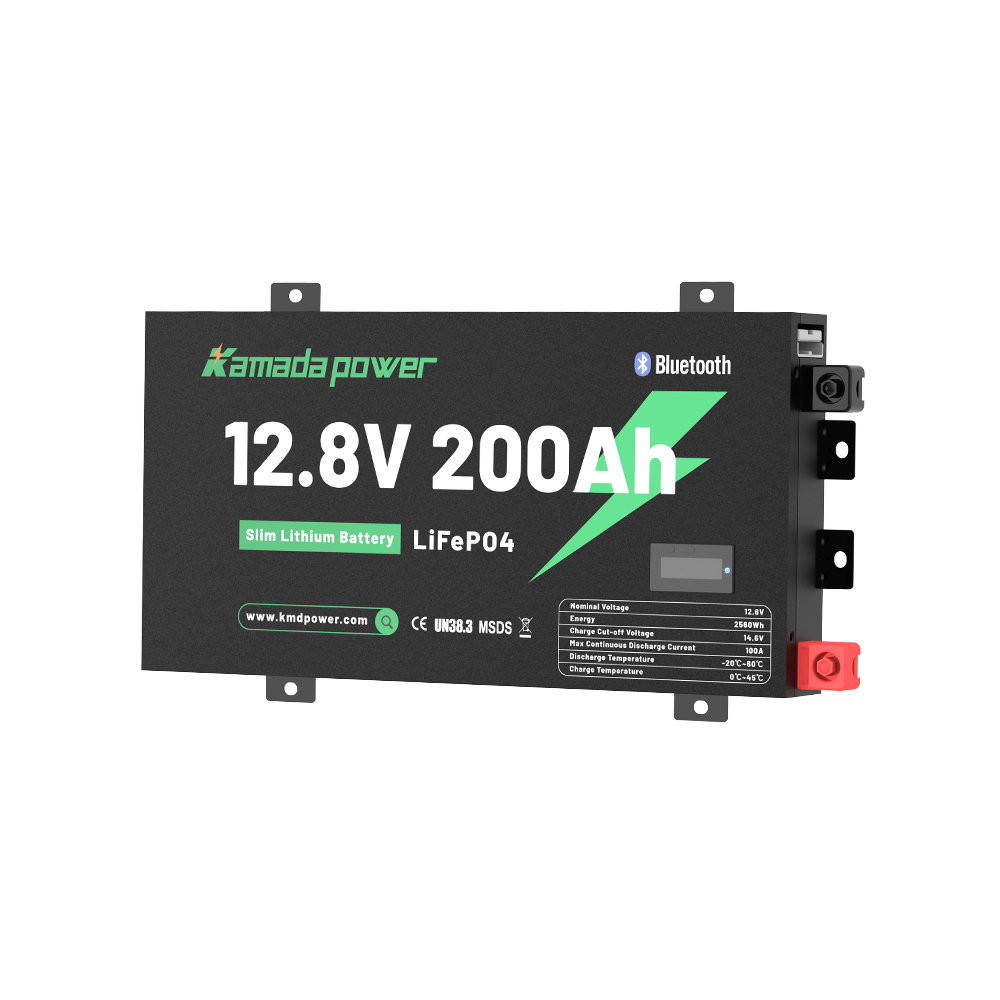
Kamada Power 12v 200ah Slimline lithium battery
Quick Answer
A slimline lithium battery can run two 12V fridges in a 4×4 canopy, but runtime depends on fridge size, average current, freezer mode, ambient temperature, solar recovery, DC-DC charging time, and other 12V loads. For light weekend use, 100Ah may be enough. For serious dual fridge touring, fridge-freezer setups, hot climates, or fleet vehicles, 150Ah to 200Ah is usually a more realistic planning range.
Why Dual Fridge Setups Need Better Battery Planning
A single camping fridge is usually manageable. Two fridges change the system because the load runs day and night. Unlike lights or USB chargers, fridges cycle automatically while the vehicle is parked, the driver is away, or the canopy is heating up.
Common dual fridge layouts include:
- food fridge + drinks fridge
- fridge + freezer
- touring fridge + bait freezer
- food fridge + medical or sample cooler
- two cooling zones in a work ute or field service vehicle
For you, the risk is not only short runtime. It is customer complaints, warranty arguments, and installer rework. Design from daily energy use, not battery Ah alone.
Why Slimline Lithium Batteries Fit 4×4 Canopies
Slimline lithium battery solve a space problem. Standard batteries can take up drawer space, floor space, or storage space inside the canopy. A slimline format can often be mounted behind a rear seat, on a canopy wall, beside a drawer system, or inside a compact power module.
For canopy builders, accessory brands, and installers, the value is system standardization: cleaner wiring, better use of narrow spaces, easier integration with DC-DC chargers and fuse panels, more repeatable fleet installation, and better private label kit design.
However, slimline shape does not create extra energy. Runtime still depends on usable capacity, load, charging input, and reserve margin.
Dual Fridge Consumption: Do Not Use Nameplate Watts Alone
Many buyers look at the fridge label, find a watt number, and calculate runtime from that. In practice, a compressor fridge does not run at one fixed load all day. It cycles on and off. The real planning number is daily consumption in amp-hours.
Daily fridge consumption:
Average current (A) × 24 hours = Ah per day
For two fridges:
Fridge 1 Ah/day + Fridge 2 Ah/day = Total fridge Ah/day
Actual consumption depends on fridge size, set temperature, fridge/freezer mode, ambient temperature, canopy ventilation, food temperature when loaded, opening frequency, cable voltage drop, and parking conditions. Freezer mode and hot canopy interiors can increase consumption sharply.
Planning Table: Dual Fridge Daily Energy Use
| Setup Type | Typical Use Case | Planning Energy | Approx. 12.8V Equivalent |
|---|
| Light dual fridge | Two efficient fridges, mild weather, limited opening | 510–770Wh/day | 40–60Ah/day |
| Normal touring | Two fridges, mixed food and drinks, warm weather | 770–1,150Wh/day | 60–90Ah/day |
| Fridge + freezer | One fridge, one freezer, regular opening | 1,020–1,660Wh/day | 80–130Ah/day |
| Hot canopy / poor ventilation | Summer use, high duty cycle, frequent opening | 1,280Wh/day or more | 100Ah/day or more |
These are planning ranges, not guaranteed consumption. Use watt-hours as the main energy budget and confirm the actual fridge models, setpoints, ambient conditions, loading pattern, and measured duty cycle for OEM, fleet, or warranty-sensitive builds.
How Long Can a Slimline Lithium Battery Run Two Fridges?
The basic runtime formula is:
Usable battery capacity (Ah) ÷ Daily consumption (Ah/day) = Runtime in days
Do not plan every day around full discharge. Leave reserve for cloudy weather, high temperature, short driving days, battery aging, and user behavior.
| Battery Size | Practical Planning Capacity | 50Ah/day Load | 100Ah/day Load |
|---|
| 100Ah | 80–90Ah | 1.6–1.8 days | Less than 1 day |
| 150Ah | 120–135Ah | 2.4–2.7 days | 1.2–1.3 days |
| 200Ah | 160–180Ah | 3.2–3.6 days | 1.6–1.8 days |
This table shows why 100Ah is often overestimated. It can look acceptable in a simple calculation, but the reserve disappears quickly when the second fridge is used heavily or the customer parks for a full day.
Is 100Ah Enough for a Dual Fridge 4×4 Setup?
A 100Ah slimline lithium battery can work in some dual fridge setups, but it should not be the default answer for every build.
It is more suitable for mild-weather weekend trips, two efficient fridges, limited freezer use, regular driving, good solar recovery, and users who monitor state of charge.
It is risky for hot climates, fridge-freezer use, two large fridges, low driving time, shaded camping, fleet users, or customers expecting two or more parked days.
For installers and distributors, selling 100Ah into every dual fridge system may create short-term price advantage but long-term support problems.
When 150Ah or 200Ah Makes More Sense
A 150Ah slimline lithium battery is often a stronger starting point for serious dual fridge touring. A 200Ah battery makes more sense for fridge-freezer operation, hot-weather touring, long parked periods, fleet duty cycles, multiple 12V loads, or premium canopy power packages.
For B2B product planning, offer 100Ah, 150Ah, and 200Ah options with clear use-case boundaries instead of presenting one battery as suitable for every customer.
Solar Reality Check: 200W Solar Is Not 200W All Day
Solar is useful, but often overestimated. A 200W panel may only approach rated output under ideal sun, angle, temperature, and clean panel conditions. Roof panels may also be shaded by racks, dust, trees, or parking position.
Estimate solar recovery in watt-hours first:
Daily solar energy (Wh) ≈ panel watts × effective sun hours × practical system factor
Example planning case:
200W × 4h × 0.75 ≈ 600Wh/day
That is roughly 47Ah when expressed as 12.8V nominal battery energy, or about 42Ah at a 14.2V charging bus. The difference is why Wh/day is the clearer comparison unit.
| Solar Size | Example Daily Recovery in Good Conditions | Practical Meaning |
|---|
| 100W | roughly 250–320Wh/day | Light support only |
| 200W | roughly 500–650Wh/day | Helpful, but may not cover a heavy dual-fridge load |
| 300W | roughly 750–960Wh/day | Stronger support for normal touring |
| 400W+ | roughly 1,000–1,280Wh/day | May approach fridge-plus-freezer demand in good sun |
These examples assume useful sun and a 0.6–0.8 practical factor; they are not guaranteed yields. Shade, winter sun, panel temperature, dust, controller limits, and cable loss can reduce recovery sharply. Treat solar as a variable daily energy source, not unlimited power.
DC-DC Charging Reality: Driving Time Matters
A DC-DC charger controls vehicle charging, supports the lithium charging profile, and recovers energy while driving. But output current only matters if the vehicle is driven long enough.
Use the average current that actually reaches the battery:
Recovered Ah ≈ average measured battery charge current × charging time
If a 40A charger sustains 40A at the battery for two hours, gross recovery can approach 80Ah. Real recovery may be lower because the charger thermally derates, input voltage limits output, current tapers near full charge, or canopy loads consume part of the charger output.
| Rated DC-DC Output | Gross Recovery if Rated Output Is Sustained for 1h | Gross Recovery if Sustained for 2h | What Must Be Checked |
|---|
| 20A | up to 20Ah | up to 40Ah | light load, battery charge limit, driving time |
| 30A | up to 30Ah | up to 60Ah | alternator margin and cable route |
| 40A | up to 40Ah | up to 80Ah | thermal derating and simultaneous loads |
| 50A | up to 50Ah | up to 100Ah | battery/BMS limit, alternator, heat and cable protection |
For a useful energy balance, subtract loads operating while driving and use logged or measured battery current where possible. A system that consumes 90Ah/day but recovers only 70Ah/day will decline progressively even though it appears adequate on the first day.
Recommended Battery, Solar, and Charger Combinations
These combinations are discussion starters, not universal specifications. They assume the energy ranges above, reserve capacity, and chargers that are compatible with the battery and vehicle.
| Application | Battery Direction | Solar Direction | DC-DC Direction |
|---|
| Mild weekend dual fridge | 100–150Ah may work after confirming 40–60Ah/day and regular recovery | around 200W can provide useful support | select from actual driving time and battery charge limit |
| Normal touring dual fridge | often 150–200Ah when 60–90Ah/day is validated | around 300W where roof area and sun allow | commonly 30–50A, but verify alternator and thermal limits |
| Fridge + freezer | often 200Ah or an engineered larger bank | 300–400W may be justified | size from the daily deficit and realistic driving hours |
| Fleet work ute cooling | use logged duty-cycle data | based on parking pattern and operating region | standardize only after pilot-vehicle testing |
| Low-driving remote use | capacity alone cannot solve a persistent recharge deficit | maximize fixed and portable solar within controller limits | a larger charger helps only when the vehicle is driven |
Wiring and Protection: Two Fridges Need a Clean System
A reliable dual fridge setup needs more than battery capacity. The power path should be clear and serviceable:
Starter battery / alternator
↓
DC-DC charger
↓
Slimline lithium battery
↓
Main fuse and shunt
↓
Distribution fuse box
↓
Fridge 1, Fridge 2, lights, USB, pump, inverter
Each fridge should have its own protected circuit. Size cable for current, distance, and voltage drop. Fuse the cable, avoid long undersized runs, use a shunt-based monitor where accurate SOC matters, align charger and BMS ratings, and label circuits for installers.
Voltage drop is a common reason fridges shut down even when the battery still has energy. The fridge sees low voltage at its terminals, not at the battery posts.
Low-Voltage Cutoff: Do Not Rely on BMS Shutdown
A fridge may have its own low-voltage cutoff. The lithium battery also has BMS protection. These are not the same thing.
The fridge cutoff stops operation below a selected voltage. The BMS cutoff protects the battery from unsafe conditions. A system should not use BMS cutoff as a normal daily control method.
If a fridge stops while the battery monitor still shows remaining capacity, check voltage drop, cutoff settings, connections, cable size, monitor calibration, and compressor load.
Common Mistakes in Dual Fridge 4×4 Battery Setups
The most common mistakes are sizing the battery from peak watts instead of daily Ah, assuming 200W solar produces 200W all day, using 100Ah for every quote, ignoring freezer mode, installing fridges in poorly ventilated canopy spaces, using shared or undersized wiring, forgetting lights and pumps, skipping a battery monitor, and quoting before confirming daily driving time.
What You Should Send Before Quotation
Before asking for a slimline lithium battery quote, send the supplier the following information:
| Required Information | Why It Matters |
|---|
| Vehicle model | Confirms charging and installation constraints |
| Canopy layout | Confirms battery space and cable routing |
| Fridge model 1 and 2 | Estimates real daily consumption |
| Fridge or freezer setting | Freezer mode changes load |
| Ambient temperature | High heat increases duty cycle |
| Daily driving hours | Determines DC-DC recovery |
| Solar wattage | Determines daily recharge |
| Other 12V loads | Prevents undersizing |
| Required backup hours | Defines battery reserve |
| Branding or OEM needs | Supports private label design |
A good quotation should explain the assumptions behind the recommendation, not only say “100Ah” or “200Ah.”
When a Slimline Lithium Battery Is Not Enough
A slimline lithium battery is not the right answer for every case. The system may need a larger battery bank or different design when two large freezers run continuously, the vehicle parks for several days without sun or driving, inverter loads are larger than fridge loads, roof solar area is too limited, the canopy has poor ventilation, or the installation cannot support correct cable and fuse sizing.
In these cases, the better solution may include more battery capacity, portable solar, better ventilation, a suitable higher-output charger, or a change in load expectations.
Conclusion
For dual fridge 4×4 setups, size the system around daily energy balance, not battery Ah alone.
A 12V 100Ah slimline lithium battery may suit light weekend use. A 150Ah battery is usually a safer starting point for regular dual fridge touring. A 12V 200Ah slimline lithium battery is more realistic for fridge-freezer setups, hot climates, fleet use, or customers who need stronger reserve.
For canopy builders, 4WD accessory brands, auto electricians, and OEM battery buyers, define the full system: battery capacity, DC-DC charger current, solar recovery, fridge load, wiring, fuse protection, and backup-hour target.
Need a Slimline Lithium Battery for a Dual Fridge 4×4 System?
Contact us. Kamada Power supports OEM and ODM slimline lithium battery solutions for 4×4 canopies, work utes, touring vehicles, and private label battery kits. Send us your fridge models, canopy space, solar wattage, DC-DC charger size, daily driving time, backup-hour target, and branding requirements. Our engineering team can help recommend a suitable battery capacity, BMS configuration, and sample testing plan for your application.
FAQ
Can a 100Ah lithium battery run two 12V fridges?
Yes, but only in light-duty conditions. It is more suitable for mild weather, efficient fridges, short trips, and regular charging. It is risky for freezer use, hot canopies, or long parked periods.
Is 150Ah enough for a dual fridge 4×4 setup?
For many touring builds, 150Ah is a practical starting point. It gives more reserve than 100Ah while still fitting many slimline canopy layouts.
Do I need 200Ah for two fridges?
A 200Ah slimline lithium battery is recommended when one fridge is used as a freezer, when the vehicle parks for long periods, or when the system operates in hot conditions.
How much solar do I need for two camping fridges?
For light use, 200W can help. For serious dual fridge touring, 300W to 400W is more realistic, depending on sun hours, shade, panel angle, and daily load.
Can a DC-DC charger fully recharge the battery while driving?
Only if the charger current and driving time are enough to replace the previous energy use. Short driving days may not fully recover the battery.
Should each fridge have its own fuse?
Yes. Separate fused circuits make the system safer, easier to diagnose, and more suitable for professional canopy and fleet installations.