15 Common Myths About Home Battery Systems. I keep having the same conversation: a friend texts me during a storm—“So if I get a home battery… I’m basically off-grid, right?”—and I have to be the buzzkill again.
Home batteries rule. I like them, I recommend them, and I also keep watching people buy the wrong setup because they believed one stubborn myth. So let’s kill the myths, coffee-chat style—no fluff, just the stuff that saves you money, stress, and those “why is the fridge off?” moments.
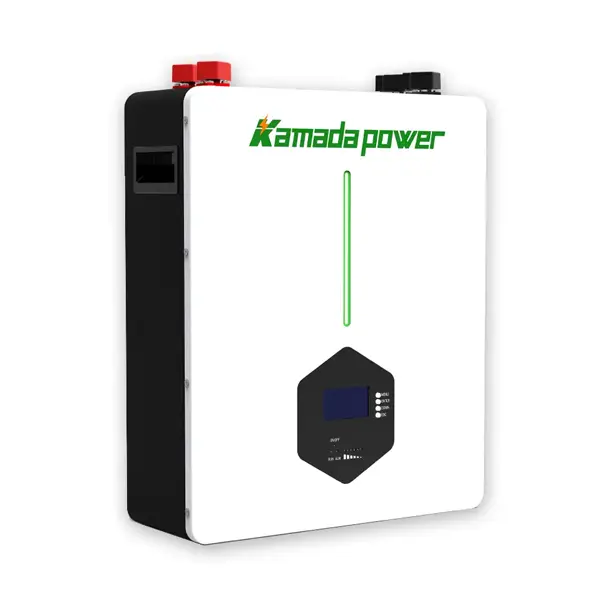
Kamada Power 10kWh Powerwall Home Battery
Before the myths: two numbers people mix up
kWh = how long you can run stuff. kW = how much stuff you can run at once.
Think of kWh as the size of your gas tank. Think of kW as the engine power.
A battery can have plenty of kWh and still face-plant if your house asks for a big kW punch (hello, AC compressor start).
Keep that in your pocket. You’ll need it.
Myth #1: A home battery means I can go off-grid easily
I wish. Most people don’t want “off-grid.” They want “my house stays sane during outages.” Big difference.
True off-grid life forces you to design for ugly weeks: short winter days, cloudy stretches, and the random time everyone showers at once. You pay for that with more solar, more battery, and more compromises—plus a tighter plan for load shedding and backup generation when the weather doesn’t cooperate.
Myth #2: A battery replaces a generator
Sometimes. Not always. A battery handles short outages like a champ. Quiet. Instant. No fumes.
But when the outage drags on and the sun doesn’t cooperate, the generator still earns its keep. A lot of smart homes run battery first, then let a generator cover the “week-long mess” scenario.
Myth #3: Batteries only help during outages
Nope. And this myth costs people real money. Plenty of folks buy batteries for the bill. Time-of-use rates push you to avoid expensive evening power. Some areas stack extra charges that punish spikes.
Outage protection sells the dream. Rate management pays the monthly bill.
Myth #4: If I have solar, I already have backup power
This one hurts. Most grid-tied solar shuts down during an outage. Safety rules don’t let your solar energize lines when crews work on them.
Yes, there are exceptions. Some solar setups can provide limited power in an outage (think: a small “sunlight backup” outlet, or daytime-only support with strict limits). But that’s not the same as running a home like normal—especially after sunset or when clouds roll in.
If you want real backup power, you need the right architecture. Not vibes.
The “lights stay on” 3-piece setup
If you want your home to run during a blackout, you usually need:
- A battery (or at least enough storage/buffering to keep power stable)
- An inverter that can run your home in island mode (it must “create” stable power when the grid is gone)
- A proper transfer/isolation method so your home disconnects from the grid safely (this is typically an automatic/manual transfer switch (ATS/MTS), or a service-entrance isolation approach depending on the design)
Solar alone, in a typical grid-tied setup, won’t do that reliably.
Myth #5: One battery will power my whole house
If you want lights, fridge, Wi-Fi, phone charging, maybe the microwave for two minutes? You can absolutely do that.
If you want two AC units, an electric oven, a clothes dryer, and the hot tub… we need to talk. You’ll need more battery, more inverter power, load control, or all of the above.
Myth #6: Cold weather makes batteries useless
They work. They just don’t feel their best. Cold can reduce what the battery will allow in the moment: slower charging, lower available power, and sometimes stricter limits on charge/discharge to protect the cells. Some systems also use internal heaters, which is great for performance… and also means a bit of energy goes to staying warm.
Placement matters a lot. A battery tucked into a sheltered garage behaves very differently than one stuck outside in a freeze.
Myth #7: A home battery always saves money
I love batteries, but I won’t pretend they always pencil out.
Savings depend on your rate plan, your usage, your solar production, your ability to shift loads, and local incentives. Sometimes people buy peace of mind instead of payback. That choice still makes sense if you own it.
Just don’t buy a “money saver” and end up with an “emotional support battery.”
Myth #8: Home batteries are loud
Most of them run quiet. You might hear a soft fan or inverter hum under heavy load (often from the power electronics, not the battery itself). You won’t hear a lawnmower engine at 2 a.m. That’s generator life.
If noise bothers you, choose the location with care. Don’t mount power electronics on the wall behind a bedroom headboard. Ask me how I know.
Myth #9: Batteries are fire traps
Any energy system deserves respect. Gas. Electric panels. Generators. Batteries.
Modern home batteries include layers of protection, but quality and installation matter like crazy. You want certified equipment, competent wiring, clean cable runs, correct clearances, and proper permits.
Skip the bargain-bin mystery gear. Don’t let “my cousin can do it” touch your main panel.
Myth #10: I’ll just buy the biggest battery and I’m done
Bigger doesn’t fix a bad design. A huge battery won’t help if:
- your inverter can’t handle startup surges,
- your panel needs upgrades,
- your solar can’t recharge the battery fast enough,
- your backup plan ignores critical circuits,
- your transfer/isolation plan isn’t right.
You don’t “collect parts.” You design a system.
Myth #11: Batteries only work with solar
A battery can charge from the grid. That matters for time-of-use shifting and for staying topped up before storms. But grid-charging rules can vary by area and program. Some utility programs, interconnection requirements, or incentive terms may limit when or how grid charging is allowed.
Still, the basic idea holds: solar helps, but it doesn’t have to show up on day one.
Myth #12: All batteries do the same thing
Not even close. Some systems back up your whole house. Others back up a dedicated “critical loads” panel. Some inverters handle big motor starts. Others panic and trip.
And here’s the sneaky part: specs often list peak power (a few seconds) and continuous power (the real-world number). Ask for both. Then ask what you get in backup/island mode, because that’s the mode that matters when the grid is gone.
Myth #13: I don’t need to think about what I back up
You do. Unless you enjoy chaos. I watched a friend test their brand-new backup setup. The power dropped, the battery took over… and the well pump tried to start. Trip. Darkness. Silence. Confusion.
Motor loads punch hard at startup. AC compressors, well pumps, some refrigerators, garage door openers. They don’t care about your feelings.
Plan your backup circuits like an adult.
Myth #14: Batteries need constant maintenance
Compared to a generator? Not even in the same sport. You won’t change oil. You won’t schedule monthly run tests. Most systems monitor themselves.
Still, don’t confuse “low maintenance” with “ignore forever.” Check alerts. Keep vents clear. Make sure installers leave you with clean documentation. Updates matter too.
Myth #15: I should wait—next year’s batteries will be way better
People have waited for years on this one. Yes, tech improves. Prices shift. Incentives change. Utilities rewrite rules. Waiting can help… or bite you.
If outages stress you out now, or your rate plan slaps you every evening, “installed and working” beats “perfect someday” more often than people want to admit.
The stuff that quietly shapes success
1) Startup surge can make or break your experience
Your battery might have enough energy (kWh) but not enough muscle (kW).
Ask how the system handles compressor and pump starts. You can often solve this with the right inverter sizing, load management, soft-start equipment, or smart load shedding.
2) Efficiency and standby use exist
Every system loses some energy in conversion and has some always-on consumption. That loss won’t ruin your life, but it can change “my battery lasts all night” into “why did it drop faster than I expected?”
3) Warranty language hides in plain sight
Don’t stop at “10 years.” Ask:
- “What capacity does the warranty guarantee at the end?”
- “Is that based on years, cycles, throughput, or some mix?”
- “What conditions apply?”
Temperature, cycling limits, and install requirements can matter.
Five questions I’d ask any installer
If you ask only five things, ask these:
- Will this back up my whole house or only a critical loads panel?
- What continuous kW and peak kW will I get in backup (island) mode?
- Can it start my biggest motor load (AC, well pump, etc.)—and how do you know?
- Exactly how will the system isolate from the grid during an outage (ATS/MTS, service-entrance isolation, etc.)?
- What does the warranty guarantee for end-of-life capacity, and what rules could void it?
If an installer gets weird about these, walk.
Conclusion
When you picture a home battery, what do you actually want it to do—keep the essentials alive during outages, cut your bill at peak rates, or help you sleep during storm season?
Pick the goal first. Then match the hardware to the goal. That’s how you end up with a system you trust instead of an expensive box that only “sort of” helps.
Want a setup that actually fits your home? Contact us for a customized home battery solution.