Sodium-Ion vs. Solid-State Batteries: The Future of Telecom Backup Power? Picture this: You’re reviewing OpEx budgets, watching VRLA maintenance costs rise while LFP supply chains remain volatile. You need a “Next Gen” solution that protects your bottom line, not just keeps the lights on. Walking the trade show floors, the hype is loud: Sodium-Ion vs. Solid-State. But as procurement pros, you don’t buy hype—you buy specs and ROI. From our experience, there is no magic bullet. The reality is simple: Sodium-Ion Battery is your “Cost Cutter,” and Solid-State is your “Density King.” The future isn’t about picking one winner; it’s about knowing where to deploy both.
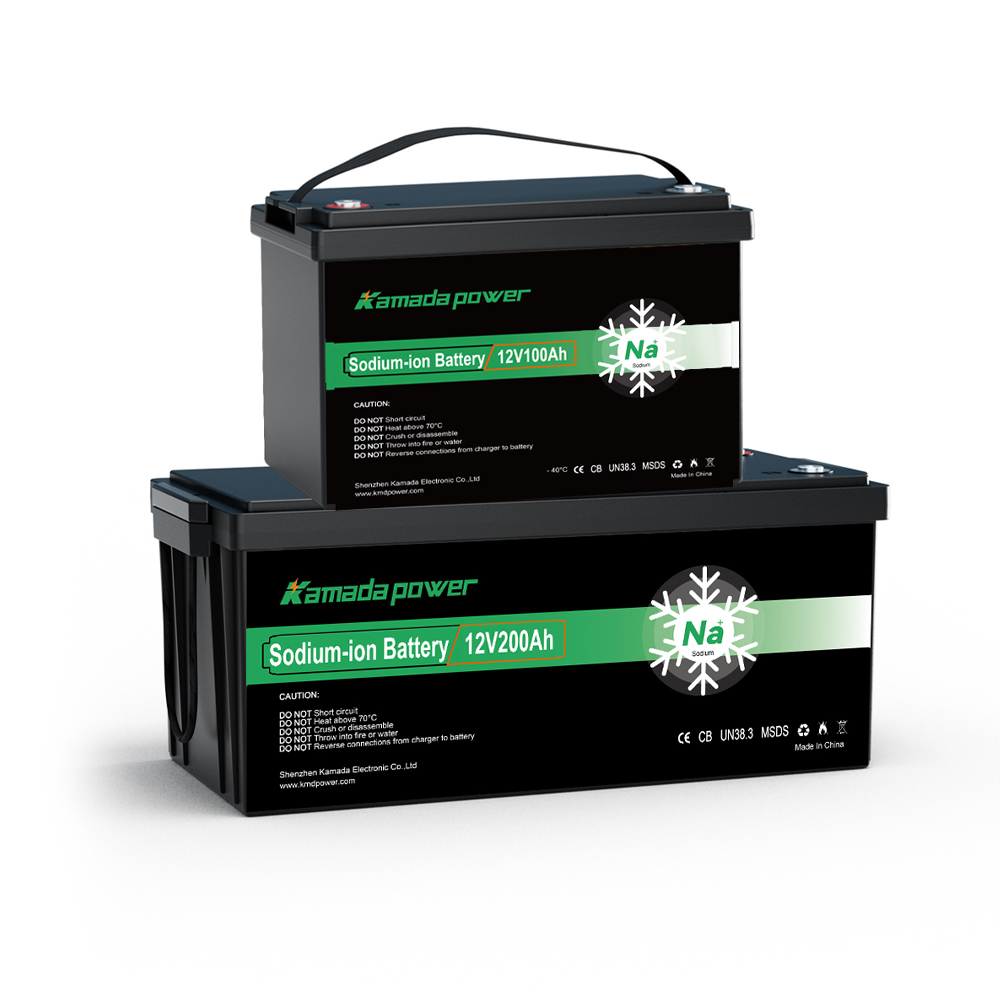
Kamada Power 12v 200Ah Sodium ion Battery
Technology Maturity: What’s Actually Available?
Before we start comparing specs, let’s clear the air on where these technologies actually sit on the commercial timeline. There is a lot of “vaporware” in the battery industry, and distinguishing a PowerPoint slide from a palpable product is part of the job.
Sodium-Ion Status (Commercial Ready)
Let’s be real: 2025 is the breakout year for Sodium-ion (Na-ion). This isn’t just R&D anymore. Major players like CATL and HiNa are already spinning up supply chains, and we are seeing the first commercially available sodium-ion battery packs hitting the market for pilot projects.
Why is this happening now? Because the chemistry works. It borrows heavily from the manufacturing equipment used for Lithium-ion, meaning factories don’t need to be rebuilt from scratch. If you are an “Early Adopter” looking to diversify your supply chain away from lithium, the hardware is ready for deployment now.
Solid-State Status (Semi-Solid vs. All-Solid)
Here is where the water gets murky. If a vendor tries to sell you an “All-Solid-State Battery” (ASSB) for a telecom rack tomorrow, check the fine print.
Most “Solid-State” batteries commercially available today are actually Semi-Solid (or Condensed State). They still contain a small amount of liquid electrolyte to help ions move between the cathode and anode. True, ceramic or polymer-based All-Solid-State batteries are likely 3 to 5 years away for stationary storage applications.
This distinction is vital for your roadmap. Semi-solid is here and offers great benefits, but the “Holy Grail” of solid-state is still slightly over the horizon.
Round 1: Cost Structure (The TCO Battle)
For most macro sites, the battle is won or lost on the spreadsheet. This is where the divergence between the two chemistries becomes massive.
Sodium-Ion Economics (The Budget Option)
Sodium-ion is essentially the battery world’s diesel truck. It’s rugged, reliable, and runs on cheap fuel. The primary driver here is soda ash—globally abundant and dirt cheap compared to lithium carbonate.
From a procurement standpoint, once production scales up, we are predicting Sodium-ion will undercut LFP prices by roughly 30%. For large-footprint projects—think rural macro towers or massive commercial ESS (Energy Storage Systems)—this is a game changer. You aren’t paying for the performance capabilities of a Ferrari when you just need to haul cargo.
Solid-State Economics (The Premium Option)
Solid-state is the sports car. It relies on complex manufacturing processes involving ceramic or polymer electrolytes and requires high-precision assembly to prevent interface resistance.
Currently, semi-solid options are trading at 2x to 3x the cost of standard LFP. That’s a steep premium. For general backup power, the Total Cost of Ownership (TCO) just doesn’t make sense yet—unless you are forced into it by physical constraints.
This is where the application engineers need to pay attention. The physical characteristics of these batteries dictate where they can be installed.
Sodium-Ion Density (~150 Wh/kg)
Sodium ions are physically larger than lithium ions. As a result, the energy density is lower, hovering around 140–160 Wh/kg currently.
The implication? Bulk. To get the same kWh capacity as an LFP rack, a sodium-ion battery pack will be physically larger and heavier. If you are retrofitting a cramped rooftop cabinet in London or New York, Sodium might literally not fit.
Solid-State Density (300-500 Wh/kg)
This is the “Killer App” for solid-state. With densities pushing past 300 Wh/kg (and aiming for 500 Wh/kg), you can pack incredible amounts of power into a tiny volume.
Imagine fitting double the backup duration (e.g., 4 hours instead of 2 hours) into the exact same 19-inch rack slot.
Why Space = Money in Urban 5G
In dense urban environments, rent per square foot for telecom sites is astronomical. We’ve seen operators in major metro areas struggling to add 5G capacity because they simply have no ground space left for extra cabinets.
In this scenario, the high cost of Solid-State is justified by the rental reduction. If you can double your capacity without renting a second pad, the battery pays for itself.
Round 3: Safety Profile (Fire Risk Analysis)
Safety isn’t just about preventing fires; it’s about insurance premiums, transport logistics, and compliance with increasingly strict urban fire codes.
Sodium-Ion Safety (Very Good)
Sodium-ion resists thermal runaway better than many legacy Li-ion chemistries. But it has a secret weapon that logistics managers love: 0 Volt Storage.
Unlike Lithium-ion, which can be permanently damaged if discharged to zero volts, Sodium-ion can be discharged to 0V, transported completely inert (no electrical energy), and then recharged on site. This drastically reduces the risk during shipping and installation. It’s a massive plus for safety protocols.
Solid-State Safety (The Ultimate)
Solid-state offers the ultimate peace of mind. By replacing flammable liquid electrolytes with non-flammable solids, you eliminate the primary fuel source for a fire.
For Indoor Core Sites or equipment located in the basements of occupied buildings, this is the gold standard. You might pay a premium, but you are buying your way out of strict fire suppression system requirements.
Strategic Fit: Where to Deploy Which Tech?
So, you have the “Diesel Truck” (Sodium) and the “Sports Car” (Solid-State). How do you deploy them in a real-world network?
Rural/Suburban Macro Towers
Strategy: Go Sodium-Ion. In rural areas, space is usually cheap. You have a fenced compound with plenty of room for a slightly larger cabinet. However, theft is a risk, and OpEx control is paramount. Sodium is low-value (less attractive to thieves than lithium) and handles the job perfectly at the lowest price point.
Urban Rooftops / Edge Computing
Strategy: Wait for Solid-State (or use Semi-Solid). Edge computing nodes are power-hungry. They run hot and process massive data loads for AI and low-latency apps. You need maximum energy in minimum volume. You can’t afford to waste space on bulky batteries. This is where the density of solid-state becomes a necessity, not a luxury.
High-Heat Desert Sites
Strategy: Sodium-Ion. Here is an interesting nuance: Sodium-ion generally boasts better extreme temperature performance than current LFP, retaining capacity better in searing heat and freezing cold. While solid-state polymers are improving, Sodium is proving to be a robust beast for harsh environments right out of the gate.
Comparison: Sodium-Ion Battery vs Solid-State Battery (SSB)
| Feature | Sodium-Ion Battery | Solid-State Battery (SSB) |
|---|
| Primary Advantage | Low Cost & Abundance | High Energy Density & Compactness |
| Current Status | Early Commercial (Available) | R&D / Semi-Solid Pilots |
| Cost Projection | Low (<$80/kWh target) | High (Premium Pricing) |
| Safety | High (0V storage capable) | Ultra-High (Non-flammable) |
| Space Efficiency | Low (Bulkier than LFP) | Very High (Compact) |
| Ideal Telecom Site | Rural Towers, Off-Grid | Urban 5G, Indoor Core |
The Adoption Timeline: A Roadmap for CTOs
If you are trying to map this out for your stakeholders, here is a realistic view of how the next decade plays out.
- 2024-2025: The Rise of Sodium Pilots. Operators begin testing Sodium-ion battery packs in non-critical rural sites to validate the BMS (Battery Management System) integration and temperature curves.
- 2026-2028: Semi-Solid Integration. Semi-solid batteries enter high-value urban sites where space is critical. Meanwhile, Sodium reaches price parity with Lead-Acid, triggering a mass migration for macro sites.
- 2030+: The Bifurcated Market. The market splits. Sodium becomes the standard for the “Bulk” (Macro/Grid), and Solid-State becomes the standard for the “Premium” (Edge/Devices).
Conclusion
The debate between Sodium-ion battery and Solid-state isn’t a zero-sum game; at its core, it’s about technology portfolio management. You don’t have to pause critical infrastructure upgrades while waiting for a Solid-state “miracle.” If you are currently facing space and budget constraints, Sodium-ion is the solution that delivers cost reduction right now, immediately solving the headaches of both supply chain and cost. However, for those tricky urban deployments where every inch counts, keep a close eye on semi-solid developments—they are your future problem-solvers. The most successful operators won’t choose just one; they will deploy both, assigning the right chemistry to the right site profile.
Ready to optimize your technology portfolio and solve today’s cost and supply chain challenges? Contact us. Our kamada power sodium ion battery manufacturers battery engineers will tailor a sodium-ion battery solution to your specific infrastructure needs, giving you an immediate competitive advantage.
FAQ
Can I simply swap my lead-acid batteries for Sodium-ion?
In many cases, yes, but it’s not always a “drop-in” replacement. While the voltage ranges are often compatible, you will need to verify that your rectifier/charger settings can be adjusted to match the charging curve of the sodium-ion battery pack. You’ll also need to ensure the BMS can communicate with your existing site controller.
True “All-Solid-State” is not ready for mass deployment yet. However, Semi-Solid batteries (which offer higher density than standard lithium) are available today. They are expensive, so they are best reserved for sites where space is extremely limited or fire safety is the absolute top priority.
Will Sodium-ion replace LFP eventually?
For stationary storage, quite possibly. LFP will likely remain dominant in EVs where range (density) matters, but for stationary telecom towers where weight doesn’t matter as much, the cost advantage of Sodium-ion makes it a very strong candidate to replace LFP as the new industry standard over the next 5-7 years.
What if I need to deploy in extremely cold environments?
Sodium-ion is actually an excellent choice here. It generally performs better than LFP and NCM batteries in sub-zero temperatures, retaining more capacity at -20°C. If your sites are in Nordic regions or high altitudes, Sodium is a strong contender.