"Kan jag lägga till ett natriumjonbatteri parallellt med min LiFePO4-bank?"
Den här frågan är vanlig i system för husbilar, off-grid, marina system, reservsystem och system för kallt väder. Det låter effektivt: behåll den befintliga LiFePO4-banken, lägg till natriumjon för mer kapacitet eller bättre prestanda vid låga temperaturer, och undvik att bygga om systemet.
Men batterier är inte generiska 12V-lådor. Natriumjonbatterier bör inte vara direkt hårdparallella med LiFePO4-batteri. Även om båda är märkta med 12 V kan deras spänningsfönster, urladdningskurvor, laddningsbeteende, inre motstånd och BMS-gränser skilja sig åt. De kan samexistera i ett projekt, men endast med korrekt separation, t.ex. DC-DC-omvandling, isolerade laddningsvägar eller kontrollerad källkombination.
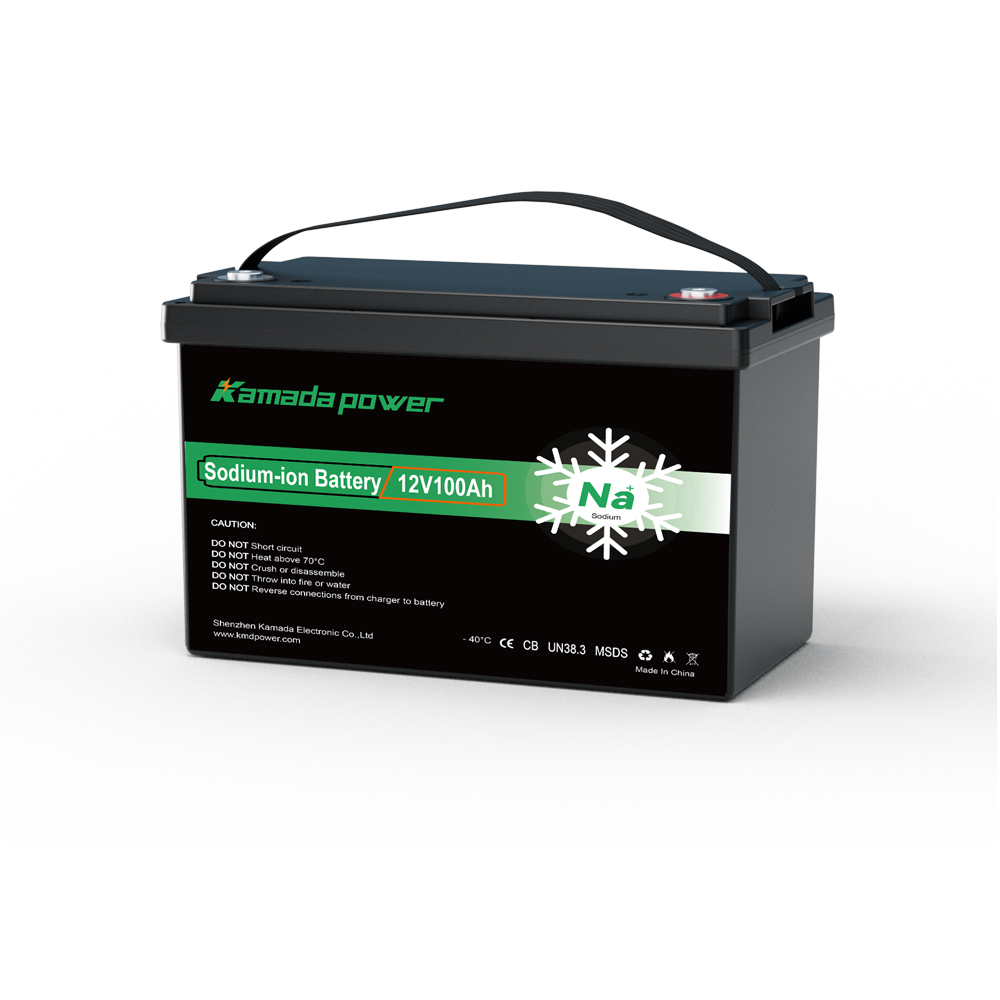
Kamada Power 12v 100Ah natriumjonbatteri
Vanligtvis nej för direkt parallellkoppling
Många köpare ser "12V" på båda batterietiketterna och antar att batterierna är utbytbara. Detta antagande är riskabelt.
Ett 12V LiFePO4-batteri och ett 12V natriumjonbatteri kan ha olika nominella spänningar, vilospänningar, övre laddningsgränser, lågspänningsgränser, temperaturgränser och BMS-logik. Många 12V LiFePO4-batterier är uppbyggda kring en 12,8V nominell plattform. Natriumjonprodukter i 12V-klassen är mindre enhetliga. Vissa ligger närmare 12,0V eller 12,2V nominellt, medan deras rekommenderade laddningsspänning kan variera beroende på celldesign och paketkonfiguration.
Så även om båda produkterna säljs som "12V" är det inte säkert att de ryms inom samma elektriska fönster.
Och spänningen är bara början. Laddningsmål, SOC-beteende, strömdelning, temperaturrespons och BMS-skyddströsklar kan också skilja sig åt. En delad DC-buss tar inte bort dessa skillnader. Den tvingar in dem i samma krets.
Den viktigaste skillnaden är denna: Att använda båda kemikalierna i ett system är inte samma sak som att parallellkoppla dem direkt i en ostyrd batteribank.
De två kemikalierna kan samexistera om varje bank har sin egen kontrollerade väg. Det som orsakar problem är den enkla versionen: positiv till positiv, negativ till negativ, och sedan förväntar man sig att en laddare och en inverterare ska behandla båda batterierna som om de vore samma familj.
Varför natriumjon och LiFePO4 inte beter sig på samma sätt
Det första problemet är den nominella spänningen. I en hård parallellkoppling kan batteriet med högre spänning pressa in ström i batteriet med lägre spänning innan någon användbar belastning ens har applicerats. Denna balanseringsström driver inte systemet. Den bidrar bara till stress, värme och förluster.
Storleken på denna korsström bestäms inte enbart av spänningsskillnaden. Kabelmotstånd, kontaktmotstånd, pack SOC, anslutningssymmetri, säkringsbeteende och BMS-svar spelar alla roll. Det är därför ett parallellt system med blandad kemi kan se acceptabelt ut på papperet men bete sig oförutsägbart i fält.
Det andra problemet är urladdningskurvan. LiFePO4 är känt för att ha en mycket platt spänningsplatå över en stor del av sin användbara kapacitet. Natriumjoners beteende beror på den specifika kemin och förpackningsdesignen, men många aktuella produkter uppvisar en mer synlig spänningslutning över SOC.
I klartext betyder det att de två batterierna inte "visar" återstående energi på samma sätt. Det ena kan hålla spänningen jämnare under längre tid. Det andra kan visa en mer gradvis spänningsändring. Det påverkar strömfördelningen, SOC-tolkningen och hur växelriktaren eller laddaren tolkar hela batteribanken.
Det tredje problemet är laddningsfönstret. En laddningsprofil som fungerar bra för LiFePO4 kanske inte laddar ett natriumjonpaket som är konstruerat för en högre övre spänning. Å andra sidan kan en natriumjonprofil som är lämplig för en produkt vara olämplig för en LiFePO4-bank eller för en annan natriumjonkonstruktion.
Det innebär inte alltid ett omedelbart fel. I många fall är resultatet mer subtilt: ett batteri är underladdat, ett batteri är stressat eller ett BMS kopplas bort tidigare än förväntat. Systemet kan se ut att fungera ett tag, och det är just därför som den här konstruktionen kan vilseleda användarna.
| Parameter | Natriumjon | LiFePO4 |
|---|
| Nominell spänning i 12V-klassade förpackningar | Produktspecifikt; många aktuella förpackningar ligger runt 12,0-12,2V | Vanligtvis runt 12,8V |
| Laddningsabsorptionsspänning | Produktspecifik; vissa produkter använder cirka 15,6 V, medan andra använder lägre eller olika övre laddningsgränser | Vanligtvis runt 14,2-14,6V |
| Utsläppskurva | Ofta mer sluttande över SOC | Mycket platt över större delen av användbar SOC |
| Laddning vid låg temperatur | Mycket produktspecifik | Vanligtvis begränsad till under 0°C om inte värme är inbyggd |
| BMS tröskelvärden | Anpassad till natriumjonkemi och förpackningsdesign | Anpassad till LiFePO4-kemi |
| Direkt parallell med den andra kemin | Rekommenderas ej | Rekommenderas ej |
Den viktiga punkten är inte att den ena kemin är bättre än den andra. Poängen är att de inte är naturligt matchade som en parallell batteribank.
Vad kan gå fel om du ändå kopplar ihop dem?
Det vanligaste problemet är korsström. Det ena batteriet skickar ström till det andra eftersom deras spänningar inte är i linje med varandra. Den strömmen skapar spänning utan att utföra något nyttigt arbete.
Nästa problem är ojämn lastfördelning. Ett batteri kan bära mer av växelriktarens belastning eftersom dess spänning, interna motstånd eller BMS-beteende gör det till den enklare källan för tillfället. Under lätta belastningar kanske obalansen inte är uppenbar. Vid överbelastningar, kalla förhållanden eller djupurladdning kan skillnaden bli mycket allvarligare.
BMS-missmatchning är en annan stor risk. Varje BMS är utformat efter sin egen kemi, spänningströsklar, strömgränser, temperaturregler och skyddslogik. Om ett batteri kopplas bort tidigare kan det andra batteriet plötsligt ta över hela belastningen. I ett växelriktarsystem kan det leda till avstängningar, felkoder eller oväntad belastning på den återstående batteribanken.
Inkonsekvent laddning är också vanligt. Laddaren kan se ut att avsluta en normal cykel, men det ena batteriet kan fortfarande vara underladdat medan det andra hålls i ett spänningsområde som inte är idealiskt för dess konstruktion.
Slutligen finns det en support- och garantifråga. De flesta tillverkare publicerar riktlinjer för parallellkoppling för matchade batterier, inte för hårdparallellkopplade enheter med blandad kemi. Om systemet går sönder blir felsökningen svår eftersom problemet inte längre bara är batteriet, laddaren eller växelriktaren. Det är samspelet mellan dem alla.
Varifrån denna fråga vanligtvis kommer
Den här frågan dyker ofta upp i samband med uppgraderingar av husbilar och skåpbilar. En användare har redan en LiFePO4-husbank och vill ha bättre prestanda i kalla väderförhållanden utan att byta ut hela systemet.
Det förekommer också i off-grid solcellsexpansion. Det befintliga LiFePO4-systemet fungerar, men nästa tillgängliga eller mer attraktiva utbyggnadsalternativ råkar vara natriumjon.
I marina system och backupsystem ser vissa användare blandkemi som en form av redundans. I själva verket kan ohanterad redundans skapa nya felvägar i stället för att förbättra motståndskraften.
OEM-projekt för eftermontering ställs inför samma problem på en högre nivå. Ingenjörer kanske vill behålla en befintlig LiFePO4-plattform och samtidigt lägga till natriumjon i samma produktfamilj. Det går att göra, men arkitekturen måste utformas kring separation, kontroll och förutsägbart felbeteende.
När risken blir högre
Risken ökar när de båda batterityperna använder samma buss, samma laddare, samma växelriktare och samma inställningar. Det tvingar fram en styrlogik för två batterier som inte beter sig på samma sätt.
Högströmsbelastningar på växelriktaren gör också problemet allvarligare. Överdriven efterfrågan avslöjar snabbt obalansen i strömfördelningen. Ett system som verkar stabilt under en liten likströmsbelastning kan bete sig helt annorlunda när en växelriktare, motor, kompressor eller pump startar.
Kallt väder lägger till ytterligare ett lager. LiFePO4 är vanligtvis begränsad från laddning under fryspunkten om inte uppvärmning eller hantering av lågtemperaturladdning är inbyggd. Natriumjon kan erbjuda bättre potential vid låga temperaturer, men det beror fortfarande på exakt cell, paket, BMS och tillverkarens begränsningar. Det är inte säkert att anta att alla natriumjonbatterier kan laddas fritt i förhållanden under noll grader.
Större banker gör felsökning svårare. Fler strängar innebär fler anslutningspunkter, större risk för obalans och fler möjliga felvägar. En bank med blandad kemi och flera parallella strängar är inte bara en större version av en enkel batteribank. Det är ett mer komplext och mindre förutsägbart elektriskt system.
Säkrare sätt att använda båda kemikalierna i ett system
Den bättre designprincipen är kontrollerad samexistensinte direkt blandning.
| Systemarkitektur | Teknisk vy |
|---|
| Direkt positiv-till-positiv / negativ-till-negativ parallell | Riskabelt eftersom det tvingar in två kemier i en okontrollerad batteribank |
| Samma laddare, samma växelriktare, samma DC-buss | Riskabelt eftersom en styrlogik måste användas för två olika batteribeteenden |
| Endast batterisolator, relä eller säkring | Inte tillräckligt eftersom skyddshårdvara inte löser laddprofil eller BMS-missmatchning |
| Separata banker med DC-DC-laddning | Säkrare eftersom varje kemi behåller sitt eget spänningsfönster och BMS-logik |
| Separata laddningsvägar | Säkrare eftersom varje bank kan få rätt laddningsprofil |
| Rollbaserad systemdesign | Säkrare eftersom varje kemikalie används där den passar bäst |
För eftermonteringssystem är separata banker med DC-DC-laddning ofta det renaste alternativet. Varje kemi har sitt eget driftfönster, och DC-DC-steget hanterar energiöverföringen på ett kontrollerat sätt.
För mer avancerade system kan varje batteribank ha sin egen laddningsväg, skyddsväg och styrlogik. Lasterna kan då försörjas via hårdvara för styrd konvertering eller källkombinering i stället för via en enkel delad buss.
I vissa fall är den bästa designen rollbaserad. LiFePO4 kan förbli huvudbatteriet i huset om systemet redan är uppbyggt kring det. Natriumjon kan användas som ett extrabatteri för kallt väder, som en sekundär lagringsmodul eller som ett applikationsspecifikt batteri där dess fördelar spelar roll.
Målet är inte att få två olika kemier att låtsas vara ett batteri. Målet är att låta varje kemi fungera under de förhållanden som den är konstruerad för.
Vad händer om du redan har kopplat dem parallellt?
Om natriumjon- och LiFePO4-batterier redan har parallellkopplats direkt ska du inte utgå från att systemet är säkert bara för att det verkar fungera.
Stoppa laddningen och ta bort höga belastningar om det är säkert att göra det. Koppla sedan bort den blandade parallellkopplingen enligt gällande elsäkerhetsföreskrifter. Låt båda batterierna vila separat och kontrollera om det finns onormal värme, lukt, svullnad, BMS-felstatus, ovanlig vilospänning eller felkoder.
Försök inte "återbalansera" de två kemikalierna förrän de ser tillräckligt lika ut. Liknande vilospänning betyder inte att de kommer att dela strömmen korrekt under laddning, urladdning, överbelastning eller kall drift.
Om det finns synliga skador, onormal värme, lukt, svullnad, upprepade BMS-fel eller osäkerhet om säker frånkoppling, ska du sluta använda systemet och kontakta en kvalificerad tekniker.
Det korrekta nästa steget är inte att återansluta dem direkt. Det är att omforma systemet med separerade batterier, DC-DC-reglering eller en expansionsplan för batterier som är kemiskt anpassade.
En bättre ingenjörsregel: Matcha kemi inom en parallellbank
Den enklaste regeln är fortfarande den bästa: hålla en parallell batteribank kemiskt matchad.
Det innebär samma kemi, samma nominella spänningsklass, liknande kapacitet, liknande ålder och helst samma modellfamilj. Matchade batterier delar ström på ett mer förutsägbart sätt, laddar renare och är enklare att övervaka, stödja och felsöka.
Även matchade batterier behöver korrekt kabeldragning, korrekt utformning av samlingsskenor, lämplig säkring, liknande kabellängder och av tillverkaren godkända parallellgränser. Batterier med blandad kemi tillför ytterligare ett lager av osäkerhet som de flesta fältsystem inte behöver.
Natriumjon vs. LiFePO4: Vilken bör du välja istället för att blanda?
Välj natriumjon när prestanda vid låga temperaturer är avgörande, när systemet konstrueras kring natriumjon från början eller när natriumjon kan ha en egen styrd elektrisk väg.
Välj LiFePO4 när du redan har ett moget LiFePO4-ekosystem och vill ha den renaste expansionsvägen med lägst risk inom det ekosystemet.
Välj kontrollerad samexistens när båda kemikalierna tillför värde till samma projekt, men var och en kan tilldelas sin egen roll, laddningsväg och skyddslogik.
Den verkliga beslutsregeln är inte "vilken kemi låter bäst". Det är vilken kemi som passar hela systemet bättre.
Slutsats
Inte direkt parallellt Natriumjonbatteri och LiFePO4-batterier. Deras spänning, laddningsbeteende, BMS-logik, strömdelning och gränser för låg temperatur kanske inte stämmer överens.
Använd kontrollerad samexistens istället: DC-DC-konvertering, separata laddningsvägar eller hanterad källkontroll. Detta skyddar varje batteris driftsfönster och gör systemet enklare att underhålla ute på fältet.
För projekt med blandade system, Kontakta oss för att se över batterimodeller, växelriktare, laddningsinställningar, belastningsprofil, temperaturintervall, kabeldragning och BMS-krav.
VANLIGA FRÅGOR
Kan jag parallellkoppla ett 12V natriumjonbatteri med ett 12V LiFePO4-batteri?
Som direkt hårdparallell bank rekommenderas den i allmänhet inte. "12V" är bara en produktklassmärkning. De två batterierna kan fortfarande ha olika nominella spänningar, laddningsbeteende, urladdningskurvor, inre motstånd och skyddslogik.
Om båda batterierna är märkta med 12V, varför kan de inte bara fungera tillsammans?
Batterier är nämligen inte passiva strömförsörjare. Spänningsbeteende, laddningsmål, strömdelningsrespons, SOC-uppskattning, temperaturgränser och BMS-logik påverkar alla hur de beter sig i ett delat system.
Är det säkert att blanda natriumjon och LiFePO4 om spänningarna ligger nära varandra?
Inte nödvändigtvis. Vilospänningen är bara en del av problemet. Batterierna kan fortfarande bete sig annorlunda under laddning, urladdning, överspänning från växelriktaren, låg temperatur eller BMS-skydd.
Kan en batterisolator göra ett system med en blandning av natriumjon och LiFePO4 säkert?
En enkel isolator är vanligtvis inte tillräckligt. Den kan minska vissa omvända strömförhållanden, men den löser inte missanpassning av laddningsprofilen, SOC-beteende, strömdelning eller BMS-samordning. Ett kontrollerat gränssnitt som DC-DC-omvandling är vanligtvis en säkrare design.
Kan jag använda samma laddare för natriumjon och LiFePO4?
Endast i en separerad arkitektur, och endast om laddningsprofilen passar den specifika bank som laddas. Om båda batterierna delar på en laddningsprofil på en okontrollerad DC-buss kan det ena batteriet bli underladdat eller det andra laddas utanför sitt önskade intervall.
Vad är det säkraste sättet att använda natriumjon och LiFePO4 i samma projekt?
Behandla dem som separata banker och anslut dem via rätt omvandlings- eller kontrollager. I många system är det säkrare att använda DC-DC-konvertering, separata laddningsvägar eller rollbaserad batteritilldelning i stället för direkt hårdparallellkoppling.