Maritime Safety Backup: Sodium-ion Battery 12V for Long-Interval Service Applications.You’ve just authorized a $7,000 vessel mobilization to service a remote channel marker in the Gulf of Mexico. The culprit? A “maintenance-free” lead-acid battery bank that decided to give up the ghost after just 14 months of tropical heat. The battery itself cost maybe $400. The logistics to replace it? Nearly twenty times that.
In the world of Aids to Navigation (AtoN), we don’t just talk about Amp-hours or voltage sag. We talk about reliability-at-sea. For procurement officers and offshore engineers, the “best” battery isn’t necessarily the one with the highest energy density—it’s the one that stops you from having to send a crew out into a Force 6 gale because a light went dark.
Today, we’re looking at the shifting landscape of marine power, specifically how the newcomer—ナトリウムイオン(Naイオン)—stacks up against the heavyweights: リチウム(LFP) そして 鉛酸.

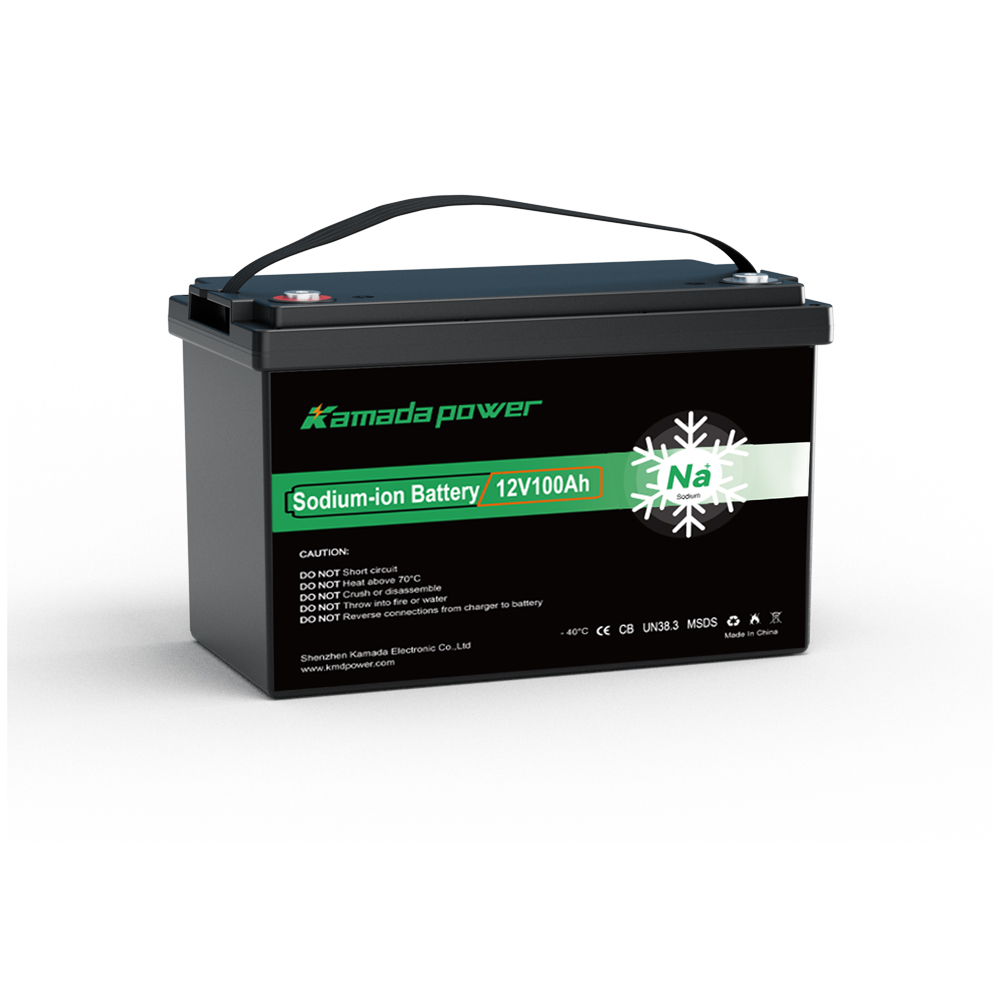
カマダパワー 12V 100Ah ナトリウムイオンバッテリー
Offshore Reality: Why Battery Cost Is Secondary to Mobilization Risk
In my years working with industrial marine clients, I’ve noticed a recurring blind spot: focusing on the “sticker price” of the battery. If you’re buying for a data center, that makes sense. If you’re buying for an offshore buoy, it’s a recipe for budget overruns.
In a typical AtoN system, the battery hardware accounts for less than 5–10% of the total lifecycle cost. The real “budget killers” are:
- Vessel Mobilization: Depending on the distance and sea state, a single day on the water can run you $3,000 to $10,000.
- Weather Windows: You can’t just “go fix it.” You wait for a window, while your liability increases every hour that buoy is off-station.
Engineering Mismatch in Legacy Systems
The industry has a synchronization problem. Modern LED lantern systems are designed for an 8–10 year service life. However, conventional batteries rarely keep pace:
- Lead-Acid (GEL/AGM): In real-world field conditions, you’re lucky to get 2–3 years.
- Lithium (LFP): Generally lasts 5–7 years depending on the depth of discharge and thermal management.
This mismatch creates a “double-touch” maintenance cycle. You end up visiting the buoy just to swap batteries long before the optical system needs a look. Sodium-ion is entering the conversation specifically to bridge this gap.
The “Buoy Oven” Effect: Designing for Sustained 60°C Conditions
If you’ve ever opened a steel buoy enclosure in the tropics at midday, you know the “oven” effect. Between the direct solar loading and the lack of active cooling, internal air temperatures frequently hover between 55°C and 65°C.
Lead-Acid Degradation Mechanism
Lead-acid batteries hate heat. It’s a matter of chemistry—specifically the Arrhenius law. For every 10°C increase in operating temperature above 25°C, the life of a VRLA battery is effectively cut in half. In a 55°C buoy, your “5-year” battery is mathematically destined to fail in less than 18 months due to accelerated electrolyte dry-out and plate corrosion.
Sodium-Ion Thermal Behavior
This is where Sodium-Ion (specifically Prussian white cathode systems) gets interesting from an engineering perspective. Preliminary data suggests that Na-ion exhibits significantly more stable structural behavior under high-temperature exposure compared to both lead-acid and even some lithium chemistries.
Furthermore, Sodium-ion has a lower risk of thermal runaway propagation. While no battery is 100% “fireproof,” the chemistry is inherently more stable, which is a huge comfort when you’re dealing with self-contained solar systems that have zero ventilation. Note: As an engineer, I must add that while lab data is stellar, we are still gathering the 5-year “soaked-in-saltwater” field data to prove these targets.
Partial State of Charge (PSOC): The Silent Killer
In a perfect world, a buoy battery is charged to 100% every day. In the real world, you have “Dark Days”—stretches of heavy overcast or winter months with low irradiance where the battery might sit at 10–30% State of Charge (SoC) for weeks on end.
The Problem with Lead-Acid and LFP
- 鉛酸: This is the death knell. Prolonged PSOC causes irreversible sulfation. The lead sulfate hardens on the plates, permanently reducing capacity. If you don’t get a full charge soon, the battery is toast.
- Lithium (LFP): Much better than lead, but still sensitive. Long-term “dwell” at very low SoC can lead to cell imbalance and degradation of the SEI layer over time.
The Sodium-Ion Advantage
Sodium-ion batteries essentially don’t care about PSOC. There is no sulfation mechanism. Lab observations show a remarkably stable electrochemical response even after repeated cycling at low SoC. For an engineer designing a system for the North Sea or the rainy season in Southeast Asia, this “forgiveness” factor is a massive reliability upgrade.
Marine Enclosure Engineering: Beyond the IP Rating
You can have the best chemistry in the world, but if salt mist gets to your BMS (Battery Management System), you have an expensive brick.
Why Fully Sealed Isn’t Always Better
A common mistake is thinking a 100% hermetically sealed box is the answer. Thermal cycling causes internal pressure changes. Eventually, seals fatigue, and the box “breathes” in moist, salty air.
The Professional Approach: We recommend an IP67 rating combined with a pressure equalization vent (like an ePTFE membrane). This allows the battery to “breathe” without letting in liquid water or salt mist.
Internal “Potted” Protection
At the board level, we insist on resin-encapsulated (potted) BMS. This provides a final line of defense. Even if the outer enclosure is compromised, the “brain” of the battery remains isolated from corrosion.
Logistics & Compliance: The 0V Advantage
Shipping Lithium-ion is a headache. Between UN38.3 certifications and Class 9 Dangerous Goods regulations, the “logistics tax” is high.
Sodium-ion has a unique trick: It can be discharged to 0 Volts for transport. Because it uses aluminum current collectors on both the anode and cathode (unlike lithium, which uses copper that dissolves at low voltages), shipping a “dead” sodium battery is safe. This potentially simplifies handling, reduces stored energy risk during transit, and could eventually lead to lower shipping classifications.
Lifecycle Cost Comparison (AtoN Context)
| ファクター | Lead-Acid (GEL) | リチウム(LFP) | ナトリウムイオン |
|---|
| High Temp Performance | Poor (Severe drop-off) | 中程度 | Excellent (Targeted) |
| PSOC Tolerance | Failure-prone | グッド | 素晴らしい |
| Maintenance Cycle | 2–3 Years | 5–7 Years | 8+ Years (Design Target) |
| Transport Risk | Acid/Leakage | Class 9 DG | Low (0V Capable) |
| Cost over 10 Years | High (3-4 Swaps) | Medium (1-2 Swaps) | Low (1 Swap/Target) |
Field-Inspired Failure Scenario: The “Tropical Meltdown”
We recently reviewed a case for a client in a tropical port. They were using high-quality GEL lead-acid batteries. On paper, they should have lasted 4 years. In practice, they were failing at month 14.
The diagnosis? A “perfect storm” of 58°C internal buoy temps and a 3-week rainy season where the batteries never hit 100% charge (PSOC). By the time the sun came back, the plates were so sulfated they couldn’t accept a charge. Switching to a chemistry like Sodium-ion in this specific environment would likely have prevented the $8,000 emergency vessel call-out that followed.
Engineering Specification Guide: What to Look For
If you are drafting a tender for marine-grade batteries, don’t just ask for “Sodium-Ion.” Be specific:
- Thermal Tolerance: Must operate at 60°C without significant capacity fade for >1000 hours.
- Enclosure: IP67 with ePTFE pressure vents and 316 stainless steel hardware.
- BMSだ: Must be fully potted/encapsulated against salt fog.
- Integration: Must be compatible with standard 12V/24V MPPT solar regulators.
- Validation: Request ASTM B117 salt spray test results.
結論
Let’s be clear: ナトリウムイオン電池 isn’t a “magic bullet” that makes lead or lithium obsolete overnight. However, for the offshore AtoN sector, it solves the two biggest pain points: High-temperature degradation そして PSOC failure.
If you are tired of the “2-year battery swap” treadmill, it’s time to look at a system-level solution. Battery selection is no longer just a procurement checkbox—it’s a fundamental engineering decision that dictates your O&M budget for the next decade.
Need a technical deep-dive into your specific buoy fleet? 鎌田パワーへのお問い合わせ. Let’s talk about how a chemistry shift could slash your mobilization costs.
よくあるご質問
Is sodium-ion truly “field-proven” for a 10-year offshore life?
The honest answer? Not yet. While the chemistry targets a 10-year life and lab results are incredibly promising, the “real-world” field data is still in its first few years of accumulation. However, compared to the guaranteed failure of lead-acid in high heat, it is a mathematically superior bet.
Is IP68 always better than IP67 for a buoy battery?
Not necessarily. In a buoy, the battery is rarely submerged indefinitely (if it is, you have bigger problems). An IP67 enclosure with a pressure vent is often superior to a “sealed” IP68 box because it prevents seal failure caused by internal pressure swings.
Can I drop a sodium-ion battery into my existing solar system?
Generally, yes. Most industrial Sodium-ion packs are designed for 12V or 24V nominal systems and are compatible with standard MPPT (Maximum Power Point Tracking) regulators. Always check the charge profile (absorption/float voltages) with the manufacturer first.
What if I ship the battery at 0V? Does that mean it’s not “Dangerous Goods”?
While shipping at 0V significantly reduces the hazard, international shipping regulations (UN38.3, etc.) are still catching up to Sodium-ion technology. Always check your local jurisdiction’s current classification, as “0V” doesn’t automatically bypass all regulatory paperwork—though it does make the process much safer.